
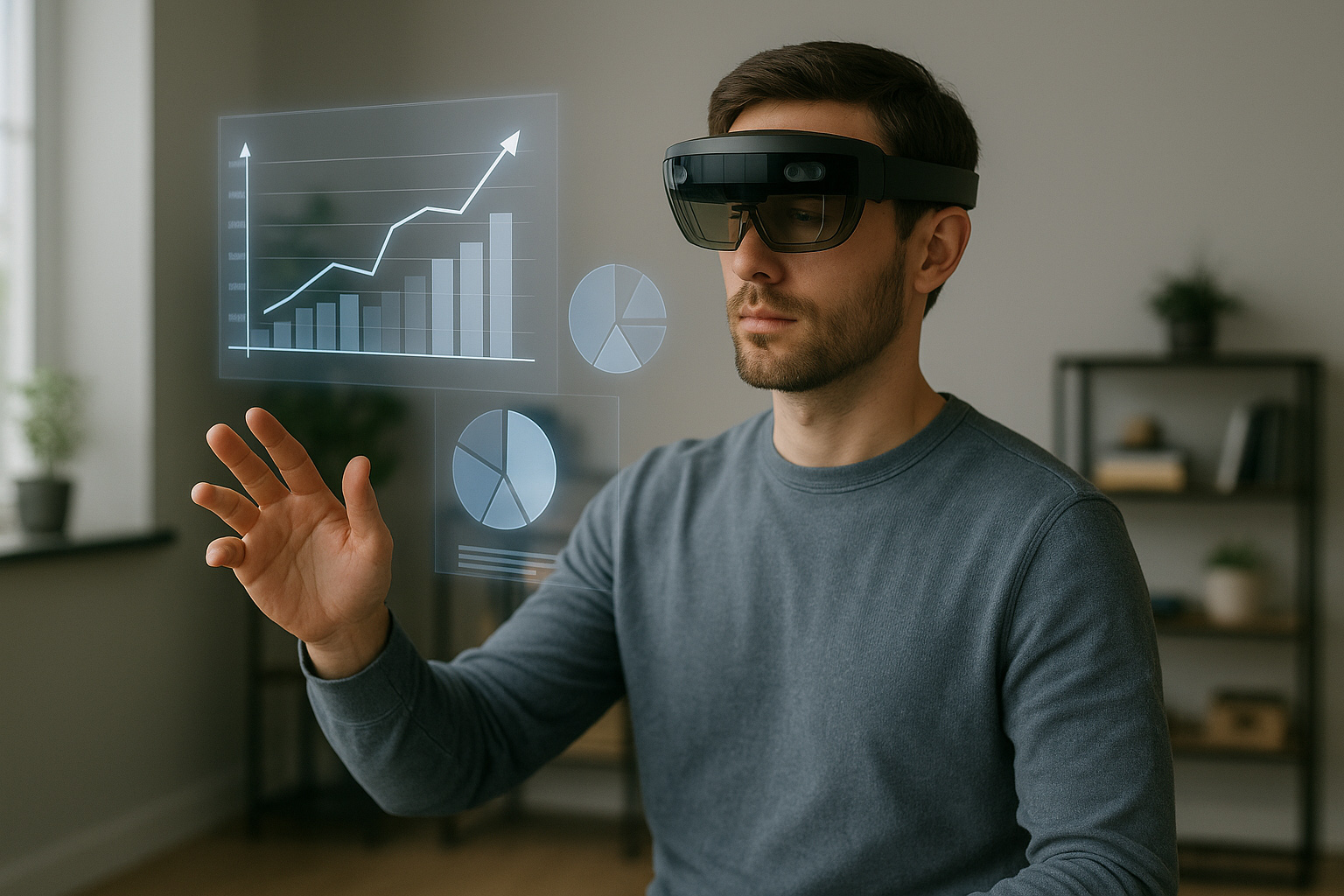
Work is evolving beyond keyboards, monitors, and flat screens. Spatial computing is reshaping the modern workflow by placing digital tools into fully immersive 3D environments. Instead of clicking and dragging on a 2D display, professionals can interact with data, applications, and models in the space around them. This shift is transforming how people design, brainstorm, analyze, and collaborate—making work more intuitive, efficient, and richly interactive.
From Screens to Surroundings
Spatial computing replaces static screens with dynamic digital layers that appear within a person’s real environment. Designers can rotate life-size prototypes in midair, analysts can walk through visualized data sets, and teams can share virtual rooms that adapt to their workflow. This creates a level of engagement that flat screens can’t match, improving understanding and decision-making.
Natural Interaction Through Movement
Gestures, hand tracking, and eye navigation become the “new mouse and keyboard.” Instead of clicking icons, users grab virtual objects, point to reorganize dashboards, or place 3D models anywhere in the room. This natural interaction reduces friction and makes complex workflows feel more intuitive, shortening learning curves and boosting productivity.
Infinite Workspace, Zero Clutter
With spatial environments, professionals no longer need multiple monitors or crowded desks. Virtual screens and tools can expand as much as needed—floating in the air, wrapping around the user, or collapsing into the background when not in use. This provides a cleaner physical setup and an endlessly flexible digital workspace.
Smarter Collaboration Across Distance
Spatial computing allows remote colleagues to work together inside the same virtual environment. Team members can examine 3D models, annotate objects, or walk through simulations as if standing side by side. This level of shared presence creates more natural teamwork and eliminates many limitations of video calls.
Conclusion
Spatial computing workflows represent the future of digital work—immersive, flexible, and remarkably intuitive. By moving beyond flat screens and into 3D environments, professionals gain more freedom, more clarity, and more powerful tools for creation and collaboration. As these experiences become mainstream, they will redefine how we work, think, and connect.

