
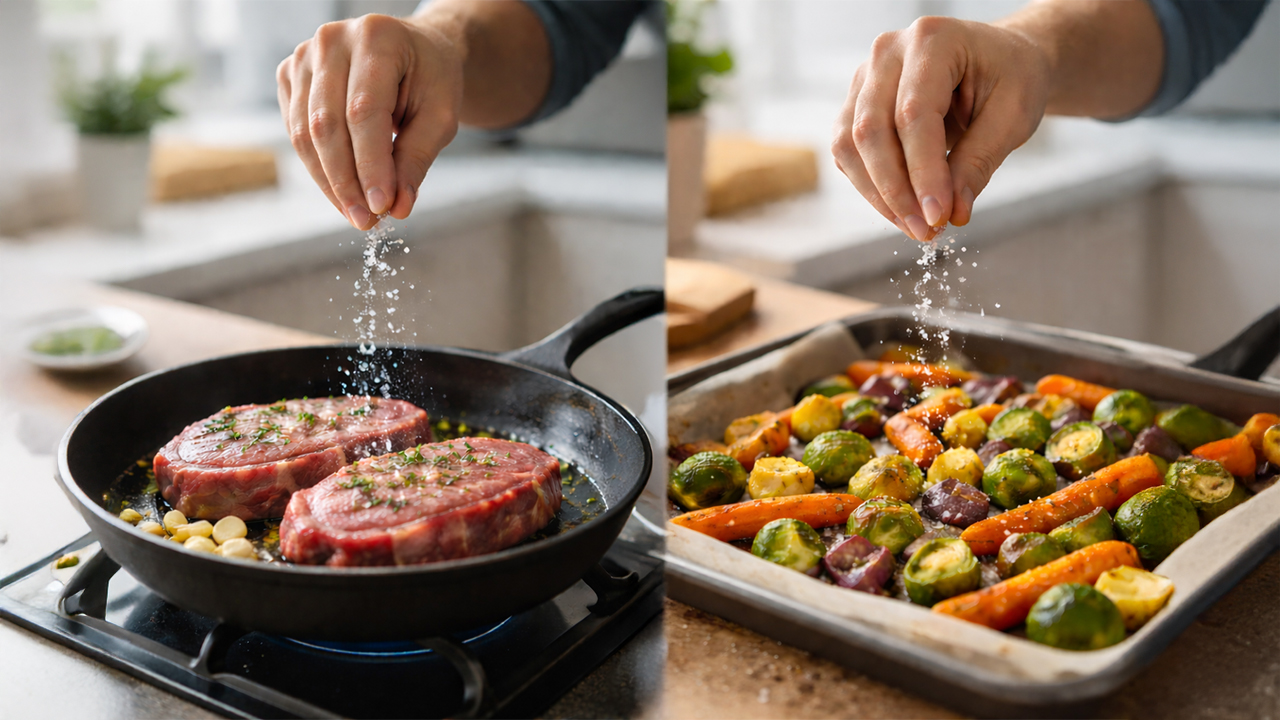
Seasoning is often seen as a simple aspect of cooking, but the timing of when you add salt to a dish can make a significant difference in flavor, texture, and the overall dining experience. The debate between salting early versus salting late is more than just personal preference; it can affect the way food absorbs flavors and how it cooks. This article explores why the timing of salt matters and how it can elevate your culinary creations.
Salting Early: The Benefits and Drawbacks
When salt is added early in the cooking process, it has time to dissolve and permeate the ingredients. This can enhance the depth of flavor, especially in dishes that require long cooking times, such as stews, braises, or soups. Salting early can also help draw out moisture from vegetables, leading to a better texture in some dishes.
However, there are a few things to keep in mind. Adding salt too early can cause the food to lose too much moisture, making it dry, particularly in meats and vegetables that are delicate. It can also cause salt to become too concentrated if you’re not mindful of the quantity.
Salting Late: Keeping Flavors Intact
Salting at the end of cooking, on the other hand, is a technique that preserves the integrity of the ingredients. This approach allows the salt to remain on the surface, which enhances the immediate flavor impact without drawing out too much moisture. It’s particularly effective for finishing dishes such as salads, grilled vegetables, and roasted meats.
While salting late can preserve textures and provide an instant burst of flavor, it requires careful attention to ensure that the salt is evenly distributed. It can be easy to over-salt when it’s added too late, as the crystals remain intact on the food surface.
Which is Best?
The best approach depends on the type of dish you’re preparing. For slow-cooked stews, braises, or soups, salting early is often the best option to infuse flavor throughout. On the other hand, dishes like roasted vegetables, meats, or fresh salads benefit from salting at the end, allowing the flavors to shine without overpowering the natural taste of the ingredients.
Conclusion
The timing of when you salt your food can significantly alter the outcome. Salting early allows flavors to deepen, while salting late can preserve texture and prevent over-salting. By understanding when and how to use salt, you can fine-tune your cooking to achieve the perfect balance of flavors, textures, and moisture.

