
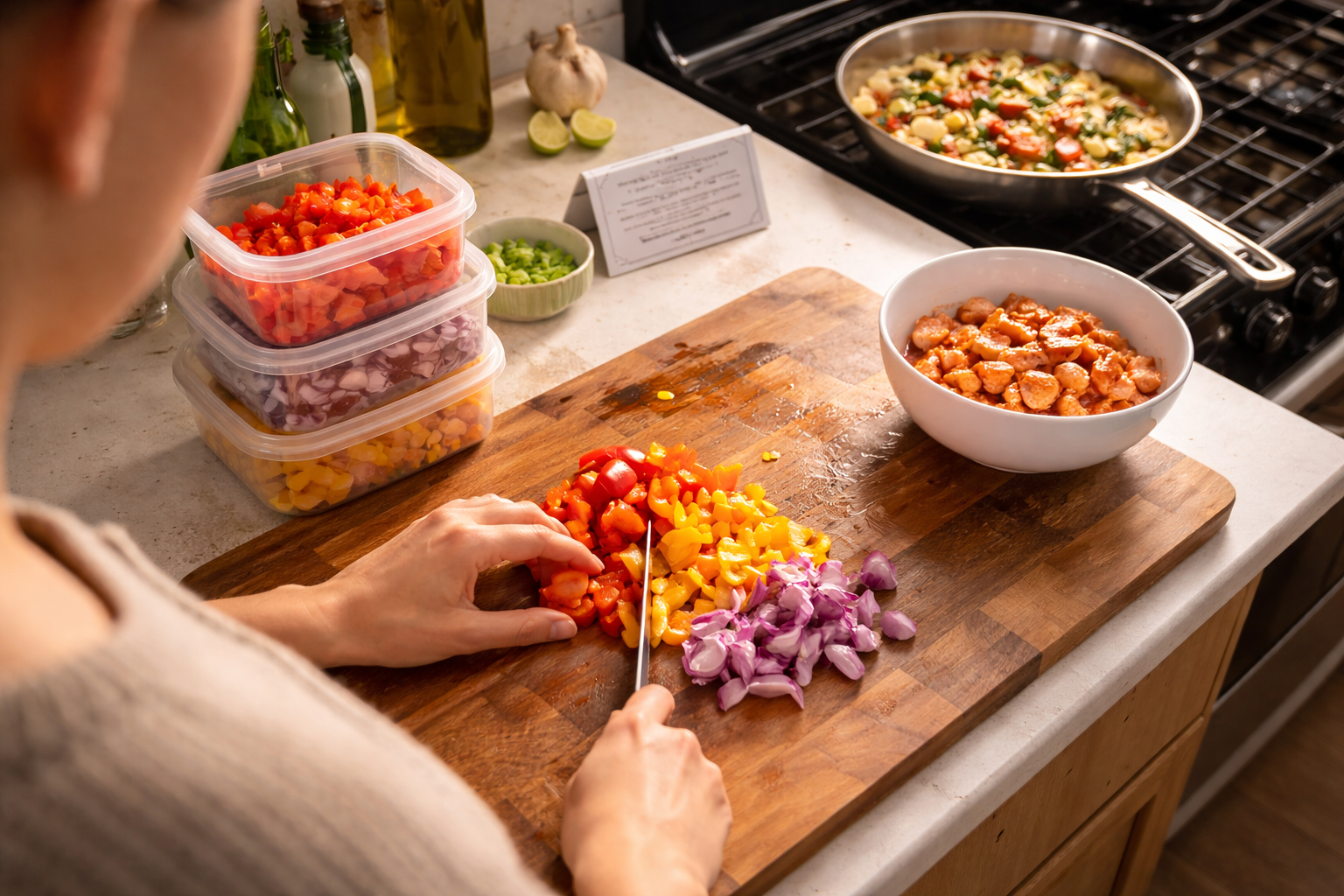
Cooking after a long day can feel overwhelming, but simple habits can shorten time at the stove and improve results.
Small changes in prep, ingredient choices, and sequence reduce stress without sacrificing flavor.
This article outlines practical, repeatable techniques that fit into busy routines and scale to different household sizes.
Adopting a few of these strategies will make weeknight meals faster, fresher, and more enjoyable.
Practical Prep Techniques
Efficient prep begins with clear priorities: identify two main components for each meal and prep those first so dinner comes together logically.
- Batch-chop vegetables at the start of the week and store them in airtight containers.
- Portion proteins and marinate briefly to lock in flavor while saving time.
When you create a predictable routine, you spend less time deciding and more time cooking. Small prep habits compound into consistent weeknight wins.
Smart Ingredient Choices
Selecting pantry-friendly staples and versatile fresh items reduces last-minute shopping and speeds meal assembly.
Keep quick-cooking grains, canned tomatoes, beans, and a couple of hearty greens on hand; these ingredients form the backbone of many fast, nutritious dinners.
Opt for proteins that suit your schedule—lean cuts for quick searing, tougher cuts for slow cooking, or pre-cooked options for ultra-fast meals. Thoughtful ingredient selection simplifies decision-making and shortens total cooking time.
Organizing a Time-saving Workflow
Arrange tasks to overlap: while a pot simmers, finish a salad, then sauté aromatics so each minute is productive.
- Work from top to bottom to prevent re-clearing surfaces: start with dry tasks, then wet, then heat.
- Keep cleaning tools nearby and tidy as you go to reduce post-meal workload.
Batch actions like heating a pan and preheating the oven early save minutes later, and cleaning incrementally keeps the kitchen usable. Rehearse the flow a few times to make it habitual and efficient.
Conclusion
Small, consistent habits transform stressful weeknight cooking into an organized routine.
Focus on a simple prep system, versatile ingredients, and overlapping tasks to reclaim time in the evening.
With practice, efficient cooking becomes the baseline for enjoyable, reliable meals.

