
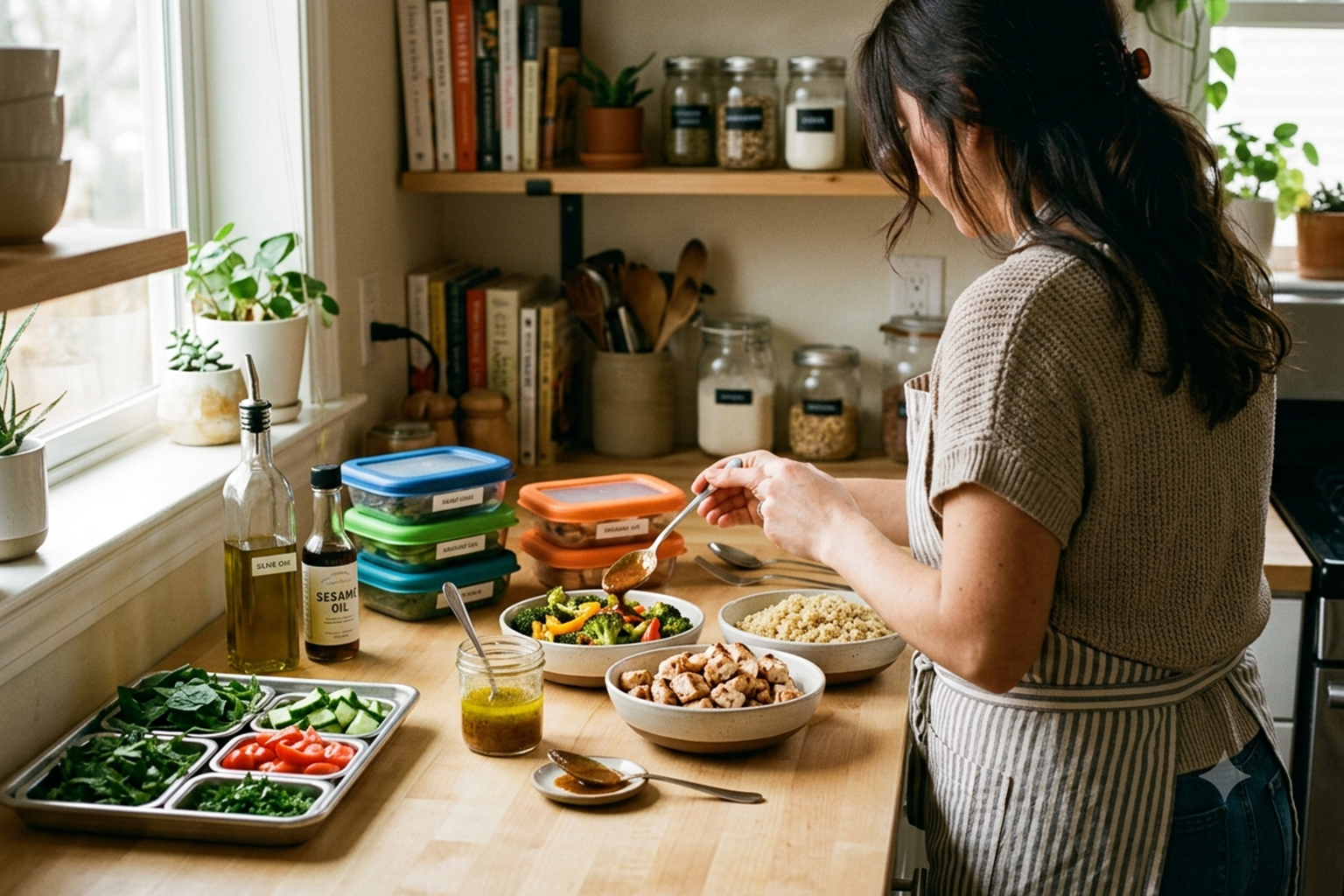
Cooking every evening can become mentally heavy when every meal feels like a brand new problem to solve. Small systems reduce choices while preserving variety, so dinners feel easier without becoming repetitive. This article outlines approachable habits you can adopt to streamline planning, prep, and flavor decisions. The goal is to make good meals the default without draining your energy.
Use Simple Meal Templates
Meal templates are repeatable frameworks that guide choices and shorten decision time. For example, a bowl template (grain + protein + veg + sauce) or a sheet-pan template (veg + protein + spice rub) gives you structure while allowing ingredient swaps. Templates reduce analysis by limiting the number of decisions you need to make for each dinner. Over time they help you learn combinations that work and make shopping easier.
Start with two or three templates that match your schedule and palette. Rotate them across the week and adjust portions so leftovers become planned components for other meals.
Adopt Micro-Prep Habits
Micro-prep means doing small, targeted tasks daily or every other day so big weekday work is minimal. Wash and chop one vegetable, toast a grain, or mix a simple vinaigrette during idle moments to cut work at dinner time. These short actions build momentum and keep ingredients ready to use, which reduces friction when you actually cook. Unlike long Sunday marathons, micro-prep is easier to sustain and adapts to changing plans.
Choose two micro-preps to start and make them part of your routine; consistency matters more than volume.
Organize for Immediate Action
Kitchen layout affects choices: place frequently used tools, oils, and seasonings within easy reach of your main cooking zone. Clear visibility in the fridge and pantry helps you quickly decide what to cook rather than hunting for inspiration. Labeling containers and keeping a small, visible inventory list removes guesswork about what you have on hand. These adjustments shave minutes from prep and reduce the mental load of planning meals.
- Keep a grab-and-go protein option frozen or ready to reheat.
- Store base ingredients together: grains, canned legumes, and cooking oils.
Over time these habits make midweek cooking flow more smoothly and lower the chance of last-minute takeout decisions.
Flavor Anchors and Flexible Leftovers
Define a few go-to flavor anchors—such as a citrus-sesame dressing, a garlicky tomato sauce, or a smoky spice blend—that can be applied across proteins and vegetables. Anchors simplify seasoning decisions and let you transform leftovers into new meals quickly. Treat leftovers as ingredients rather than repeats to keep dinners interesting without extra planning. Rotating a handful of sauces and spice blends gives variety while keeping the decision set small.
Invest a little time to make one versatile sauce each week and you’ll notice fewer stalled dinners and more creative reuse of ingredients.
Conclusion
Small, consistent systems reduce the number of choices you face at dinner and preserve your energy for the parts of cooking you enjoy. Begin with one template, two micro-preps, and a single flavor anchor and expand as those habits settle in. Over a few weeks you’ll feel less decision fatigue and more freedom to enjoy cooking again.
