
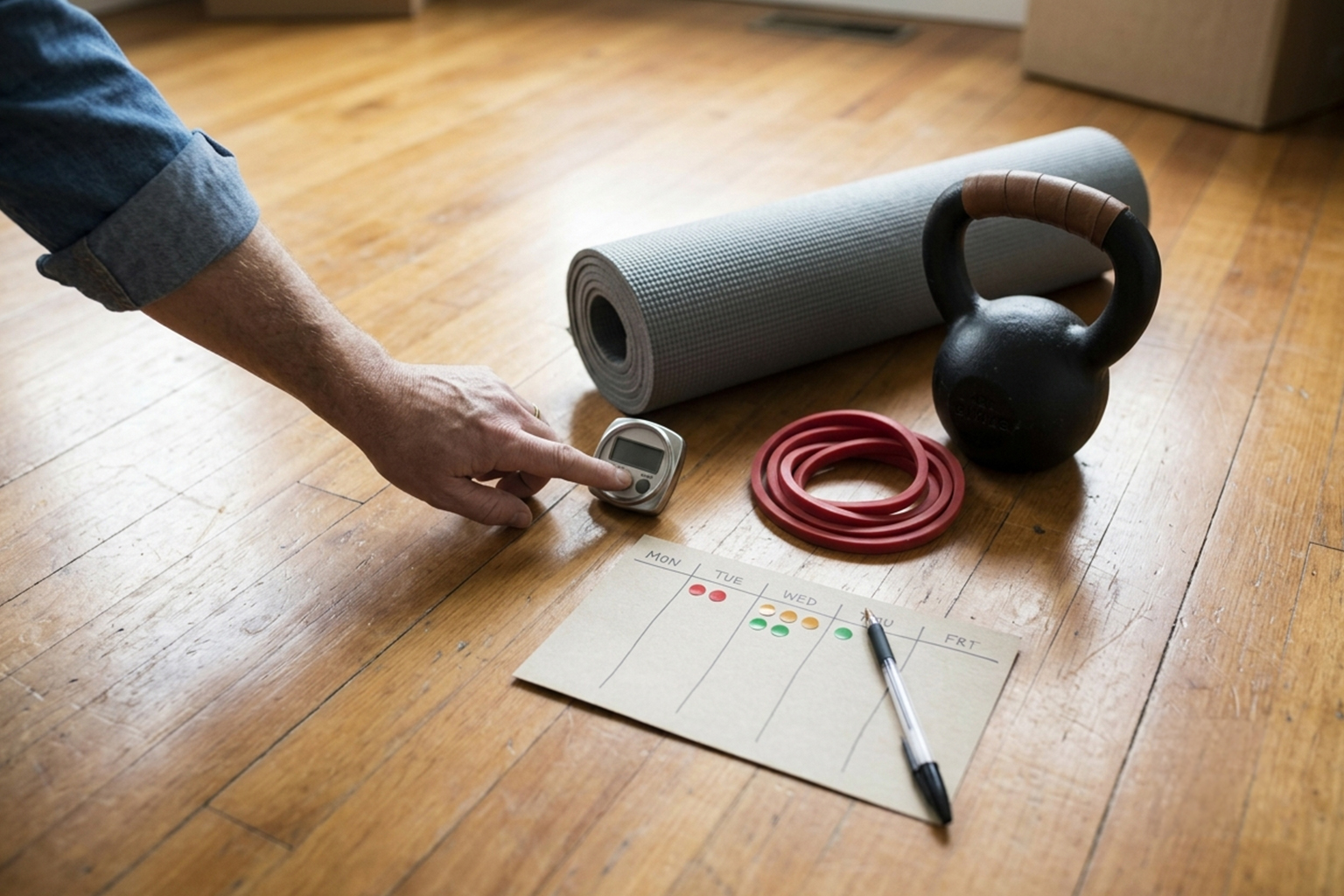
Busy weeks rarely allow long training sessions or rigid schedules.
Keeping movement simple, intentional, and adaptable makes it more likely to happen.
This article offers a week-based template built around short sessions, clear priorities, and recovery.
Use these ideas to create realistic progress without burning time or motivation.
Weekly Template Overview
Start by dividing the week into high-priority sessions and low-effort maintenance days. Aim for three focused workouts that emphasize strength, two short mobility or cardio sessions, and one active rest day. Sessions can be 20–40 minutes, concentrated on compound movements and purposeful breathing. The goal is consistency and variety, not maximum volume.
Set simple rules: pick the same general times each day, choose one main lift or movement for each focused workout, and limit distractions. These constraints make planning faster and adherence higher. Over time, those small constraints reduce decision fatigue.
Anchoring Your Week with Short Sessions
Short, intense blocks deliver most of the benefits when repeated regularly. A 20-minute strength circuit with squats, rows, and a hinge pattern covers major muscle groups and builds functional capacity. On mobility days, spend 10–15 minutes on hip openers, thoracic rotations, and loaded stretching to preserve range. For cardio, intervals or brisk walks add cardiovascular resiliency without long time commitments.
Batch exercises into circuits to keep heart rate up and finish sessions efficiently. When time vanishes, a single focused block still maintains momentum and stops small interruptions from derailing the whole week.
Balancing Strength, Mobility, and Recovery
Strength drives long-term capability, mobility keeps movement safe, and recovery lets progress stick. Schedule heavier lifts earlier in the week when energy is higher, and use lighter sessions or technique work later on. Sleep, hydration, and simple nutrition choices amplify the effectiveness of short workouts.
Track effort instead of minute details: if fatigue builds, swap a heavy day for a lighter mobility session. This flexible approach preserves gains while reducing burnout risk.
Practical Tracking and Progress
Keep tracking minimal: note the main movement, sets, and how it felt to monitor trends over weeks. Use small targets like adding one rep, two more minutes of intensity, or improving range on a mobility drill. Monthly check-ins help adjust priorities and keep motivation aligned with real-life demands.
Consistent logging turns tiny wins into momentum, making a busy week feel like forward progress instead of stalling. When patterns emerge, tweak volume and focus accordingly.
Conclusion
Small, repeatable plans win over sporadic extremes.
Focus on three meaningful sessions, add short maintenance work, and protect recovery.
Over weeks, these manageable choices compound into visible progress.
