
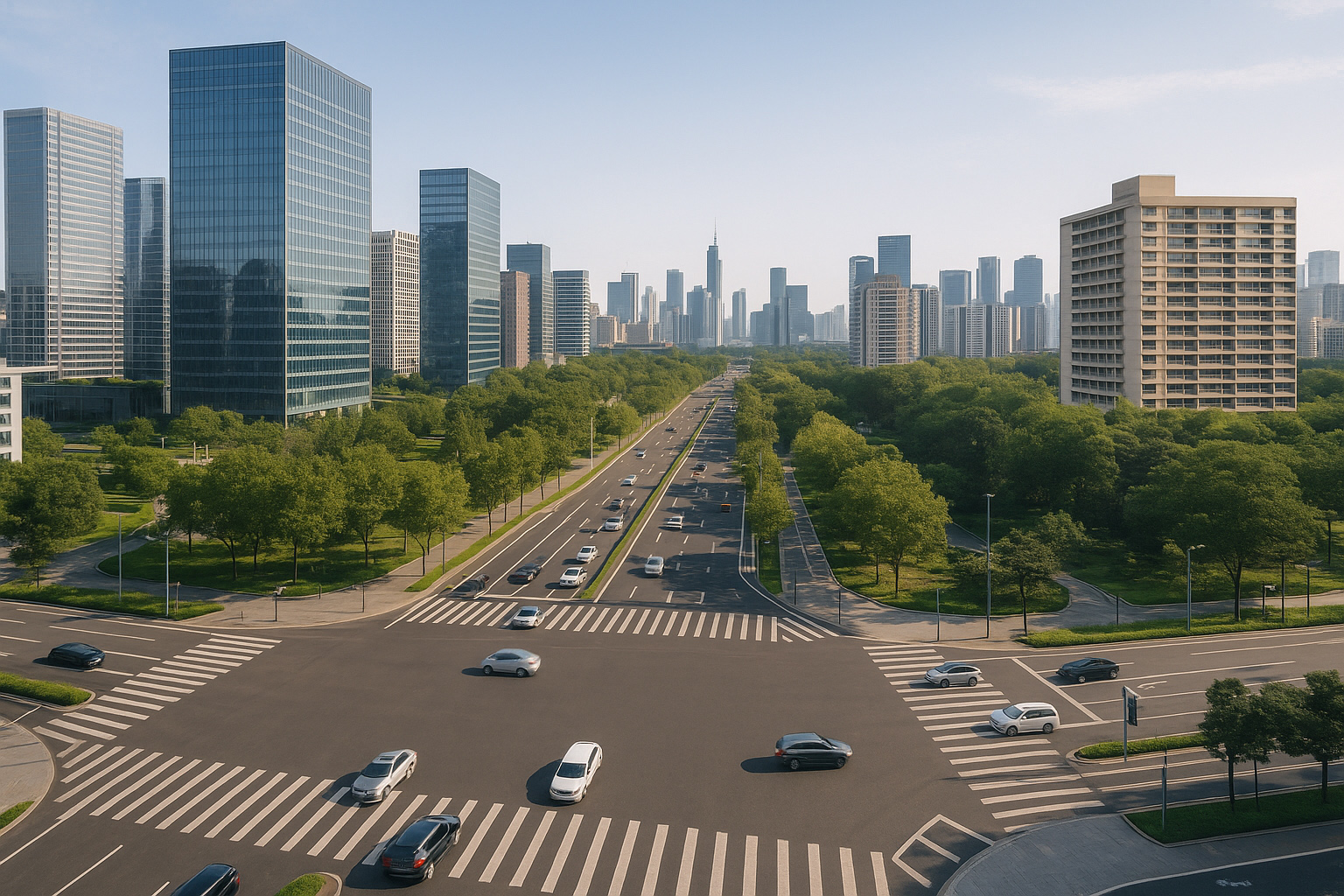
Cities are becoming smarter, more efficient, and more responsive thanks to artificial intelligence. As urban populations grow, AI-driven neighborhoods are emerging as the next evolution in city living—places where traffic flows smoothly, air quality adjusts in real time, and safety systems work proactively instead of reactively. These intelligent environments use connected sensors, predictive analytics, and automated systems to improve daily life for residents, creating communities that feel cleaner, safer, and more seamless.
Smarter Traffic That Reduces Congestion
Traffic congestion is one of the biggest challenges in modern cities. AI-powered networks analyze vehicle flows, pedestrian patterns, and public transit usage to optimize traffic signals dynamically. Instead of fixed timing, lights adjust automatically to reduce waiting times and prevent bottlenecks. Real-time recommendations help drivers choose less crowded routes, improving commute times for entire neighborhoods. Over time, AI learns daily patterns and adapts to weather changes, events, and peak hours with remarkable precision.
Cleaner Air Through Real-Time Monitoring
Air quality varies from block to block, and many residents are unaware of what they’re breathing. AI-driven neighborhoods integrate environmental sensors that continuously measure pollution levels, temperature, humidity, and particulates. When air quality dips, ventilation systems, traffic controls, or industrial zones can automatically adjust. Some smart cities even redirect traffic or activate green corridors to reduce emissions. These adjustments help residents enjoy healthier air and reduce long-term environmental impact.
Proactive Safety That Prevents Problems Before They Occur
Safety in AI-enabled neighborhoods goes far beyond cameras. Smart systems analyze movement, lighting, noise levels, and historical incident patterns to identify risks before they escalate. Streetlights brighten automatically when sensors detect unusual activity. Public areas receive alerts when foot traffic becomes unsafe or overly crowded. Emergency services get predictive insights that help them respond faster and more accurately. Instead of reacting to incidents, cities can prevent them.
Neighborhood Services That Adapt to Residents’ Needs
AI-driven city living also enhances everyday convenience. Waste management systems track fill levels and optimize pickup routes. Smart parking identifies available spaces instantly. Community apps provide real-time updates on weather shifts, public transport arrival times, and local events. These connected systems make city living more efficient and intuitive.
A Future Where Cities Learn and Grow
AI-driven neighborhoods are not static—they continuously improve based on data and resident feedback. As systems learn, they help cities save energy, reduce pollution, manage resources better, and create safer streets. The goal is not just efficiency but a more livable, human-centered urban experience.
Conclusion
AI-driven city living represents the next chapter in urban development. By optimizing traffic, improving air quality, and enhancing safety, smart neighborhoods create cleaner, more responsive environments for residents. As these technologies expand, cities will become smarter, healthier, and more adaptive built to support thriving communities for generations.

