
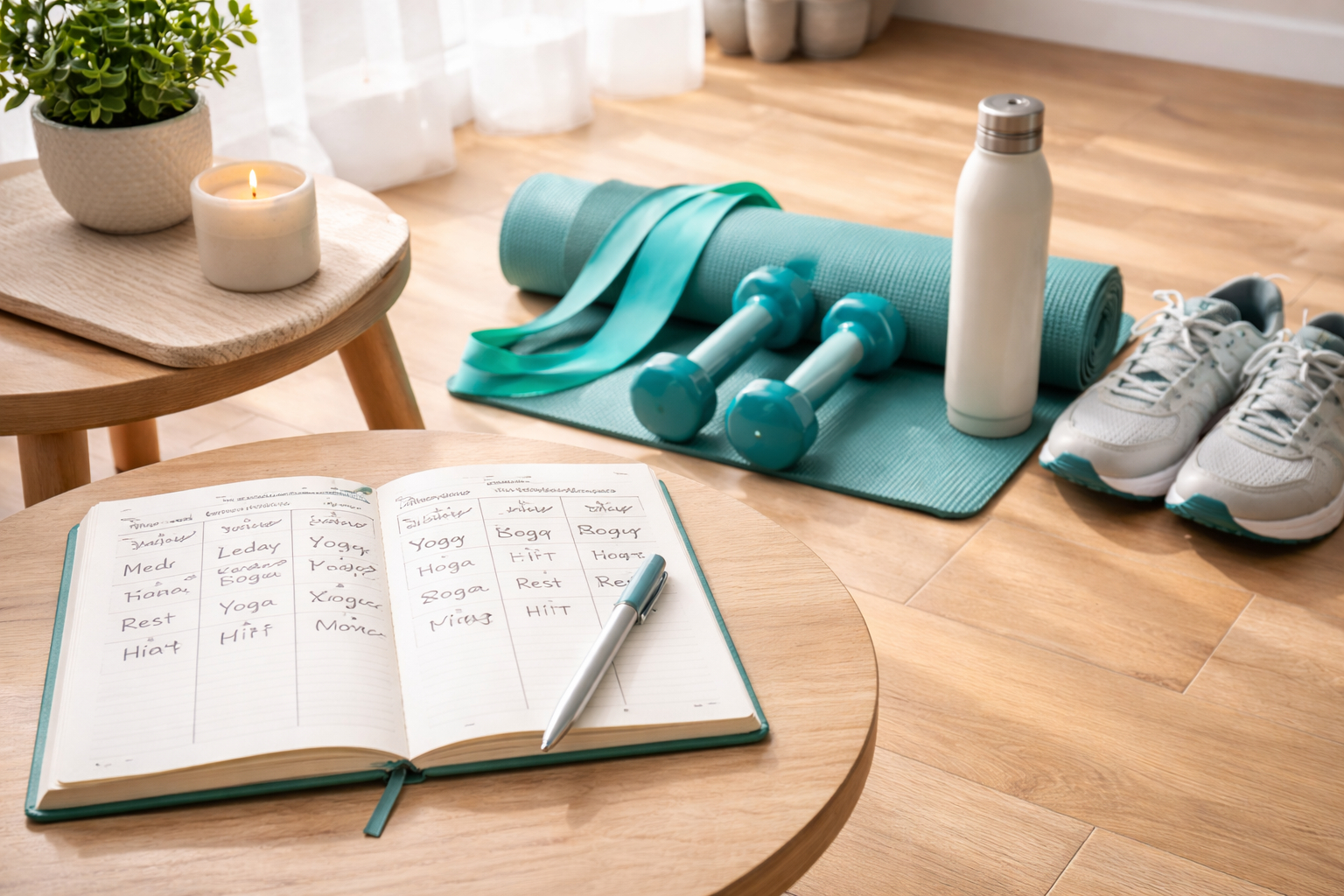
Consistency beats intensity for most people starting or maintaining a fitness habit. A flexible routine balances structure with room to adapt when life gets busy, helping you stick to healthy behaviors over years rather than weeks. Rather than chasing perfect workouts or exact schedules, focus on repeatable actions that fit your energy and obligations. This approach reduces burnout and makes progress feel sustainable.
Clarify your priorities
Before writing a plan, name the outcomes that matter most: strength, endurance, mobility, or general health. Priorities influence frequency, duration, and intensity of workouts, as well as recovery choices like sleep and nutrition. Being specific helps you choose the right exercises and avoid wasting time on conflicting goals. For example, a weekly emphasis on compound lifts differs from programming focused on daily cardio. Small experiments help you learn what works without disrupting momentum.
Set one primary goal and one secondary focus for each month. Reassess these priorities every 4–6 weeks to keep the routine aligned with your life.
Create an adaptable weekly plan
Design a weekly template rather than a rigid hourly calendar. Block time for key sessions—strength, conditioning, mobility—and allow flexible slots where you can swap intensity or duration. Include active recovery and short, high-value sessions for busy days to preserve momentum. Keep session length realistic; thirty to sixty minutes is achievable for most people. Scheduling variety across the week keeps motivation high and reduces overuse risk.
Plan core sessions at the start of the week and reserve two flexible windows. Use simple habits like consistent warmups to reduce the decision burden on training days. Over time these windows become predictable anchors in your week.
Monitor progress and iterate
Track a few meaningful metrics such as session frequency, weights used, or subjective energy levels. Small, consistent improvements in these indicators are more informative than sporadic maximal efforts. When progress stalls, adjust volume, intensity, or recovery before scrapping the whole plan. Flexibility means changing details while preserving the habit of regular activity. Celebrate small wins to reinforce the behavior and keep morale up.
Reflect weekly and make one small, testable change at a time. Over months, these adjustments produce steady long-term gains. Use simple tracking tools that you will actually maintain.
Conclusion
A flexible routine blends consistent priorities, a simple weekly template, and regular review. That combination reduces friction and supports continued engagement with fitness. Build one adaptable habit at a time and measure progress with patience.

