
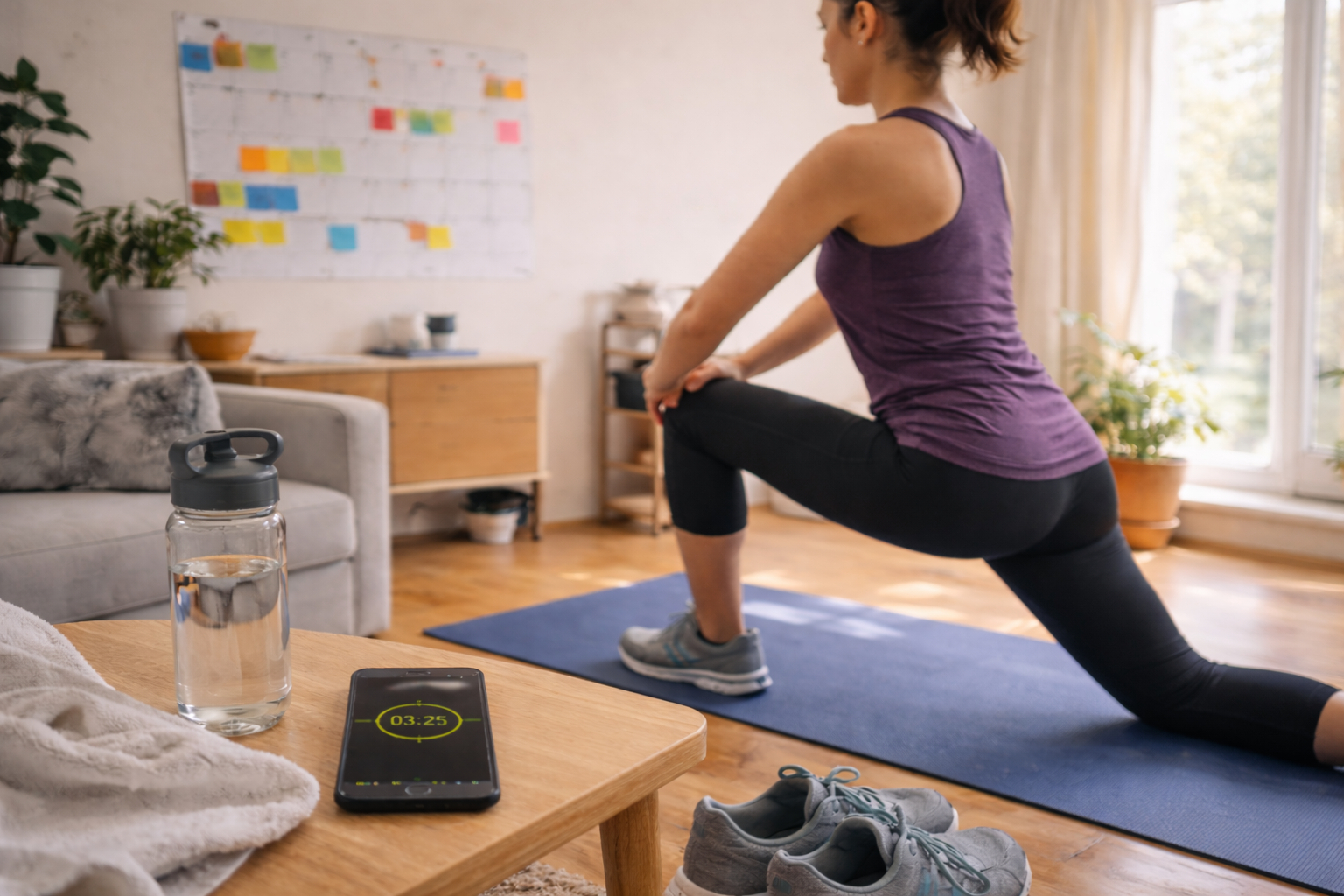
Many people struggle to keep consistent with exercise because routines often feel disconnected from daily responsibilities. A practical fitness flow focuses on simple, repeatable practices that integrate into your existing schedule and energy patterns. This approach reduces decision fatigue by favoring templates and cues over rigid plans, making it easier to sustain movement long term. The guidance below covers adaptable weekly planning, efficient session design, and mindset tools that support consistency. Small, steady changes often produce better results than sporadic, intense efforts.
Plan Around Time and Energy
Begin by mapping available time blocks across a typical week and label them by energy level, such as high, medium, or low. Match session types to those blocks: prioritize heavier strength or focused interval work when energy is high, and mobility or light aerobic work when energy is low. Aim for a balanced weekly template that cycles through strength, cardio, and flexibility so all fitness components receive attention. This planning reduces the need to decide each day and makes skipping sessions less likely.
Keep the template flexible: swap session types or split workouts into shorter bursts when life gets busy. Periodically reassess your available time and adjust the plan so it stays realistic and motivating.
Structure Sessions for Maximum Impact
Design sessions around a clear goal: build strength, boost endurance, or restore mobility, and choose exercises that deliver those outcomes efficiently. Use compound movements and interval formats to get more work done in less time, and combine strength with short cardio elements when appropriate. Start with a brief warm-up focused on movement quality, then prioritize the main work set for 15–30 minutes depending on your schedule. Tracking simple measures such as sets, reps, or perceived exertion helps you progress without overcomplicating the process.
Keep sessions purposeful and time-boxed to prevent them from expanding into the rest of your day. Small, consistent overloads applied week to week will produce meaningful adaptations over months.
Build Consistency With Cues and Feedback
Create strong cues that make workouts automatic: fixed calendar appointments, a visible home setup, or pairing exercise with an existing daily habit. Use accountability tools like a training log, a short weekly review, or a partner to maintain momentum and notice trends. Treat missed sessions as information to refine your plan rather than reasons to quit, and celebrate incremental progress. Rest, sleep, and recovery practices are part of consistency; plan them alongside active sessions to sustain training ability.
Simple feedback loops and predictable cues reduce willpower demands and increase adherence. Over time, reliable routines turn effort into habit and create the conditions for steady improvement.
Conclusion
A practical fitness flow prioritizes realistic planning, efficient workouts, and consistent cues to make movement a stable part of life. By focusing on templates and small wins, you can progress without overwhelming your schedule or energy. Start by implementing one realistic change this week and use feedback to build from there.
