
Cooking regularly becomes less stressful when your kitchen works with you, not against you.
Small, consistent habits and simple organization save time and reduce waste.
This article outlines practical techniques that fit into busy routines without major expense.
A few changes applied consistently make everyday meals faster and more enjoyable.
Organize by Use and Frequency
Start by grouping tools and ingredients according to how often you use them rather than by category alone. Keep daily essentials like knives, cutting boards, and frequently used spices within easy reach to minimize movement while cooking. Reserve less-accessed items for higher or lower storage so the most used items remain visible and accessible. Reviewing and adjusting this arrangement monthly keeps the layout aligned with evolving habits and seasonal needs.
- Store baking supplies where you bake and prep tools near the stove.
- Keep a small set of everyday dishes close to the dishwasher for quick unloading.
- Place frequently used spices in a single, dedicated rack.
These adjustments reduce friction during meal prep and create a predictable workflow. Regular tweaks ensure the setup continues to serve your routine effectively.
Optimize Storage and Labels
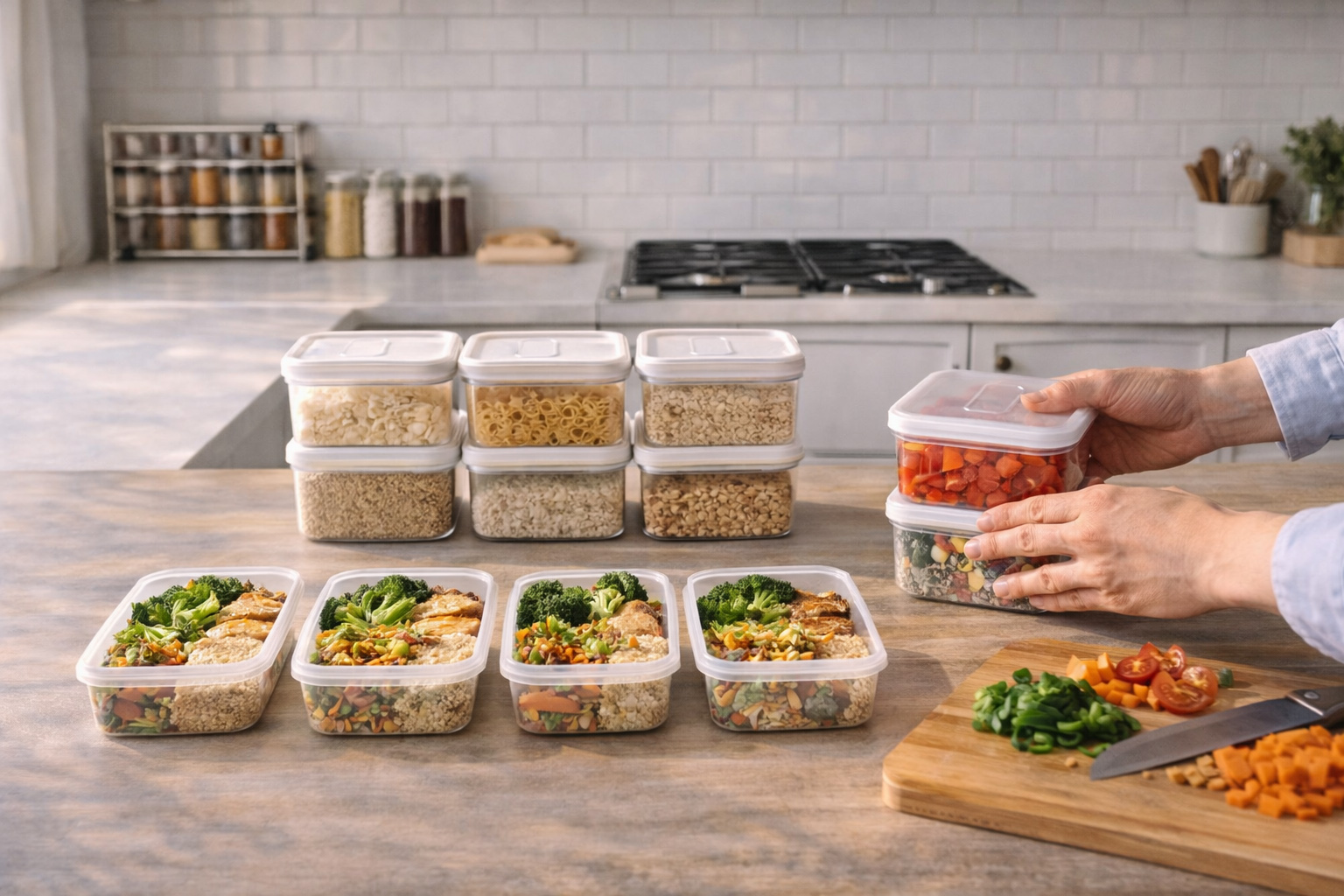
Clear containers and consistent labeling make ingredients easier to identify and track. Transfer staples into uniform, airtight containers to extend freshness and make pantries visually intuitive. Use labels with dates to monitor opening times and prioritize older items before they expire. A tidy pantry with readable labels makes meal planning and shopping lists faster to assemble.
- Use transparent bins for snacks and baking goods.
- Label lids or front faces with contents and open dates.
- Group similar items together to speed retrieval.
Good storage reduces waste and prevents last-minute runs to the store. When everything has a place, cooking becomes smoother and less stressful.
Batch Prep and Time-Saving Techniques
Batch cooking and strategic prepping cut daily effort without requiring long weekend sessions. Chop vegetables, cook grains, and portion proteins in advance to assemble meals quickly during the week. Learn a handful of one-pot or sheet-pan recipes that scale easily and clean up fast. Incorporate small practices like soaking beans overnight or marinating in advance to shorten active cooking time.
- Reserve one prep session for chopping and portioning for the week.
- Cook versatile bases like rice or roasted vegetables in bulk.
- Freeze single-portion meals for quick reheating and minimal waste.
These techniques preserve flavor and nutrition while freeing up weeknight time. Over a few weeks they will noticeably reduce stress around dinnertime.
Conclusion
Adopting a few practical habits transforms the kitchen into a more efficient space.
Organize by frequency, invest in clear storage, and plan small batch prep sessions.
Consistent, simple changes deliver better meals with less effort over time.

