
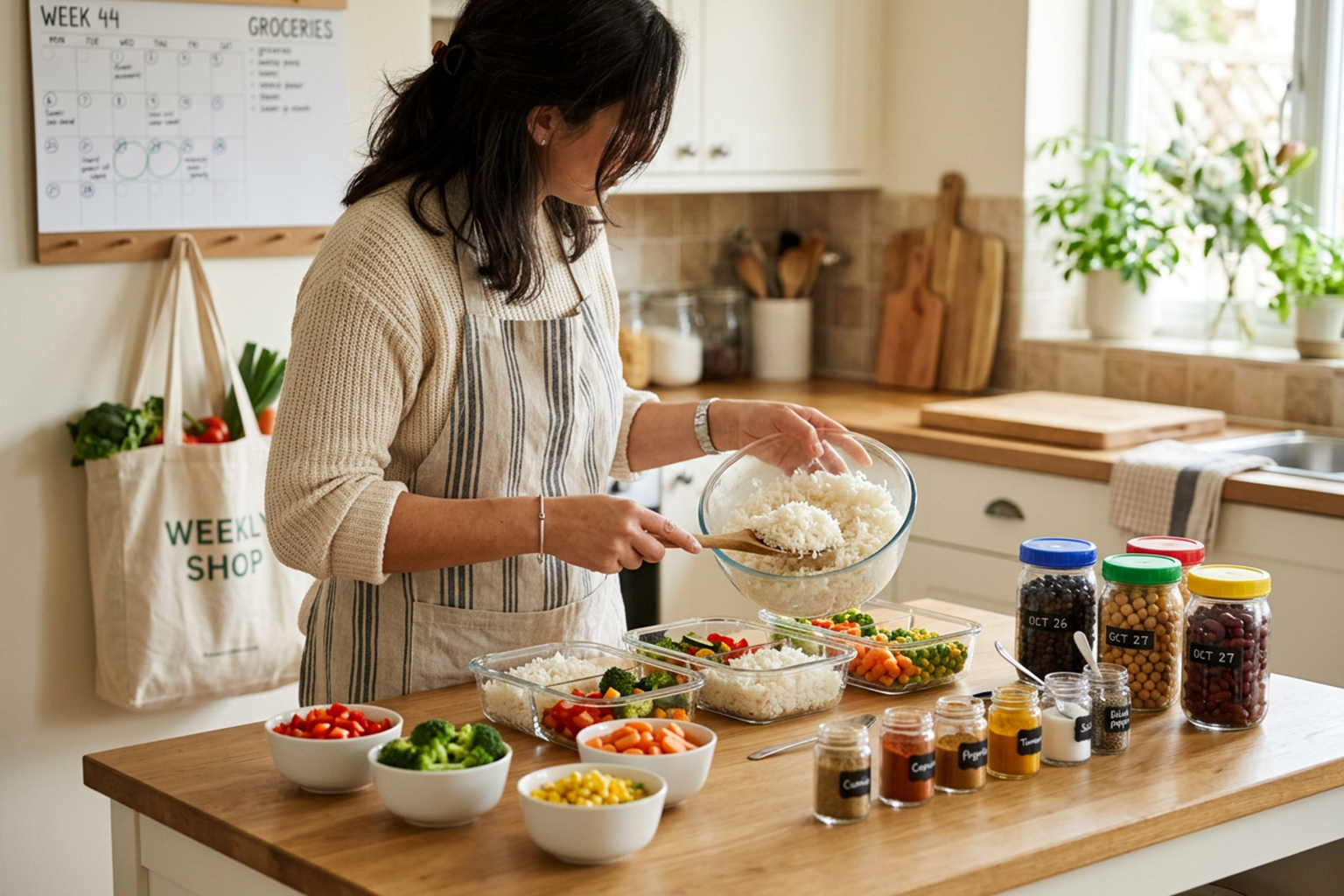
Good kitchen days begin with a simple plan and a few intentional actions. Decide on two or three meal anchors and build flexible sides around them. Small habits—like pre-chopping, timing key steps, and storing pre-cooked grains—save time when evening arrives. These changes stack, making weeknight cooking calmer and more consistent.
Plan a Lightweight Weekly Framework
Start by mapping meals to predictable patterns rather than exact recipes. Choose proteins, a grain, and two vegetable templates you can rotate through the week to reduce decision fatigue. This framework lets you swap ingredients based on what’s available without reinventing each meal. It also guides targeted shopping so your pantry supports quick execution.
Keep the framework flexible: designate theme nights and reuse favorite methods. Over time you’ll refine the map to match your schedule and tastes.
Adopt Short Mise en Place Habits
Spend 10–20 minutes in the morning or after grocery shopping to complete basic mise en place. Wash greens, trim vegetables, and measure spices into small containers so the evening cook step becomes assembly rather than prep. Pre-cooked staples like rice or beans shorten cook times and reduce one-pot chaos. Consistent little efforts add up to major time savings and less stress.
Make these tasks habitual by pairing them with another routine, such as cleaning or a morning coffee. Small, repeatable actions are easier to maintain than rare, long prep sessions.
Rotate Ingredients to Cut Waste and Boost Variety
Create a short rotation list of proteins, vegetables, and sauces to keep meals varied without complexity. For example, swap chicken, beans, or firm fish across similar recipes and pair each with different seasonings. Using roughly the same cooking techniques lets you reuse learning while exercising creativity with flavor. This reduces waste and increases confidence in improvisation.
Track favorites and what didn’t work to refine rotations. A simple note system helps you repeat winning combinations and avoid unnecessary experiments on busy nights.
Conclusion
Structuring your kitchen day around a lightweight plan, small mise en place habits, and an ingredient rotation simplifies evening cooking. These strategies reduce decisions, speed preparation, and cut waste so meals feel more manageable. Start with one habit and build gradually until the routine fits your life.

