
Evening meals can feel rushed and repetitive without a few steady practices in place. Small, repeatable habits reduce decision fatigue and improve results over time. This article outlines core approaches that focus on planning, preparation, and the kitchen layout. Adoptable steps help you produce better dinners with less stress, night after night.
Set Reliable Meal Templates
Establish two or three go-to meal templates that suit your week — for example a grain bowl, a sheet-pan dinner, and a pasta night. Templates cut planning time because you only swap proteins, vegetables, or sauces rather than reinventing each night. Teach family members the templates so decisions are shared and preparation becomes collaborative. With repetition you learn timing and seasoning that consistently produces satisfying meals.
Start by listing ingredients and common substitutions for each template and keep that list visible. Over time you can rotate in seasonal produce without losing the structural simplicity templates provide. The goal is not rigidity but predictability that frees creative touches when you have time.
Prep Smart, Not Exhaustively
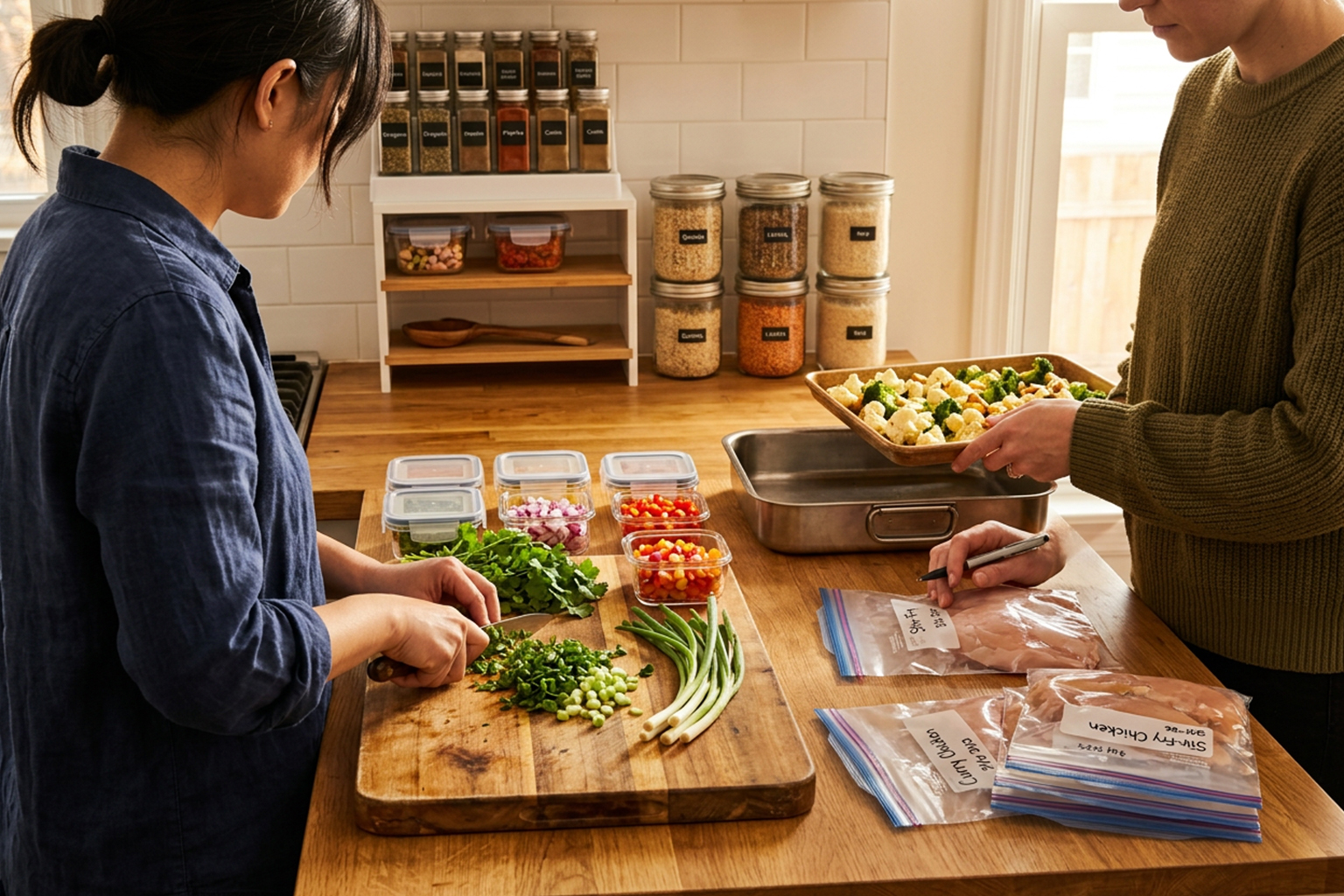
Identify the prep tasks that truly save time: chopping a week’s worth of aromatics, pre-cooking grains, and portioning proteins for the freezer. Avoid over-prepping things that wilt or stale quickly; focus on tasks that hold well for several days. Use clear containers and labels so you can grab components quickly during a busy evening. Small, targeted prep reduces nightly friction without turning cooking into a weekend job.
Make a short checklist for weekly prep sessions and aim for consistency rather than length. Even twenty to forty minutes on a dedicated day can change the entire week’s cooking experience and preserve freshness and flavor. Keep tools like a sharp knife and a reliable pan accessible to make quick work of evening tasks.
Arrange Your Kitchen for Flow
Organize tools and ingredients by zone: prep, cooking, and plating. Store frequently used items near their point of use so you spend less time searching when the timer is ticking. Clear countertops of unnecessary clutter to create immediate workspace, and group spices or oils in a small station that travels if needed. Simple adjustments to layout translate into measurable time savings and smoother movements at dinner time.
Regularly audit your pantry and fridge so you can see what’s available and avoid duplicate purchases. A short five-minute nightly reset keeps the kitchen ready for the next meal and reduces build-up of tasks. When the space supports your habits, cooking becomes less of a chore and more of an efficient routine.
Conclusion
Adopting a few core habits—templates, targeted prep, and an organized layout—makes evening cooking faster and more enjoyable. Start small, commit to consistency, and adjust each habit to fit your household’s rhythms. Over weeks these changes compound into a calmer, more capable kitchen routine.
