
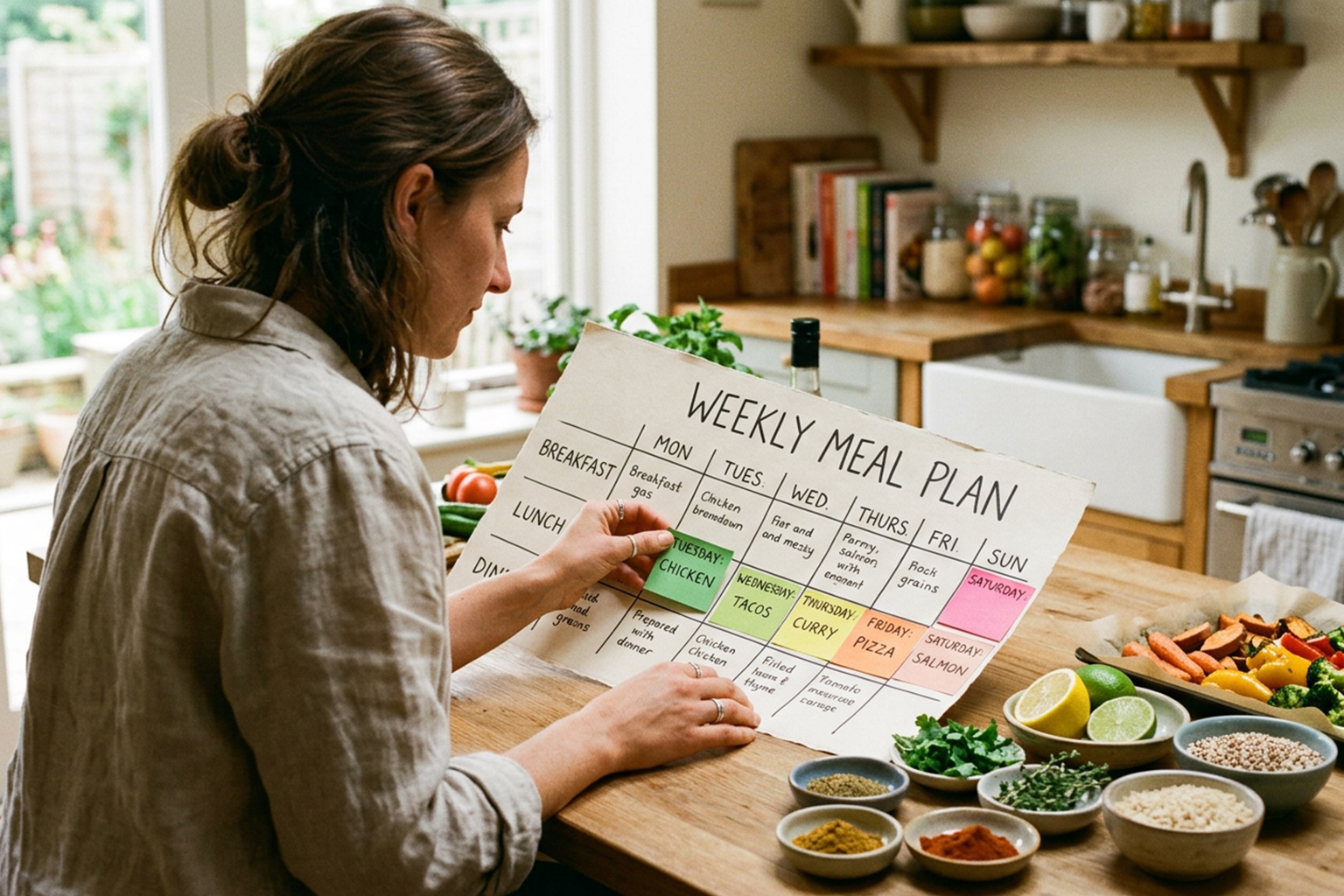
Creating a weekly flavor map helps you plan meals around taste profiles rather than specific recipes.
It reduces decision fatigue by setting a small set of flavor directions.
This encourages variety and makes shopping and prep easier.
Below are practical steps to build a flavor map you can use.
What a flavor map is
A weekly flavor map is a simple framework that assigns broad flavor directions to each meal. It sets themes like ‘bright citrus’ or ‘smoky-spiced.’ This lets you mix proteins, grains, and vegetables that fit the theme and reduces reliance on recipes. Over time it trains your pantry and palate to work together.
Start with three to five themes and rotate them. That keeps variety without complexity.
Choosing core flavors and components
Pick flexible core flavors like spicy-umami, fresh-herb-citrus, creamy-acid, toasted-smoky, and tangy-sweet. For each theme identify a few staples: a protein, a grain, a vegetable, and a finishing element. These blocks make it easy to assemble coherent, balanced meals without a recipe. Keep components few to make shopping simpler.
Rotate staples within themes to keep week-to-week interest. Swap a grain or vegetable to change the whole plate.
Building flexible meal templates
Create templates matching common cooking times: 15-minute bowls, 30-minute sheet-pan meals, and slow stews. Assign which templates pair with each flavor so you can combine them quickly — e.g., spicy-umami with a stir-fry. Templates reduce decisions about technique and timing. They guide prep and equipment use.
Keep templates simple and test them on a low-stakes night. Adjust portions and sides as you learn preferences.
Shopping and prep strategies
Build a shopping list organized by theme and template for the week. Buy multi-use staples: canned tomatoes, versatile grains, and a few fresh herbs and aromatics. Do partial prep one day: cook a grain, roast vegetables, and make a small sauce. This prep speeds assembly without full meal prepping.
Label prepped components with themes to avoid confusion. Keep a small list of quick swaps to rescue meals with what you have.
Adapting on the fly
A flavor map’s strength is flexibility: swap proteins, use pantry replacements, and adjust seasoning to fit the theme. If an ingredient is missing, substitute with similar flavors, for example smoked paprika for chipotle or lemon for vinegar. Taste as you cook so adjustments are quick and intuitive. Over time you’ll internalize common swaps and finishers.
Keep a small ‘rescue kit’ of condiments and spices that cover multiple themes. Use leftover components to create new combinations instead of starting from scratch.
Conclusion
A weekly flavor map simplifies decisions and keeps dinners engaging.
It blends structure with room to improvise and makes pantry use smarter.
Start small, iterate, and let it grow with your tastes.

