
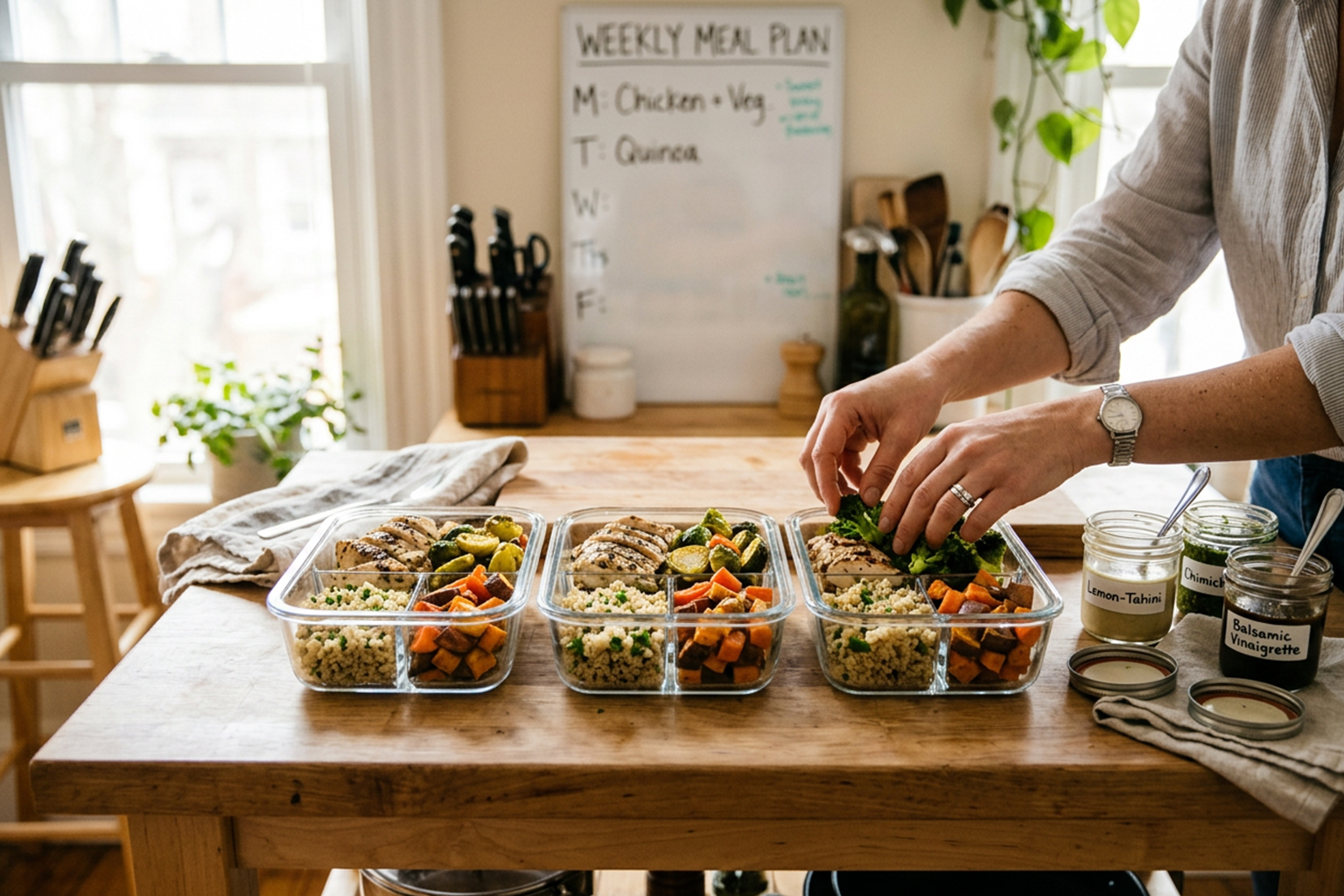
Creating simple meal templates reduces decision fatigue and saves time across the week.
A template is a basic pattern—protein, vegetable, grain, and a sauce or flavoring—that you repeat with variations.
With a few reliable templates you can mix and match ingredients and still feel creative.
This article explains how templates work, how to build them, and practical tips for keeping them flexible.
Why Meal Templates Work
Meal templates work because they simplify choices and provide a predictable structure for shopping and prep.
They reduce planning time by narrowing options to a few interchangeable components.
That predictability makes it easier to batch-cook elements or reuse leftovers in new combinations.
Templates also encourage balanced meals since the framework reminds you to include vegetables, protein, and carbs.
They can further lower food waste by making portioning and reuse more intentional.
Adopting templates turns meal planning into a set of small habits rather than a chore.
Over time those habits compound into a smoother weekly rhythm.
How to Build a Weekly Template
Start by listing your go-to proteins, vegetables, grains, and favorite sauces or seasonings.
Create two or three templates such as “roast protein + roasted veg + grain” and “stir-fry + quick sauce + noodle or rice.”
Assign templates to days based on how much time you have; keep one night for experimenting.
Use a short shopping list for each template to speed grocery runs.
Assigning templates to specific nights simplifies shopping and helps everyone know what to expect.
Keep the templates simple at first and expand them as you learn what your household prefers.
Consistency matters more than variety when you are establishing a routine.
Tools and Tips to Keep Templates Flexible
Use a small set of pantry staples and a freezer strategy to swap ingredients without extra planning.
Batch-cook grains and roasted vegetables so you can assemble meals quickly during the week.
Maintain a notes list of quick swaps—different sauces, spices, or proteins—that work in each template.
A visible whiteboard or app helps track what templates are scheduled and what needs to be prepped.
Use seasonal produce to keep templates fresh while maintaining the same structure.
- Batch-cook staples and portion them for fast assembly.
- Freeze single portions and label them by date and template.
- Keep three go-to sauces or spice blends to change flavor quickly.
Rotate ingredients monthly to prevent boredom and to use what’s in season.
Small notes about leftovers and timing speed decisions later in the week.
Conclusion
Start with two templates and practice them for a month.
Refine by noting favorite swaps and timing.
Soon meal planning will feel simpler and more creative.

