
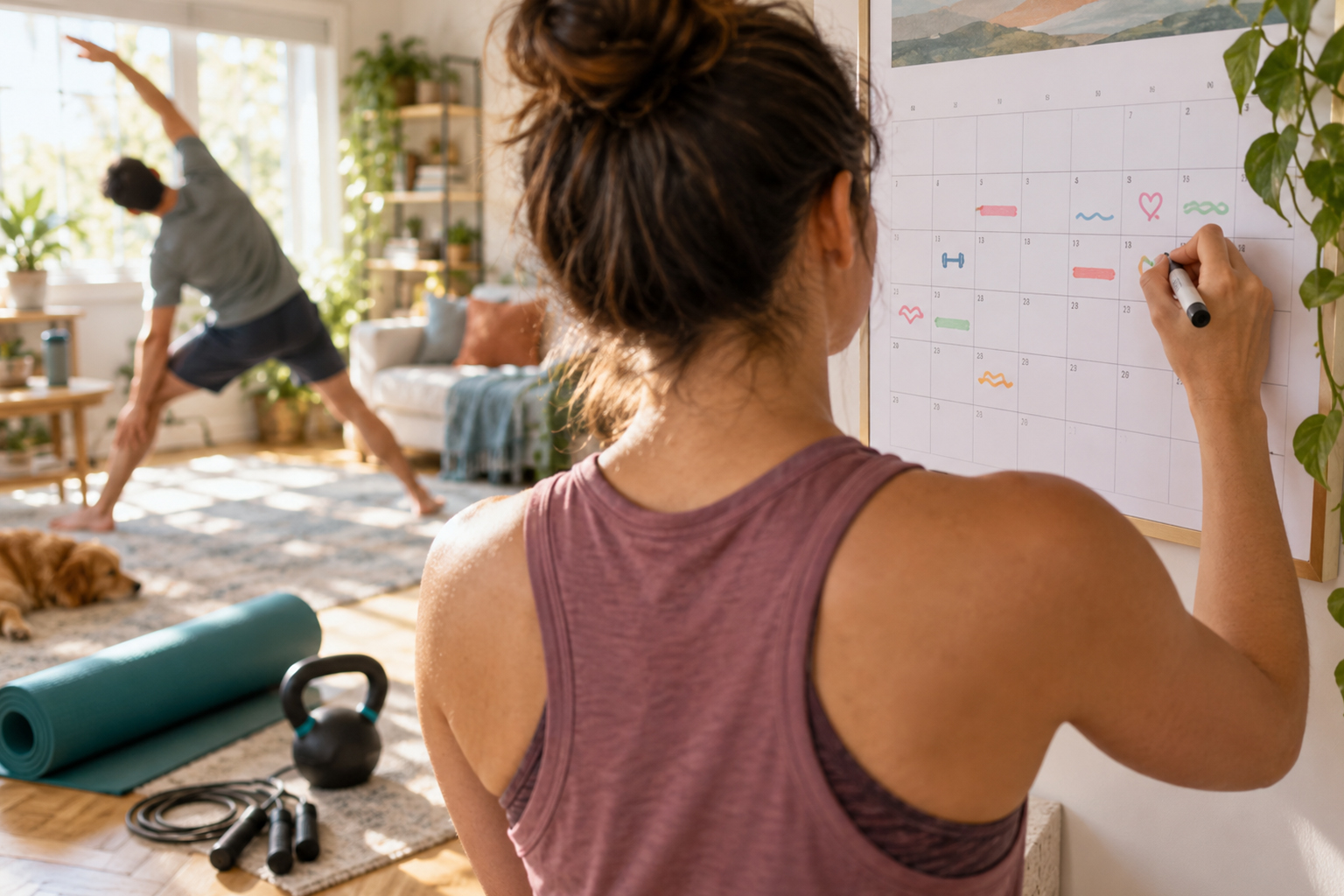
Creating a weekly movement plan that fits real life means balancing purpose with flexibility. Start by identifying the types of movement you value and the minimum time you can commit reliably. A simple structure reduces decision fatigue and makes it easier to follow through when schedules shift. With modest consistency and clear intentions, progress becomes steady rather than sporadic.
Plan Around Priorities, Not Perfection
Begin each week by choosing two or three priorities: strength, mobility, cardiovascular health, or recovery. Prioritizing lets you design short sessions that directly support what matters most and prevents trying to do everything at once. Keep sessions focused and intentional so they provide meaningful stimulus even when time is limited. This approach reduces guilt and keeps motivation consistent across changing days.
When a session must change, swap elements rather than skipping entirely; flexibility preserves momentum. Over time, priorities can shift, and a weekly plan built on purpose accommodates those changes without losing structure.
Structure Sessions for Efficiency and Variety
Design most sessions to include a clear goal, brief warm-up, a main set, and a short recovery routine. For strength, pick compound movements and 2–3 accessory exercises; for cardio, choose intervals or steady-state depending on available time. Rotation of intensity and type prevents burnout while improving multiple fitness components. Shorter sessions can use circuits or supersets to maintain intensity and produce results in limited time.
Variety keeps engagement high and reduces injury risk by distributing load across different movement patterns. A simple template applied consistently makes planning faster and adherence more likely.
Practical Tools to Maintain Consistency
Use small, practical tools to make execution easier: a weekly calendar block, a pared-down equipment list, and a few go-to workouts. Track sessions lightly to notice patterns instead of obsessing over numbers; this informs small adjustments that compound. Set micro-goals each week—like adding one extra set or improving mobility on a recurrent tight area—to keep progress tangible. Accountability partners or brief check-ins can help when motivation dips and schedules become chaotic.
- Block time instead of hoping for free time.
- Keep two or three reliable workouts ready.
- Measure consistency, not perfection.
Small tools reduce friction and increase the chance that movement persists through busy stretches. Over months, these modest habits accumulate into meaningful improvements.
Conclusion
Design a weekly plan that reflects your priorities and allows simple swaps when life interferes. Focus on clear, efficient sessions and a few practical tools to reduce barriers to movement. Consistent, intentional practice creates durable fitness even amid changing schedules.
