
Small, repeatable patterns make weeknight cooking less stressful and more reliable.
This article outlines approachable habits to plan, prep, and recover smoothly.
They require minimal time and focus, and they scale across different kitchens.
Adopting a handful of these patterns helps meals feel regular rather than frantic.
Start with a Weekly Framework
A short weekly framework clarifies what to cook and when, reducing decision fatigue. Set two to three anchor meals you enjoy and rotate easy variations around them. Use a single shopping list that maps to those anchors and fills remaining meals with quick proteins and greens. Keep the plan flexible so you can swap nights without starting from scratch.
Review the framework on a weekend check-in to spot gaps or forgotten staples. This small weekly habit keeps the fridge stocked and dinners predictable.
Block Prep Time and Batch Basics
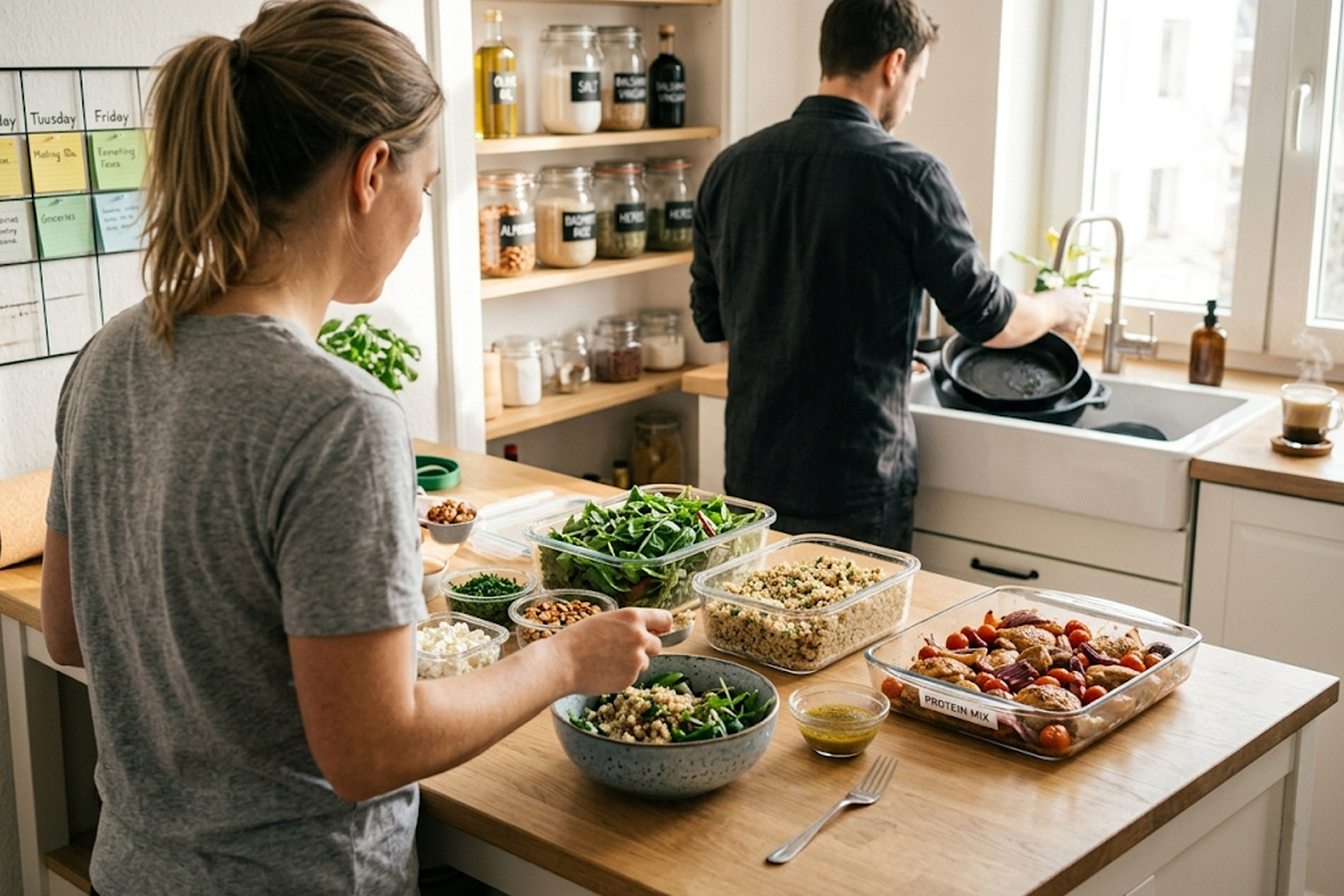
Blocking 30 to 60 minutes once or twice a week transforms weeknight prep. Wash and chop vegetables, cook grains, and roast a tray of proteins to build ready components. Store prepped items in clear containers so you can assemble meals quickly on busy evenings. These basic batches let you combine ingredients differently without extra cooking each night.
Over time you’ll learn which elements benefit most from batching in your kitchen rhythm. Start small and add one batch habit at a time.
Clean as You Go to Reduce Recovery Time
A few minutes of tidying during cooking shortens the post-meal cleanup dramatically. Keep a soapy bowl for utensils, wipe counters between steps, and stack used pans so they soak while you eat. These small acts preserve energy and make the next meal feel less daunting. Encouraging household members to adopt a single shared task creates equity and speed.
Treat cleanup as part of the cooking flow, not a separate chore to dread. That mindset shift multiplies the benefits of your planning and batch work.
Stock a Flexible Pantry
A pantry of interchangeable staples simplifies last-minute decisions and stretches fresh ingredients further. Keep long-shelf items like canned beans, grains, broths, and a few dried spices you use often. Label dates and group like items to avoid buying duplicates and to spot what needs using soon. When fresh produce runs low these shelf items let you build quick, balanced meals.
Rotate pantry items into your weekly framework so they become planned ingredients rather than backups. A small, intentional pantry reduces shopping stress and broadens meal options on tight nights.
Conclusion
Small, consistent patterns reduce friction and elevate weeknight meals.
Apply one change at a time and measure how it saves you time and stress.
With modest effort you’ll gain a smoother, more satisfying cooking routine.

