
Cooking at home becomes manageable when you replace frantic evenings with a few intentional habits. Small, repeatable routines reduce decision fatigue and make meals taste better without extra effort. This article outlines practical shifts that fit into busy lives and support consistent results. Each idea is adaptable so you can pick what matches your kitchen and schedule.
These habits focus on prep, patterns, and cleanup so the whole meal process flows more predictably. They work whether you cook every night or a few times a week. The aim is fewer surprises and more enjoyable cooking. Start with one change and add another as it sticks.
Plan with simple templates
Create a handful of dinner templates—grain plus protein, pasta plus veggie, sheet-pan combination—and use them as anchors for the week. Templates remove the blank-page problem and make shopping and prep straightforward. When you know the structure, seasoning and timing become the only creative choices you need to make. Over time these templates evolve into reliable favorites.
Use templates to guide a short shopping list and a one-hour prep session. You’ll save time and reduce waste. Templates also help family members contribute more easily to meals.
Prep once, use twice
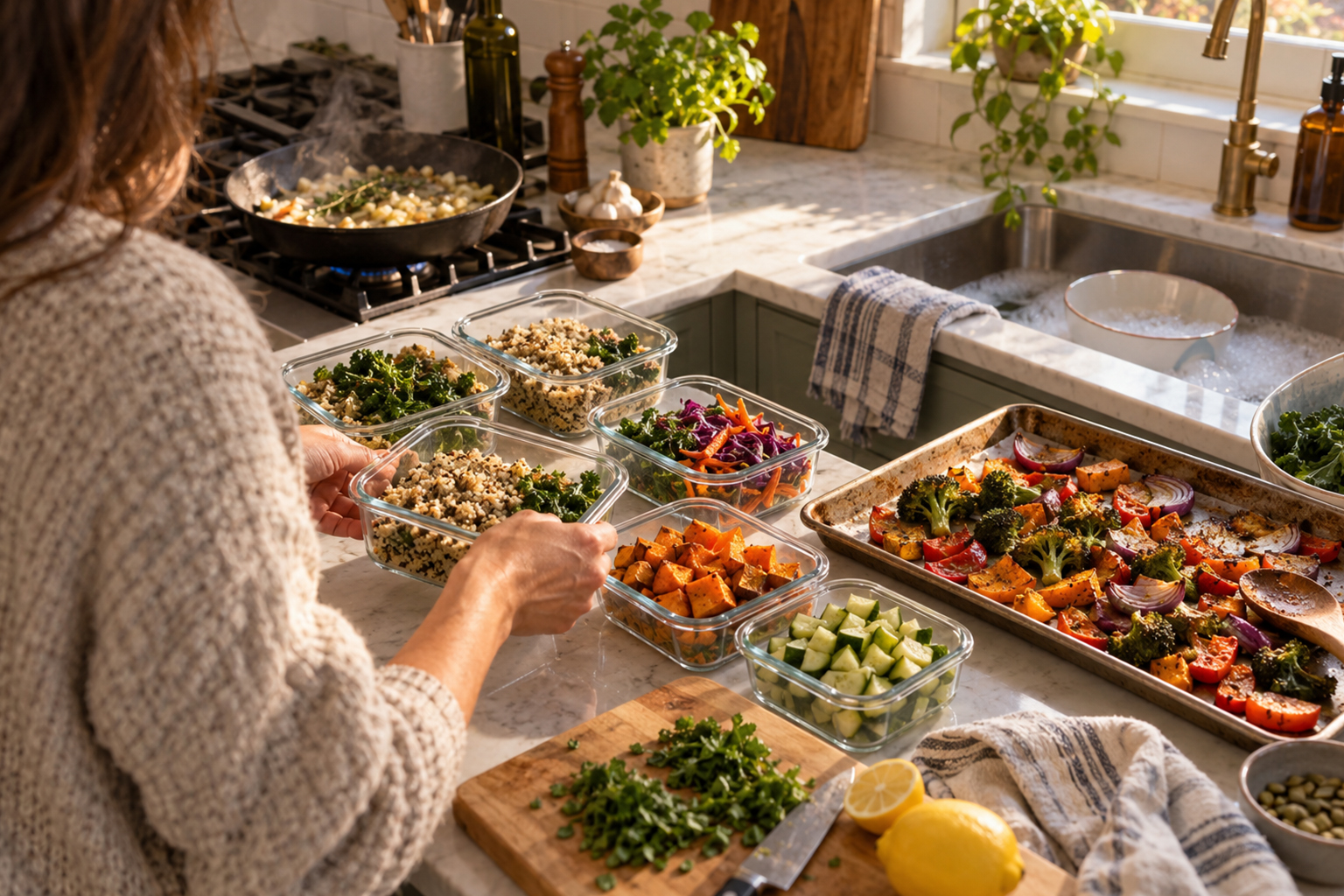
Batching a few ingredients saves repeated effort across meals: roast a tray of vegetables, cook a pot of grains, or chop a week’s worth of aromatics. These components recombine into diverse dinners without starting from scratch each night. Focus on items that store well and reheat cleanly. Keep compositional ideas in a visible place to speed decision making.
Set one evening block for this prep or split tasks across mornings. Even 20 minutes a day adds up into significant time savings by week’s end. The payoff is faster dinners and less evening stress.
Adopt consistent knife-to-pan patterns
Develop a few reliable sequences—what goes into the pan first, how long it cooks, and when to add aromatics or liquid. Repeating patterns trains intuition so timing and seasoning become second nature. Patterns also make it easier to improvise without losing balance. Keep a short list of go-to techniques where you can glance at them while cooking.
- Start proteins hot for browning.
- Add hardy vegetables earlier.
- Finish with fresh herbs or acid.
These small rules simplify choices and improve consistency. Over time you’ll internalize them and cook with more confidence.
Quick cleanup routines that preserve momentum
Cleaning as you go prevents the dreaded sink pileup and shortens post-meal cleanup time. Wipe counters between steps, rinse bowls immediately, and stack used items neatly for a single final wash. Small habits like soaking pans while food rests turn a long chore into a brief tidy-up. A cleaner space also makes the next meal easier to start.
Establish a one- or two-minute reset after each meal to keep surfaces guest-ready and functional. These tiny investments pay back as less resistance to cooking tomorrow.
Conclusion
Start with one habit and make it routine before adding another.
Small, repeated changes compound into reliable cooking results.
Intentional patterns turn busy evenings into manageable, enjoyable meals.

