
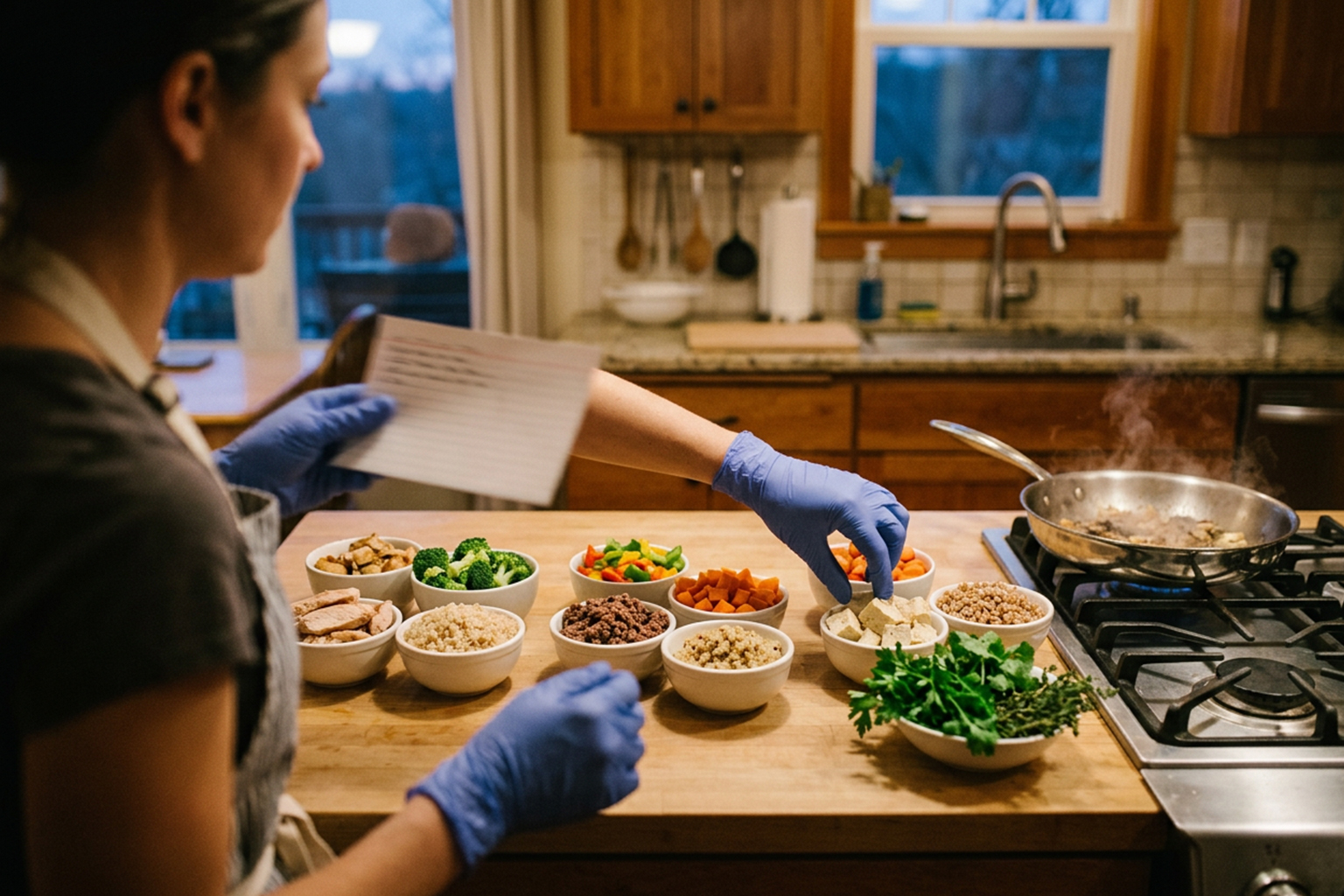
Small, repeatable meal templates cut decision time and lower stress during busy evenings.
They focus shopping, simplify prep, and make cooking more consistent across the week.
You can build templates scaled to your schedule, skill level, and pantry staples.
This article explains why templates work and how to set three practical examples.
Why meal templates matter
Meal templates matter because they convert abstract meal ideas into predictable actions that save time and reduce friction in the kitchen. By defining a handful of reliable structures — such as quick-sauté, roast-plus-reset, or one-pot stews — you narrow choices and reduce the chance of last-minute substitutions that derail a plan. Templates also make grocery shopping more efficient because repeatable ingredient lists lend themselves to bulk buying and less food waste, which helps with both budgeting and meal consistency. Over time, using templates builds confidence: cooks learn which components pair well and how to tweak flavor without starting from scratch each night.
Start small and iterate gradually; adopting just two templates can noticeably improve weeknight flow. Keep records of timings and favorite sauces so repetition feels intentional, not monotonous. With a few reliable structures in place, you’ll spend less time deciding and more time cooking well.
Three templates to start with
Begin with three flexible templates that cover most weeknight needs: a fast stir-fry, a roast-and-refresh, and a comforting one-pot option. Each template defines roles for protein, vegetable, starch, and sauce, which makes shopping and prep straightforward while leaving room for seasonal swaps. Building templates around what you already enjoy and what’s reliable in your pantry shortens planning time and increases the chances meals actually get made. These templates work whether you have 15 minutes or a slow hour; adjust ingredient size and technique, not the structure.
- Stir-Fry: Quick protein, two veggies, a simple sauce, and rice or noodles.
- Roast-and-Refresh: Roast protein and veg, then turn leftovers into salads, tacos, or grain bowls.
- One-Pot Comfort: Braise or simmer with aromatics, a starch, and a finishing herb or acid.
Write down ingredient lists and basic timings for each template and keep them visible in your kitchen. That way you can shop efficiently and swap components without losing the template’s time-saving benefits.
Keeping templates fresh and flexible
Maintaining variety is simple: rotate proteins, swap spice blends, or change the grain or sauce to give each template a different profile. Use seasonal produce and pantry staples to reinvent a template weekly; small changes to herbs, acids, or toasted seeds refresh the eating experience without adding decision overhead. Treat templates as scaffolds rather than rules, so leftovers, guest preferences, and time constraints can still shape the final dish. Periodically review what worked and what didn’t, then refine portions, cook times, or shopping notes accordingly.
Templates are tools to make evenings smoother while preserving creativity. With modest adjustments they remain both useful and interesting over the long term.
Conclusion
Meal templates reduce decision fatigue and improve consistency in weeknight cooking.
They free mental energy for flavor, technique, and shared time at the table.
Start with a few, iterate based on what you enjoy, and let templates evolve with your schedule.

