
Dinner often feels like a scramble even when you cook most nights.
Small, repeatable changes in how you plan, prep and use your space make an outsized difference.
This piece lays out practical tweaks—no fancy gadgets, no overhaul—that reduce time and friction.
Use one or two habits and add more as they stick; consistency matters more than perfection, and small wins compound.
Build a simple weekly scaffold
Pick a predictable outline for the week: two quick nights, two one-pan meals, and a flexible night that can use leftovers or takeout if needed.
Templates reduce nightly decisions and make shopping straightforward because you buy fewer unique ingredients.
Plan a short list of go-to proteins, vegetables and grains that you rotate according to sales and seasonality.
That modest pattern lets you lean on familiar steps when time is tight and keeps variety from becoming a chore.
- Meal templates and fallback dinners
- Cook a larger batch of a grain twice weekly
- Keep a short grocery list focused on staples
Start with one template and test it for two weeks so you can judge what actually works for your rhythm.
Adjust based on what felt rushed or enjoyable and refine the list of staples you return to most often.
Adopt three daily mini-prep habits
Small tasks done daily prevent a big evening pile-up and keep the kitchen feeling manageable between meals.
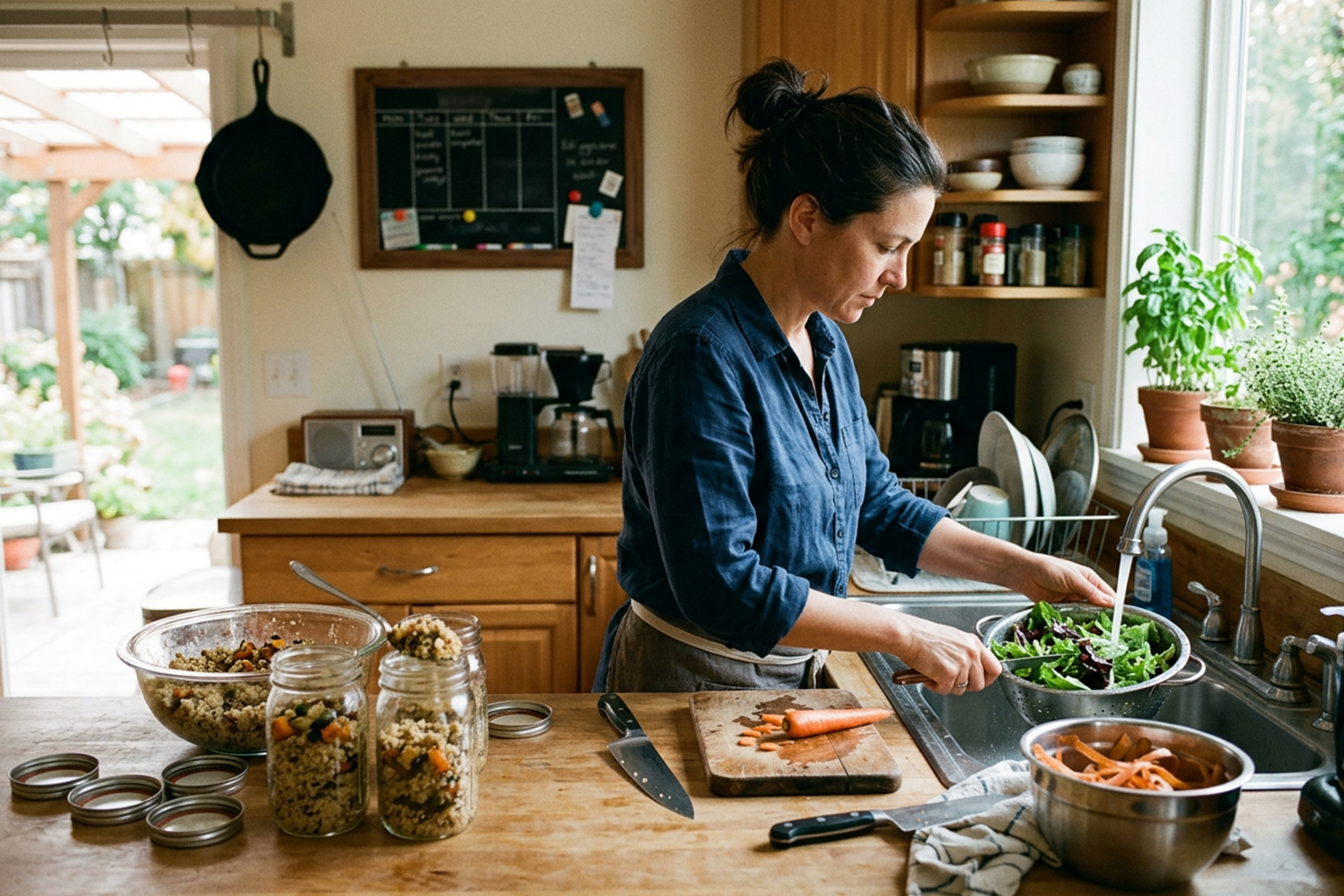
Examples include rinsing produce after shopping, trimming one vegetable, and portioning snacks into containers for quick grabs.
Each action takes two to five minutes but saves more time when you combine steps during cooking.
Consistency turns these tasks into background work instead of chores and removes decision fatigue at dinner time.
- Rinse salad greens and dry them for the week
- Trim and store one vegetable for tomorrow
- Portion snacks or proteins into grab-and-go containers
If mornings are busy, move mini-prep to a midafternoon pause or right after work.
Aim for tiny wins; they compound and free up time when it matters most.
Tidy your primary workstations and tools
Keep the sink, prep counter and stove uncluttered so movement between tasks is fast and intentional.
Store frequently used tools within arm’s reach and group similar items together to avoid unnecessary searching.
A few high-quality knives and a single good pan reduce decision friction and make cooking feel more reliable.
Regularly clear one shelf or drawer each week to prevent slowdowns caused by overflowing clutter.
- Sharp chef’s knife
- Sturdy skillet (cast-iron or nonstick)
- One large sheet pan
You don’t need every gadget—just reliable basics that do most of the work well.
A tidy layout helps even uncertain cooks feel in control and speeds every step from prep to serving.
A five-minute reset that keeps momentum
At the end of most meals run a five-minute reset: wipe counters, stash leftovers, and load the dishwasher so the kitchen is ready for the next session.
Starting a pot of water or soaking a pan saves real time the next day and reduces friction when you begin cooking.
A brief tidy keeps the kitchen ready and removes the dread that accumulates around messy counters after a long week.
Make this reset a non-negotiable pause and it will pay back daily in cleaner mornings and simpler evenings.
- Set a two-song timer to keep resets short
- Label leftovers immediately to avoid mystery containers
- Empty the sink or run the dishwasher before bed
Once it feels automatic, your kitchen will require less prep to start dinner and more of your time will be spent enjoying food rather than cleaning up stress.
That small habit prevents evening spirals and keeps momentum across the week.
Conclusion
Small, repeatable habits shave minutes and reduce stress night after night.
Start with one change and let it settle before adding another.
Over time those tweaks become how you cook, not a to-do list.
