
Evening meals feel lighter when a few reliable habits take the pressure off. Small, repeatable steps before and during the workweek reduce last-minute scrambling and keep flavors bright. This piece lays out practical practices you can adopt without overhauling your routine. No special equipment required—just clearer thinking about how you use what’s already in your kitchen.
Build a flexible refrigerated base
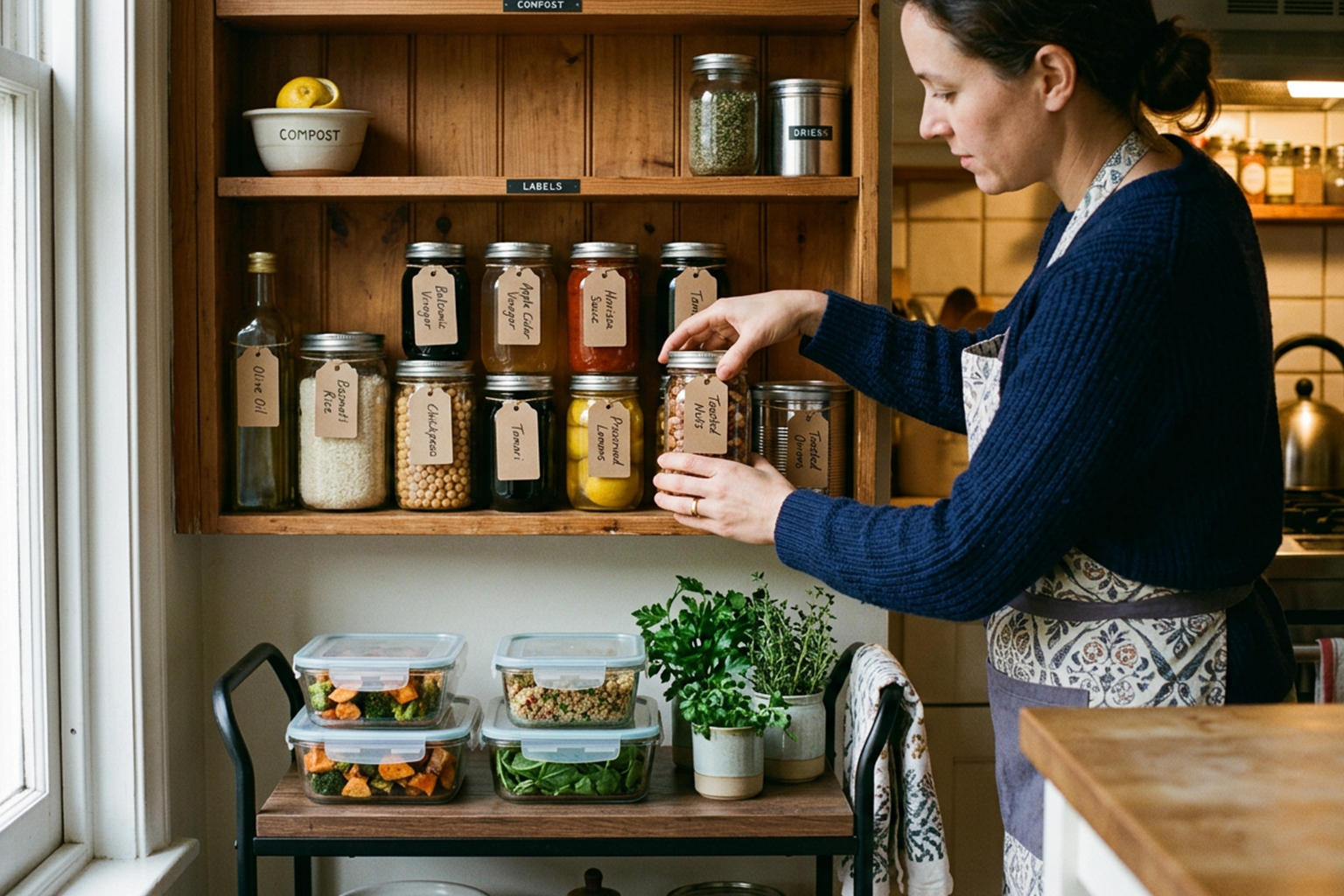
Start by preparing one or two neutral components that can be recombined into different meals. A tray of roasted vegetables, a pot of seasoned grains, or a batch of simply cooked protein gives you quick building blocks. When those pieces are ready, dinners become a matter of assembly instead of full cooking sessions. Aim for textures and flavors that mix well with sauces, herbs, or a handful of fresh greens.
Store portions in clear containers so you can see what you have. Rotate older items toward the front so nothing lingers too long.
Keep a tight staples list and restock smartly
Identify six to ten pantry and fridge items that you use most: a neutral oil, a sturdy grain, a canned legume, one vinegar, two sauces, and a go-to spice blend. Shopping with that short list in mind cuts decision time and prevents oddly incompatible ingredients from piling up. Having a reliable protein option—eggs, tofu, or a frozen fillet—means dinners rarely stall because of missing elements. Replenish these staples on a predictable cadence so they’re there when you need them.
Use a simple note on your phone or a magnet list on the fridge to track what’s low. Replace items before they actually run out to avoid emergency trips.
Master three quick finishing moves
Finish dishes with small touches that brighten and vary flavors: an acid like lemon or vinegar, a crunchy element such as toasted nuts or fried onions, and an herb or soft cheese for lift. These moves take seconds and transform basic combinations into interesting plates. Learn which finishing pair works with your go-to components and keep those toppings accessible. They let you stretch the same base into multiple meals without extra effort.
Reserve a jar or two of prepared toppings and a shelf for fresh herbs. With those in reach, dinners come together faster and feel more intentional.
Time the work and tidy as you go
Block 20 to 40 minutes for evening assembly and cleanup rather than trying to do everything at once. Start with the element that takes longest, then layer quicker tasks while that cooks. Clean a pan or wash a bowl while the oven is on so you’re not left with a sink full of dishes after everyone eats. A small routine of tidy-as-you-go keeps the kitchen pleasant and saves a separate cleaning session later.
Set a simple end-of-meal checklist: clear plates, wipe counters, move leftovers to the fridge. That one habit keeps the next cooking session much easier.
Conclusion
Adopt a few repeatable habits and evening cooking becomes lighter. Focus on prep, a short staples list, quick finishing touches, and steady cleanup. Those modest changes pay off in less stress and better-tasting dinners.
