
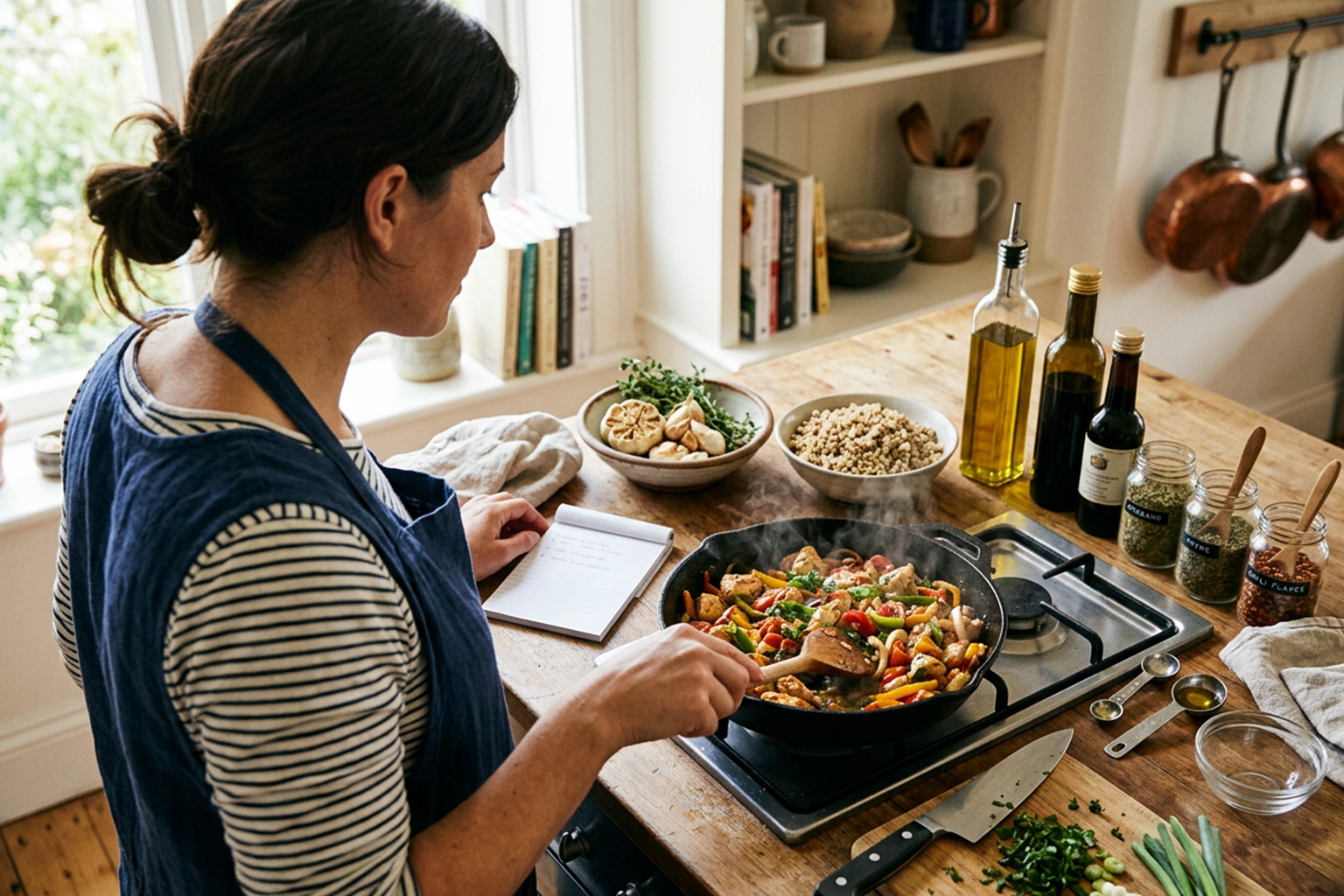
Good cooks develop small reliable habits that consistently lift flavor and reduce stress.
This article outlines practical strategies you can apply every day without elaborate shopping or fancy equipment.
The focus is on planning, ingredient routines, and timing so meals become predictable and satisfying.
Implementing a few simple practices will speed prep, improve taste, and build confidence at the stove.
Plan with Purpose
Start meals with a clear purpose: decide on a main ingredient, a cooking method, and a target time before you begin, and make a rough grocery note to match your plan.
This mental outline shortens decision-making, reduces waste, and helps you pull only the tools and ingredients you need.
Use a flexible sketch for dinner—protein, starch, vegetable, and a finishing element like acid or herb—and favor seasonal or local choices when possible to keep meals interesting.
When you plan purposefully, leftovers, substitutions, and timing become easier to manage, and it frees up creativity within constraints.
Keep weekly goals realistic and repeat successful combinations until they become second nature, and rotate them monthly to keep meals interesting.
Over time these decisions take less effort, you’ll find it easier to experiment, and they yield more consistent results.
Smart Ingredient Habits
Organize your pantry and fridge so frequently used ingredients are visible and accessible, and group like items together for faster grab-and-go prep.
Prioritize a short list of versatile staples—good oil, salt, an acid, a dried herb, and one aromatic—that appear across meals, and adjust that list by season.
Prep small batches of staples like roasted garlic, a quick vinaigrette, or cooked grains to speed assembly, and freeze portions if helpful for busy nights.
Taste as you go and learn the adjustments that bring a dish together, then note your favorite tweaks for future reference.
- Good neutral oil for cooking
- A quality finishing acid (vinegar or lemon)
- A go-to dried herb and an aromatic (garlic or onion)
Set a weekly restock habit and use a running list to avoid gap purchases and check before shopping to avoid duplicates.
Small, steady refills keep meals varied so your weeknight cooking feels effortless rather than stressful.
Time and Tool Strategies
Respect simple timing rules: preheat pans, salt water when boiling, and sequence tasks so nothing crowds the stove, which saves energy and prevents overcooking.
Keep three reliable tools at hand—a chef’s knife, a sturdy pan, and a measuring spoon set—to reduce friction, since a narrow set of reliable gadgets is more efficient than many specialty tools.
Batch similar tasks and clean as you cook to avoid daunting cleanup later, and put used tools directly into a soak basin to simplify washing.
These rhythm-based habits preserve energy, make consistent meals feel effortless, and over weeks become a natural rhythm in your routine.
Use timers and simple checklists for new recipes until the rhythm sticks, and review timers after dishes to refine estimates.
Small preparation wins add up to smoother evenings, and the kitchen becomes a place you trust rather than avoid.
Conclusion
Start with one habit and build from there.
Consistency matters more than perfection when improving home cooking.
These small shifts save time, reduce stress, and improve flavor.

