
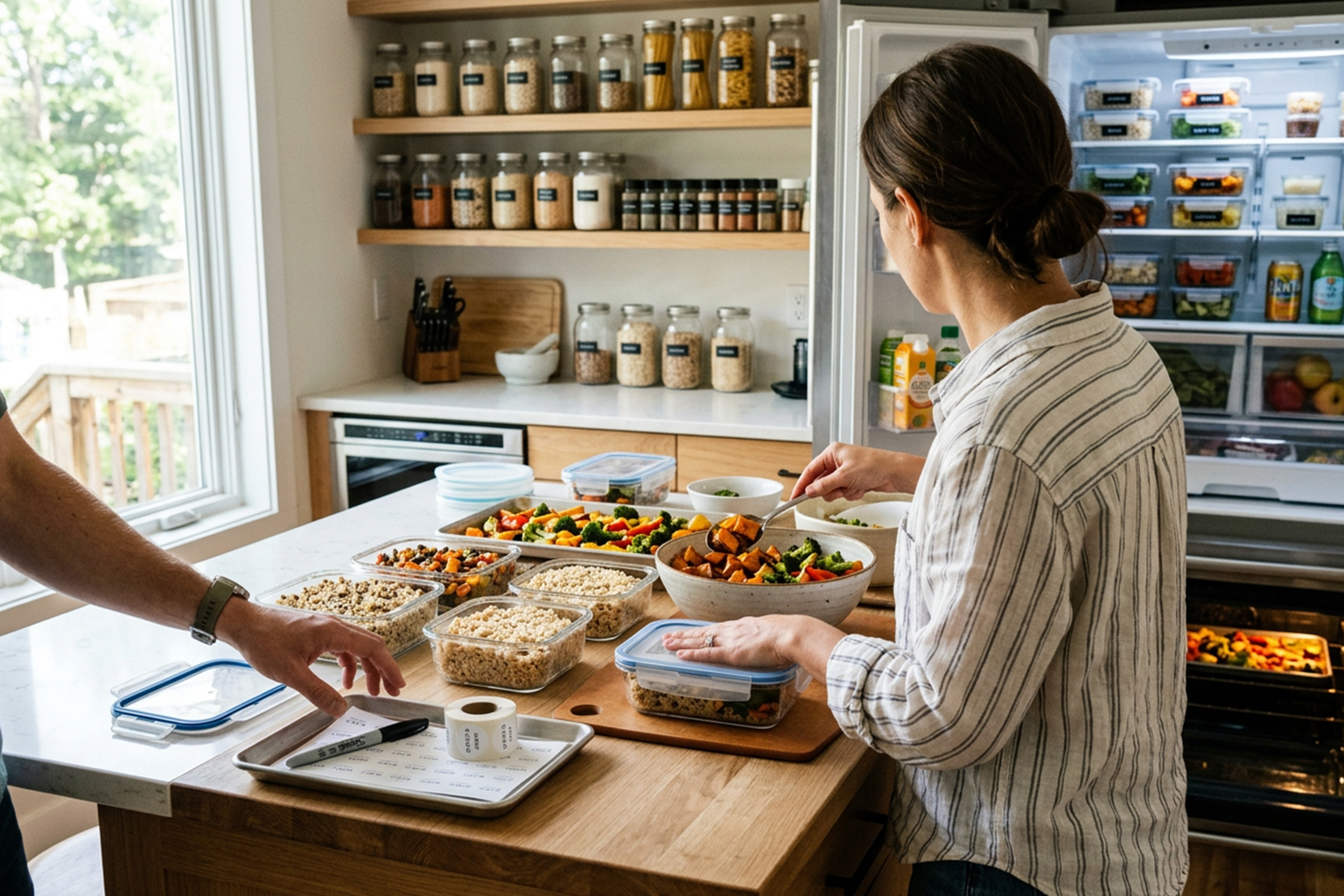
Having a simple, adaptable plan for weeknight cooking reduces stress and helps meals actually happen. A playbook combines a few reliable recipes, staple ingredients, and predictable prep steps you repeat each week. It doesn’t need to be rigid; the goal is to make choices easier and faster while keeping variety. Over time these small systems save time, reduce waste, and boost confidence in the kitchen.
Start with a rotating meal framework
Design a loose rotation of protein, grain, and vegetable combinations you enjoy and can assemble in 30–40 minutes. Think of 6–8 base meals you can vary by sauce, spice blend, or side to keep dinners from feeling repetitive. Keep one vegetarian option and one fast-finish option for busier nights to lower decision fatigue. This framework turns an open-ended question into a few easy choices.
Once you have the rotation, create a simple shopping list template tied to it. That template keeps grocery trips focused and speeds up planning for the week.
Batch and partial prep to shorten nightly work
Set aside one or two prep sessions each week to wash and chop vegetables, cook grains, or portion proteins for later use. Par-cooking ingredients like roasted carrots or cooked beans means dinners often come together in under 15 minutes. Use airtight containers and date labels so prepared items stay organized and usable across several meals. This approach reduces nightly prep to assembly and reheating instead of starting from scratch.
- Cook a double batch of a grain and freeze half for later.
- Make a large braise or sauce that transforms across meals.
- Portion snacks and salad toppings for quick grabs.
Even modest prep sessions pay back time throughout the week and make weeknight cooking feel manageable.
Organize your pantry and fridge for visibility
Arrange frequently used items where they’re easy to see and reach, and keep similar ingredients grouped together. Clear containers, consistent labeling, and a simple first-in, first-out habit make it easy to spot what needs using. A visible pantry reduces impulse buys and makes meal assembly faster because you can find items at a glance. Periodically audit staples so you don’t discover missing ingredients at dinner time.
When staples are abundant and accessible you’ll be more likely to build meals from what you already have. This also trims food waste and late-night grocery runs.
Lean on quick techniques and reliable tools
Master a few fast cooking methods—sheet pan roasting, one-pot sautés, or a quick stir-fry—and pair them with dependable tools like a sharp knife, a heavy skillet, and a covered baking sheet. These techniques deliver good flavor with minimal fuss and adapt to many ingredients. Experiment with a handful of spice combinations and sauces that can change a base meal with little effort. Having these go-to moves makes improvisation straightforward when plans shift.
Tools and techniques that you trust reduce the mental load of cooking and make weeknight meals consistently enjoyable. Over time they become the backbone of your personal playbook.
Conclusion
Build a small, flexible system of meals, prep habits, and storage that fits your schedule and tastes. Focus on repeatable actions that save time and make choices easier each evening. With a compact playbook in place, weeknight cooking becomes more reliable and more enjoyable.

