
Consistent, low-effort kitchen habits are the difference between chaotic weeknights and calm, satisfying meals. Small rituals around prep, storage, and timing help you finish dinner with less stress and more flavor. This article outlines practical shifts you can adopt gradually so that each meal becomes easier to execute. The aim is to build reliable systems, not add chores, so improvements stick over time.
Start with one habit and integrate another every week until the routine feels natural. These changes compound and reduce decision fatigue. Over time they free up mental energy for creativity rather than problem-solving.
Start with a daily mise en place
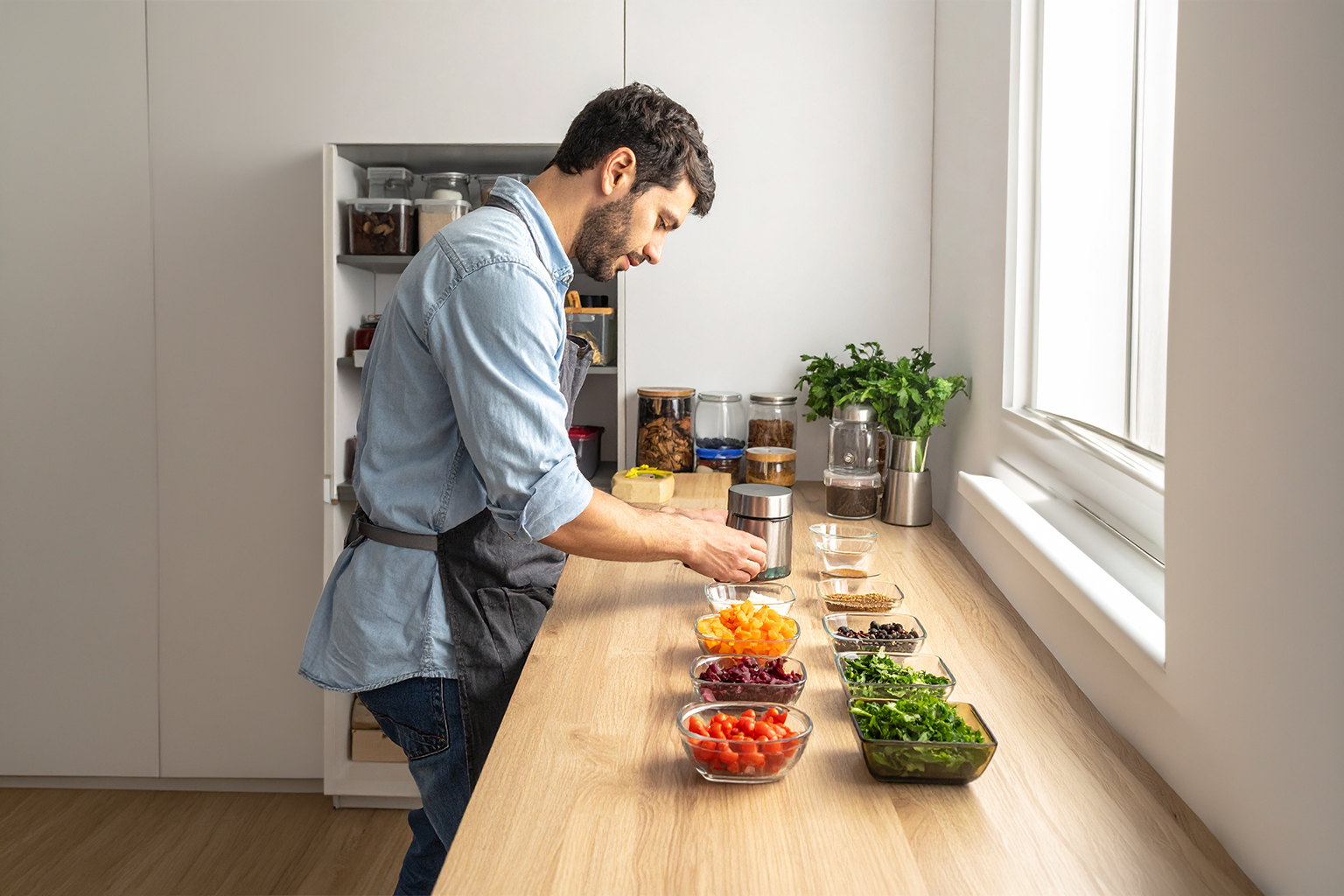
Keeping a short daily mise en place saves time when dinner starts and reduces cleanup at the end of the night. Spend ten minutes in the morning or after lunch to wash produce, measure spices, and portion proteins if possible. Having common ingredients ready means simple recipes come together quickly and uneven cooking is less likely. This practice also reveals missing items early, so you can adapt the plan before dinnertime.
Make the process manageable by limiting it to staples used that week. Over time you’ll learn what prep delivers the biggest payoff for your menu.
Create recipe templates and a rotating menu
Templates let you mix familiar structures with new ingredients to keep meals interesting without reinventing the wheel. Examples include a sheet-pan template, a one-pot grain bowl, and a quick sautéed protein plus veg routine. Each template lists typical cook times and compatible flavorings so substitutions are straightforward. A rotating menu that repeats core favorites reduces daily choice and streamlines shopping.
Customize templates to match your schedule and taste, and treat them as living documents you refine. This approach speeds decisions and maintains variety.
Organize your pantry for speed and clarity
A pantry organized by use rather than by product type makes it easier to assemble meals under time pressure. Reserve a dedicated space for weeknight essentials — oils, canned tomatoes, quick grains, and long-lasting produce — and keep them at eye level. Labeling shelves or using clear containers saves seconds that add up across the week. Periodically audit what you actually cook and remove items that only gather dust.
Simple organization reduces food waste and prevents duplicate purchases. It also makes improvisation less stressful when plans change.
Adopt timed multitasking and rely on a few tools
Effective timing is about overlapping tasks: start a roast, prep a salad while it cooks, and finish with a quick sauce. Use a few reliable tools like a sharp chef’s knife, a sturdy pan, and a timer to simplify execution. Learning small techniques — how to sear evenly, when to rest meat, or how to deglaze — provides big improvements in outcome with little extra effort. Track which tools and techniques save you the most time and prioritize mastering them.
Consistent multitasking reduces idle time in the kitchen and leads to faster, more confident cooking. Over weeks these small shifts become second nature.
Conclusion
Adopting a handful of practical habits transforms weeknight cooking from stressful to steady. Start small, focus on prep, templates, pantry order, and timing, and build from there. Over time you’ll notice meals improve and evenings become calmer.

