
Cooking after a busy day often feels rushed, but a plan-first mindset changes that dynamic.
Small, repeatable choices made earlier reduce decision fatigue and preserve flavor.
This approach emphasizes simple habits you can apply regularly so meals feel more predictable and less stressful.
Below are practical steps to build a calm, efficient evening cooking routine you’ll return to again and again.
Plan and Prioritize
Begin by selecting a set of dependable weeknight meals and rotating them to shorten planning time and simplify shopping.
Focus on ingredients that serve multiple dishes, such as a roasted vegetable, a cooked grain, or a pan-fried protein.
Create a compact shopping list tied to those staples rather than chasing new recipes every night.
A clear plan reduces impulse buys and lowers the chances of missing key ingredients at crunch time.
Prioritizing this way streamlines both the store run and the pantry.
It also gives you room to improvise without scrambling when a schedule changes.
Prep and Portion
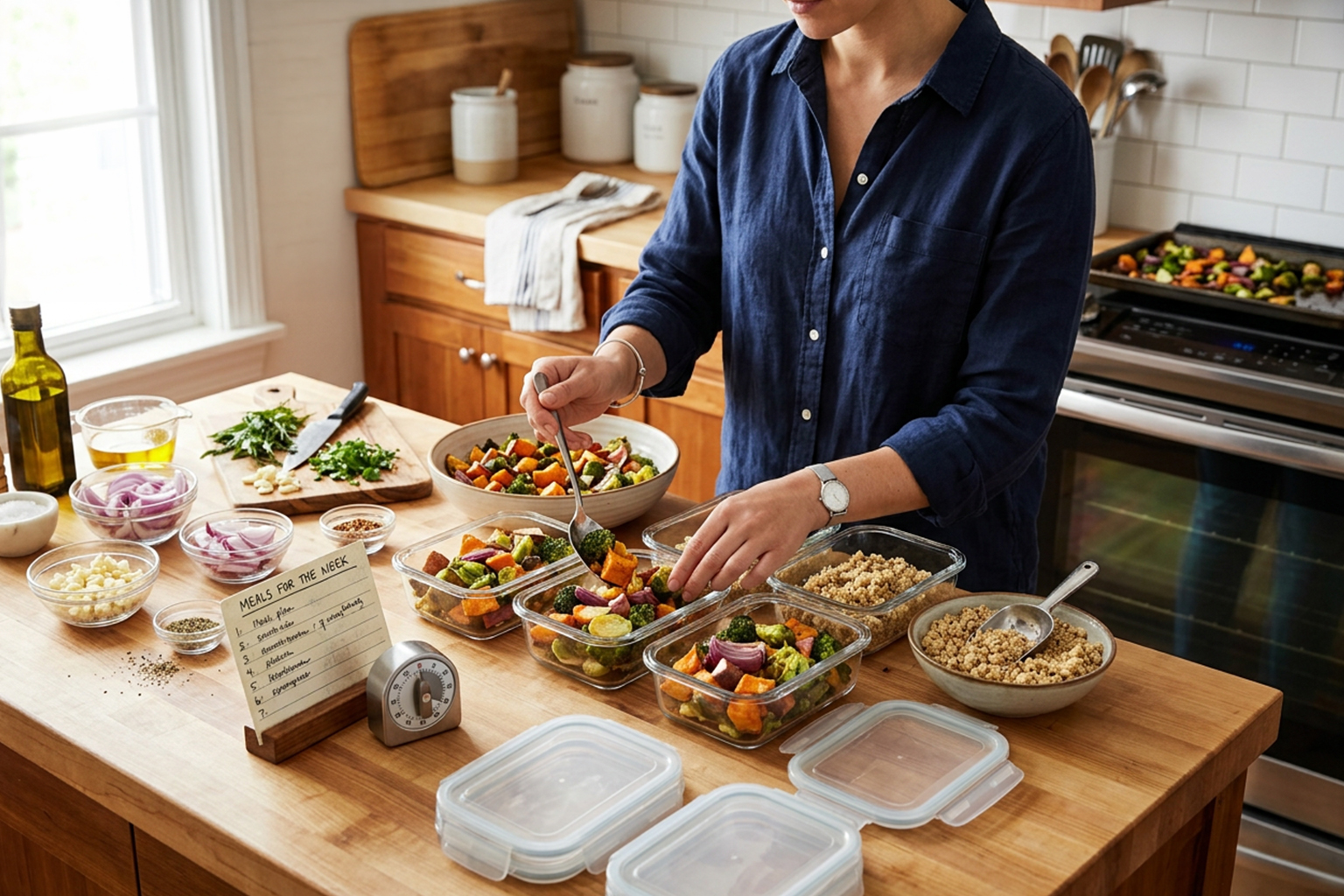
Reserve thirty to ninety minutes once or twice a week to prep components you’ll reuse: wash greens, chop aromatics, roast a tray of vegetables, or cook a grain batch.
Portion cooked items into meal-sized containers to speed reheating and control servings.
Label containers with dates and intended meals so nothing gets forgotten at the back of the fridge.
This habit cuts evening hands-on time and reduces food waste by keeping ingredients visible and ready.
- Pre-cut vegetables for three nights.
- Batch cook one grain and one protein.
- Make a simple sauce or dressing to finish dishes quickly.
Start small: pick one prep task each week and expand as it becomes routine.
Over time, this pays back hours during busy weekdays.
Tools and Timing
Keep a compact set of reliable tools accessible: a sharp chef’s knife, a heavy skillet, a sheet pan, measuring spoons, and a good timer.
Organize tools by task so you reach for what you need without hunting.
Use timers and checkpoints to overlap tasks—while a roast cooks, you can prep salad or quick sides.
Efficient timing turns otherwise wasted minutes into productive steps that shorten total dinner time.
Maintain your tools so they perform when you need them, and clear counter space to work comfortably.
A little organization reduces friction and keeps momentum during cooking.
Flavor Templates
Develop a few flavor templates—acid-herb, umami-roasted, or smoky-spice—that guide seasoning choices across meals.
With templates, you can swap proteins or vegetables and still produce a coherent dish without consulting a recipe.
Keep a small set of pantry enhancers like vinegar, chili flakes, soy sauce, and a fresh herb to finish plates quickly.
These quick decisions ensure consistent results and allow you to adapt to what’s on hand.
Templates simplify improvisation and make intentional tweaks easier.
They also help you teach household members how to finish meals confidently.
Conclusion
Plan-first habits reduce evening stress and make cooking more consistent.
Small, repeatable prep tasks and simple flavor templates save time and build confidence.
Start with one change this week and let the routine grow naturally.

