
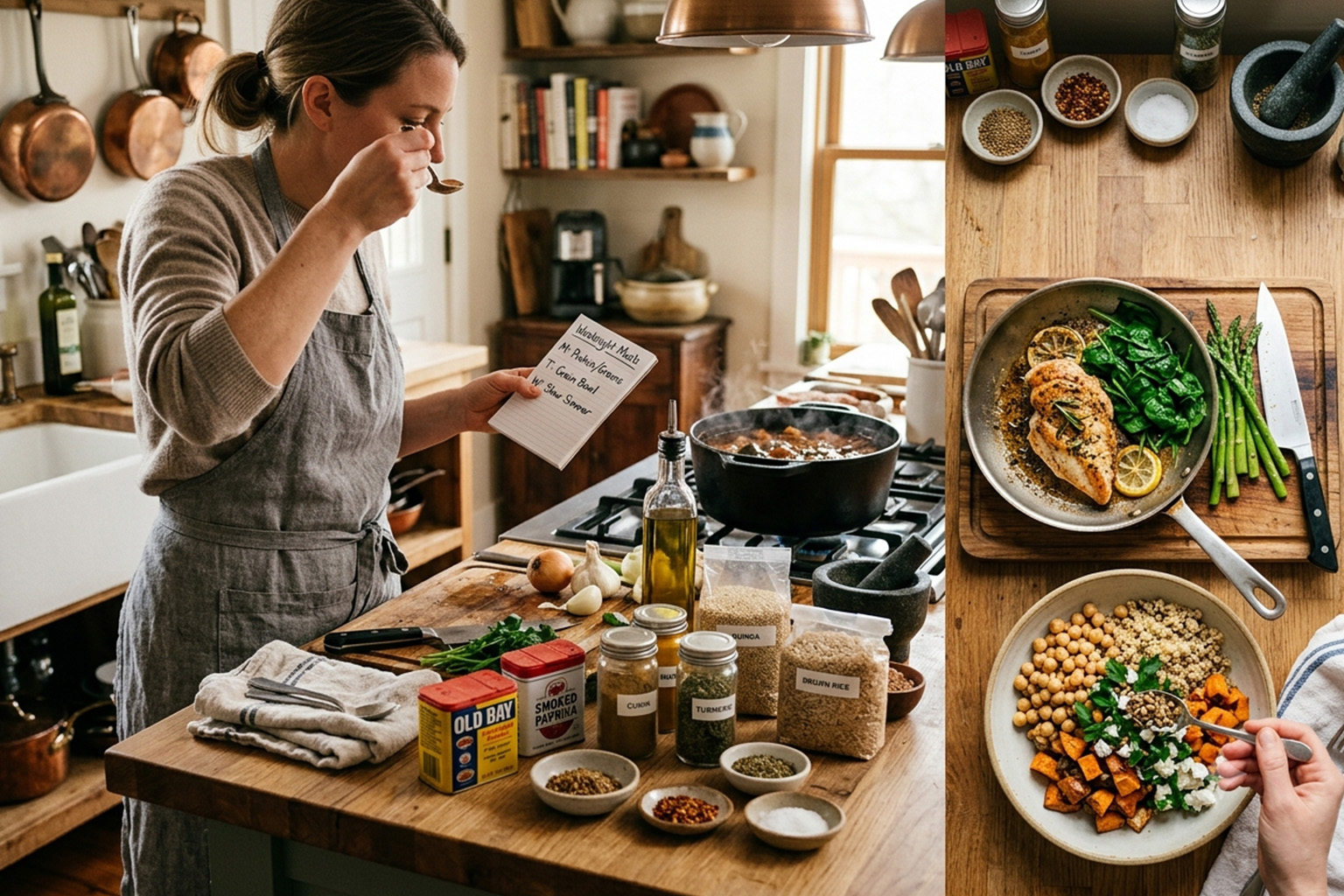
Developing a small set of reliable flavor frameworks makes weeknight cooking less stressful and more consistent. Instead of reinventing each meal, these frameworks guide choices about proteins, starches, and complementary seasonings. They also help you shop more efficiently and use what’s already in the pantry. Over time, they turn into quick templates you can improvise from without losing taste.
Start with Three Base Blueprints
Choose three base blueprints that match your schedule: a quick pan-seared protein with greens, a one-pot grain bowl, and a slow-simmered sauce or stew. Each blueprint defines cooking method, key aromatics, and a compatible starch so you can mix and match ingredients. When you plan a week, slot one or two blueprints per night based on time and energy. Keeping the frameworks narrow makes decisions faster and reduces the chance of an unfinished dinner.
These blueprints act like recipes you already know by heart. They free up attention for tweaking flavors and adding seasonal produce.
Pantry-Friendly Ingredient Groups
Organize staples into groups that reliably pair with your blueprints: shelf-stable proteins (canned beans, tinned fish), quick starches (rice, couscous, pasta), and versatile aromatics (onion, garlic, citrus). That approach lets you assemble balanced meals from a handful of items without extra shopping. When fresh produce is limited, you can still meet flavor and texture goals using these groups. This method reduces waste because each ingredient fits multiple templates.
- Shelf proteins: canned beans, lentils, tuna
- Quick starches: pasta, couscous, pre-cooked grains
- Flavor anchors: stock, soy or miso, vinegar
Rotate items through your templates so nothing stagnates. Simple swaps keep meals interesting while staying predictable.
One-Week Rotation and Time Blocks
Plan themes for each night based on how much time you’ll have: fast, moderate, or slow. A fast night uses 15–25 minutes with a pan-sear blueprint; moderate nights allow for one-pot bowls; slow nights use leftovers or a longer braise. Mapping this rotation prevents overcommitting and balances effort across the week. Use a simple calendar note to track which templates you enjoyed and which you want to tweak.
The rotation reduces decision fatigue midweek. It also makes grocery lists shorter and more intentional.
Tactics to Keep Flavor Consistent
Establish a few go-to seasoning combos like lemon-herb, soy-ginger, or smoked paprika-chile to anchor meals. Measuring and tasting as you cook helps maintain that signature profile across different proteins and vegetables. Batch-prep a concentrated sauce or dressing that can be added to multiple dishes for instant familiarity. Small rituals, such as finishing a dish with acid and a sprinkle of salt, standardize the final taste.
These tactics let you improvise while preserving a dependable flavor identity. Over weeks, they become second nature.
Conclusion
Adopting a handful of flavor frameworks transforms weeknight cooking from guesswork into a manageable creative practice. With simple blueprints, grouped pantry items, and a predictable weekly rotation, dinners become faster and more satisfying. Start small and refine templates as you go.
