
Maintaining regular movement is less about perfect workouts and more about consistent, manageable choices that fit your lifestyle. Small, deliberate routines create momentum and reduce decision fatigue around exercise. By prioritizing variety, recovery, and realistic weekly goals you build a sustainable foundation for fitness. This article outlines practical approaches to planning, quick sessions, and staying consistent.
Plan with Purpose for the Week Ahead
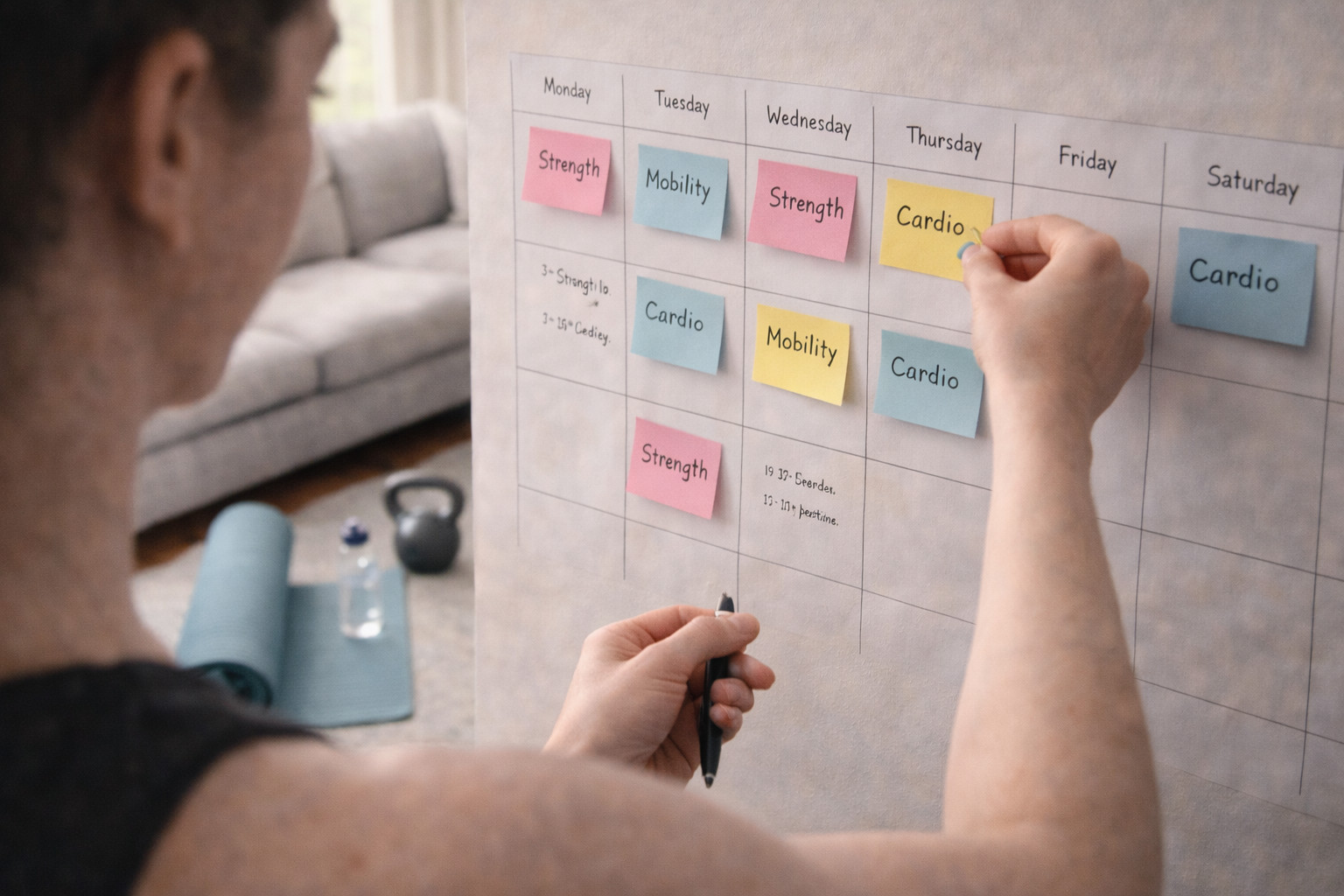
Start each week by mapping three types of sessions: a strength-focused day, a cardio or conditioning day, and a mobility or recovery day. Scheduling these into specific time windows reduces friction and helps you treat workouts like appointments. Keep sessions short when time is tight and progressively increase duration or intensity when you can. Clear, simple plans are easier to follow than ambitious to-do lists that depend on motivation.
Use a single sheet or digital note to track the plan and adjust as needed. Revisit it midweek to adapt around unexpected commitments and preserve momentum.
Quick Strength and Mobility Sessions
Effective sessions don’t require hours in a gym; 20 to 30 minutes of focused work can maintain strength and mobility. Prioritize compound movements—push, pull, hinge and squat patterns—paired with short mobility flows to support joint health. If equipment is limited, bodyweight variations and household objects offer meaningful resistance and variety. Consistency with short sessions often produces better long-term results than sporadic long workouts.
- Sample 20-minute routine: warm-up, 3 circuits of 3 compound moves, brief mobility cool-down.
- Alternate heavier, shorter strength days with lighter, mobility-focused sessions.
- Use tempo or pauses to increase challenge without extra load.
These compact sessions are easy to slot into busy days and offer measurable progress when repeated weekly. Over time, accumulating consistent micro-sessions builds both capacity and confidence.
Consistency, Tracking, and Progressive Adjustments
Track simple metrics like session frequency, perceived effort, and key performance markers such as reps or duration. Data helps identify plateaus and informs small, actionable changes like adding a set, increasing load, or swapping exercises. Build weekly habits by pairing workouts with existing routines—after a morning coffee or before evening screen time—to reduce missed sessions. Regularly scheduled reviews encourage adjustments and reward steady progress.
Celebrate small wins and be flexible on tough weeks; consistency is cumulative and resilience matters more than perfection. Incremental progress maintained over months leads to substantial fitness gains.
Conclusion
Design weekly plans that balance strength, cardio, and recovery with short, consistent sessions. Track simple metrics and make small adjustments to progress without burnout. Prioritize habits that fit your life and allow fitness to become a reliable part of your routine.

