
Weeknight cooking doesn’t need to be frantic to be good. A handful of small, consistent habits can reduce late-afternoon panic and turn ordinary ingredients into satisfying dinners. These practices don’t require fancy gear or elaborate planning—just a little structure and a willingness to repeat a few simple actions. The payoff is steadier meals, less waste, and evenings that feel calmer.
Small habits compound. Over a few weeks you’ll notice fewer last-minute runs to the store, less staring blankly into the fridge, and dinners that actually get served on time. Below are practical habits to try and how to slot them into an evening routine.
Start with a simple meal template
Pick two or three dinner templates you enjoy and repeat them through the week. For example: a grain + roasted vegetable + protein bowl, a sheet-pan chicken dinner, and a one-pot pasta. Templates reduce decisions—when you know the framework, you can shop and prep with purpose instead of improvising under pressure.
- Rotate proteins and vegetables within each template to keep variety.
- Keep one pantry grain and one frozen vegetable on hand for easy swaps.
With templates in place you’ll shop smarter and finish meals faster, because the structure carries you through the rough patches of a busy evening. The result is more consistent cooking and fewer nights of takeout.
Adopt a five-minute evening reset
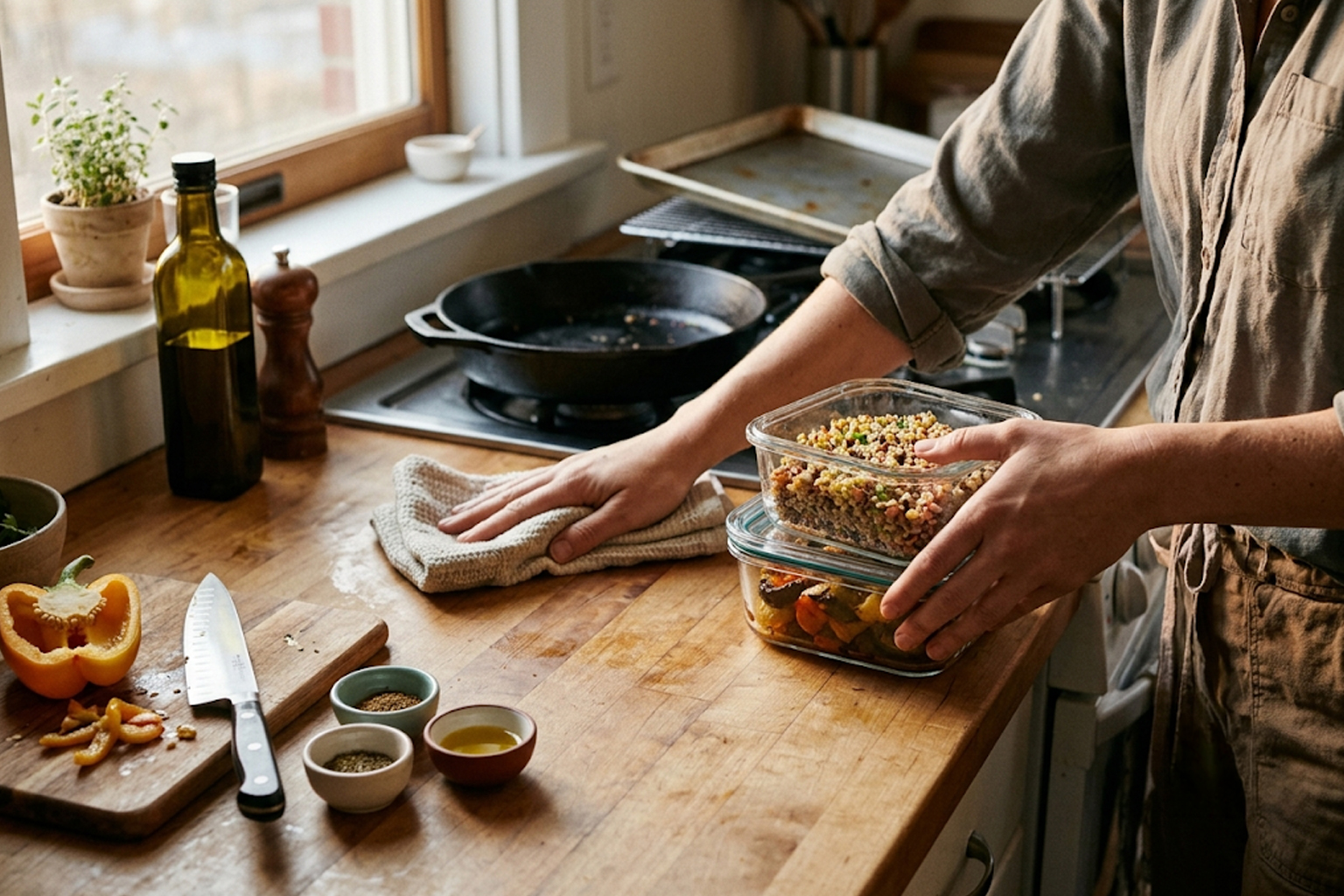
Spend five minutes after dinner tidying the prep area and checking the fridge for what needs using tomorrow. That short reset prevents food from getting lost, and a quick inventory lets you plan the next day’s dinner without scrambling. It’s a tiny habit that stops clutter and reduces waste.
Make it automatic by doing the reset before you sit down to relax. Over time it becomes a steady rhythm: cook, eat, clear, note—then you’re done for the night with a clearer head for tomorrow.
Keep a tiny mise en place habit
Before you start cooking, take three minutes to gather and roughly prep the ingredients you’ll need. Chop one vegetable, measure spices, and set out the cooking oil and tools. This mini mise en place prevents mid-recipe delays and keeps the momentum moving.
It also makes multitasking easier—while something simmers you can finish a quick prep task. The few extra minutes up front save larger interruptions later.
Invest in three small tools worth using
You don’t need a drawer full of gadgets—pick three reliable tools that accelerate your cooking. A sharp chef’s knife, a heavy skillet, and a sheet pan cover most weeknight needs and last for years. Choosing durable, versatile items encourages use and simplifies decisions about what tool to reach for.
- A sharp knife speeds prep and improves results.
- A good skillet browns proteins evenly.
- A sheet pan batches vegetables with minimal fuss.
These tools create leverage: better texture, faster cooking, and fewer excuses to take shortcuts. When equipment helps instead of hinders, habits stick more easily.
Conclusion
Small, repeatable habits reshape the weeknight kitchen more than sporadic big efforts. Choose a couple of these practices, try them for two weeks, and keep what works. The steady gains add up to calmer evenings and more reliable dinners.

