
Finding time for strength training can feel impossible with a busy schedule.
Small, focused workouts can deliver meaningful gains when planned with intent.
This article outlines practical approaches to design short sessions that fit busy lives.
You will learn simple programming, recovery tips, and ways to stay consistent.
Why brief strength sessions are effective
Short workouts work because they reduce barriers to starting and allow for higher consistency over weeks and months. When intensity and movement selection are prioritized, even twenty minutes can stimulate strength adaptations through progressive overload. Frequent, short sessions also permit better technical focus and quicker recovery between efforts. The key is selecting exercises that provide the most return for time invested.
By concentrating on compound lifts and controlled progression, sessions remain efficient and productive. This approach minimizes wasted time and preserves training quality across busy weeks.
Designing a time-efficient routine
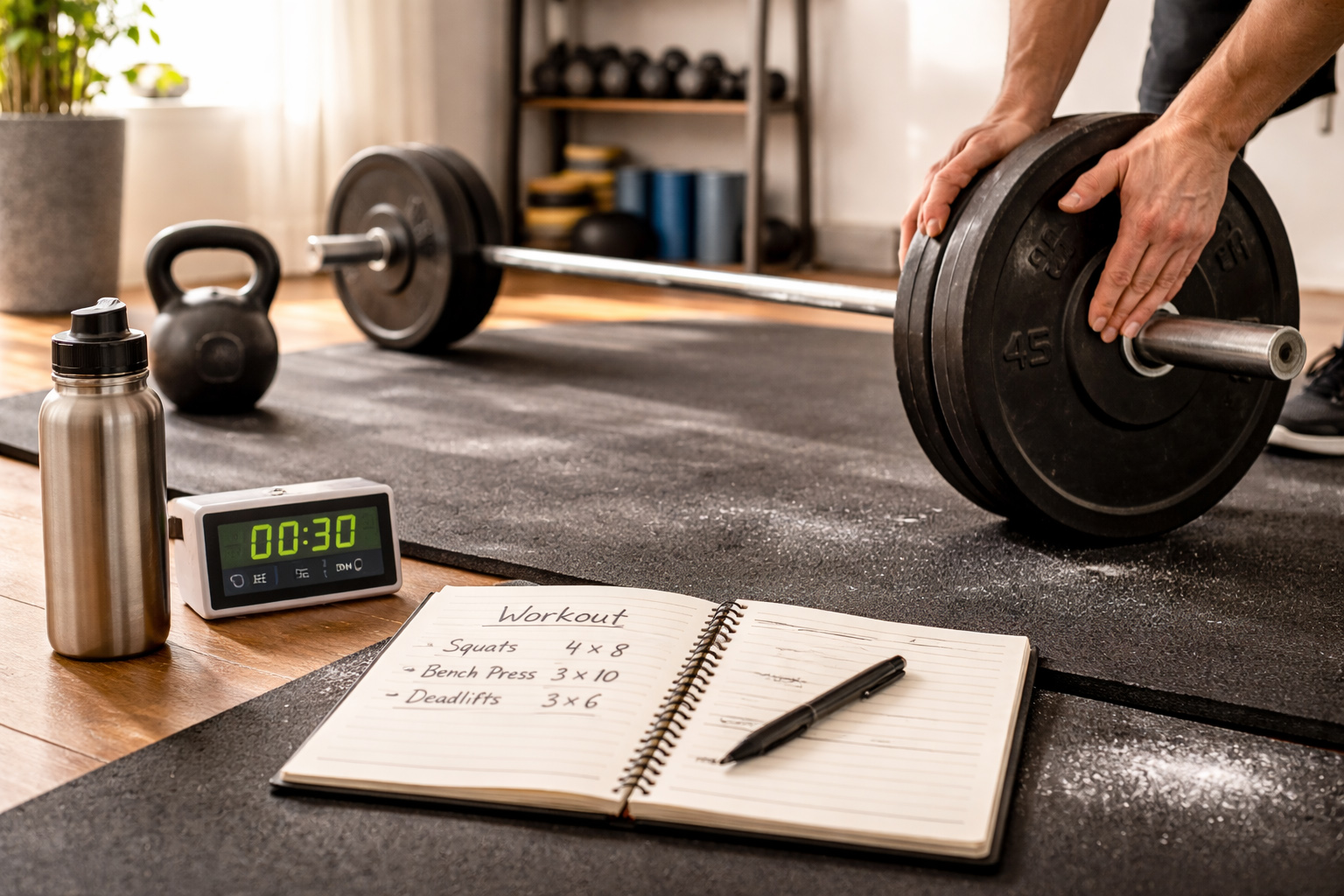
Choose two to four compound movements that target major muscle groups and rotate focus across sessions. For example, pair a push, a pull, and a hinge or squat variation to cover the body effectively. Use 3–6 sets of 4–8 reps for strength emphasis, or 8–12 reps for a mix of strength and hypertrophy depending on goals. Keep rest intervals appropriate for the intensity: shorter for higher-rep work, longer for maximal lifts.
Structure each session with a brief warm-up, the main working sets, and one accessory movement if time permits. Consistency in this simple template helps ensure progressive improvements without long training sessions.
Progression, recovery, and tracking
Track load, sets, and reps to ensure small, measurable progression each week. Increasing weight, adding a set, or improving form are practical progression methods that fit short sessions. Prioritize sleep, nutrition, and mobility to support recovery between frequent, brief workouts. When recovery is limited, reduce volume or modify intensity rather than skipping sessions altogether.
Regular assessments every 4–6 weeks help you adjust volume and intensity and keep motivation high. Small wins compound over time when workouts are consistent and monitored.
Conclusion
Short, focused strength workouts offer a practical path to steady progress when time is limited.
Consistency and smart exercise selection multiply the impact of brief sessions.
Apply simple progression and recovery strategies to maintain growth and avoid setbacks.
