
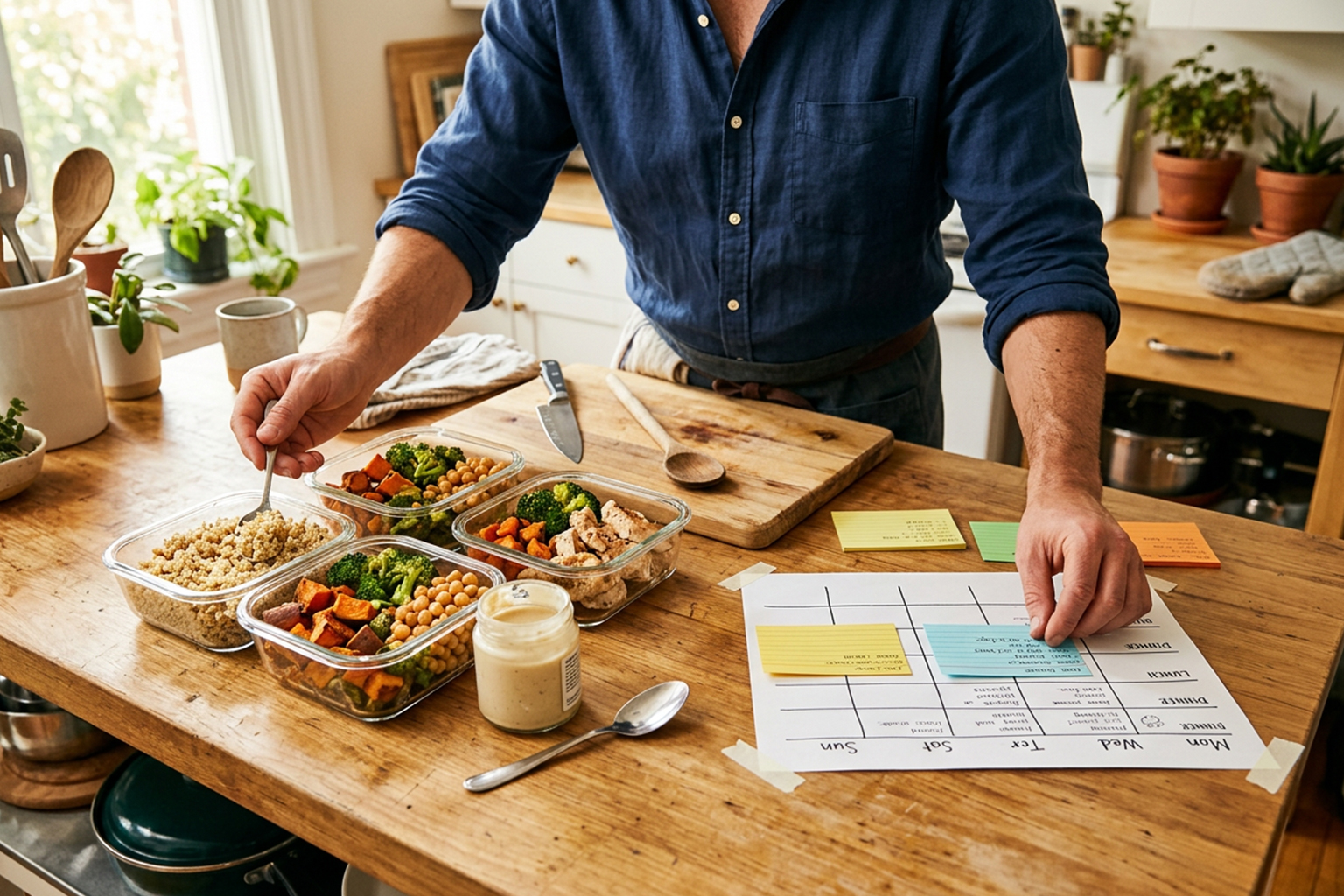
Creating a reliable, low-stress approach to home cooking starts with a few clear building blocks.
You don’t need elaborate plans to get consistent, tasty dinners on the table.
Small, repeatable systems reduce decision fatigue and make flavor easier to manage.
This article outlines practical frameworks you can adapt to your schedule and tastes.
Structure Your Weekly Framework
Start by mapping the week into simple meal types: quick, moderate, and make-ahead nights. Choose 2–3 protein and vegetable combinations you enjoy and rotate them across those slots so planning is predictable. Allow one night for leftovers or flexible orders to avoid pressure when schedules shift. Over time this framework shortens grocery lists and clarifies what to cook each day.
- Quick nights: 20–30 minutes, minimal chopping.
- Moderate nights: one-pot or sheet-pan meals that take 45–60 minutes.
- Make-ahead: braises, stews, or grain bowls prepared earlier in the weekend.
Having labeled meal types makes choosing recipes faster and grocery runs leaner. Consistency in structure also helps family members know what to expect.
Prep That Matches Your Schedule
Identify one or two prep tasks that yield the biggest time savings and fit them into your routine. Examples include washing and chopping vegetables, cooking a batch of grains, or portioning proteins for freezing. If mornings are busy, shift prep to a 30–60 minute weekend slot instead. The goal is not perfection but predictable progress that supports weekday cooking.
Align prep with habits you already have, like listening to a podcast or clearing the table. When prep feels doable, it becomes sustainable and actually reduces stress during the week.
Use Small Tools and Simple Menus
A few reliable tools and templates can transform how efficiently you cook without adding complexity. Keep one flexible grain, two sauces or dressings, and a handful of spices that pair well with most proteins. Useful tools tend to be space-efficient: a sharp knife, a good sauté pan, and a baking sheet go a long way. Templates let you mix and match ingredients while preserving flavor and variety.
- Templates: grain bowl, stir-fry, sheet-pan roast.
- Sauces: a vinaigrette, a simple tomato sauce, and a soy-based glaze.
Simple menus and a few dependable tools reduce friction and invite creativity without overwhelming you. Over time these small choices compound into reliably better weeknight meals.
Conclusion
Implement a weekly framework that reflects your life and tastes.
Prioritize one or two prep habits that save real time.
Use a few templates and tools to keep meals varied and manageable.
