
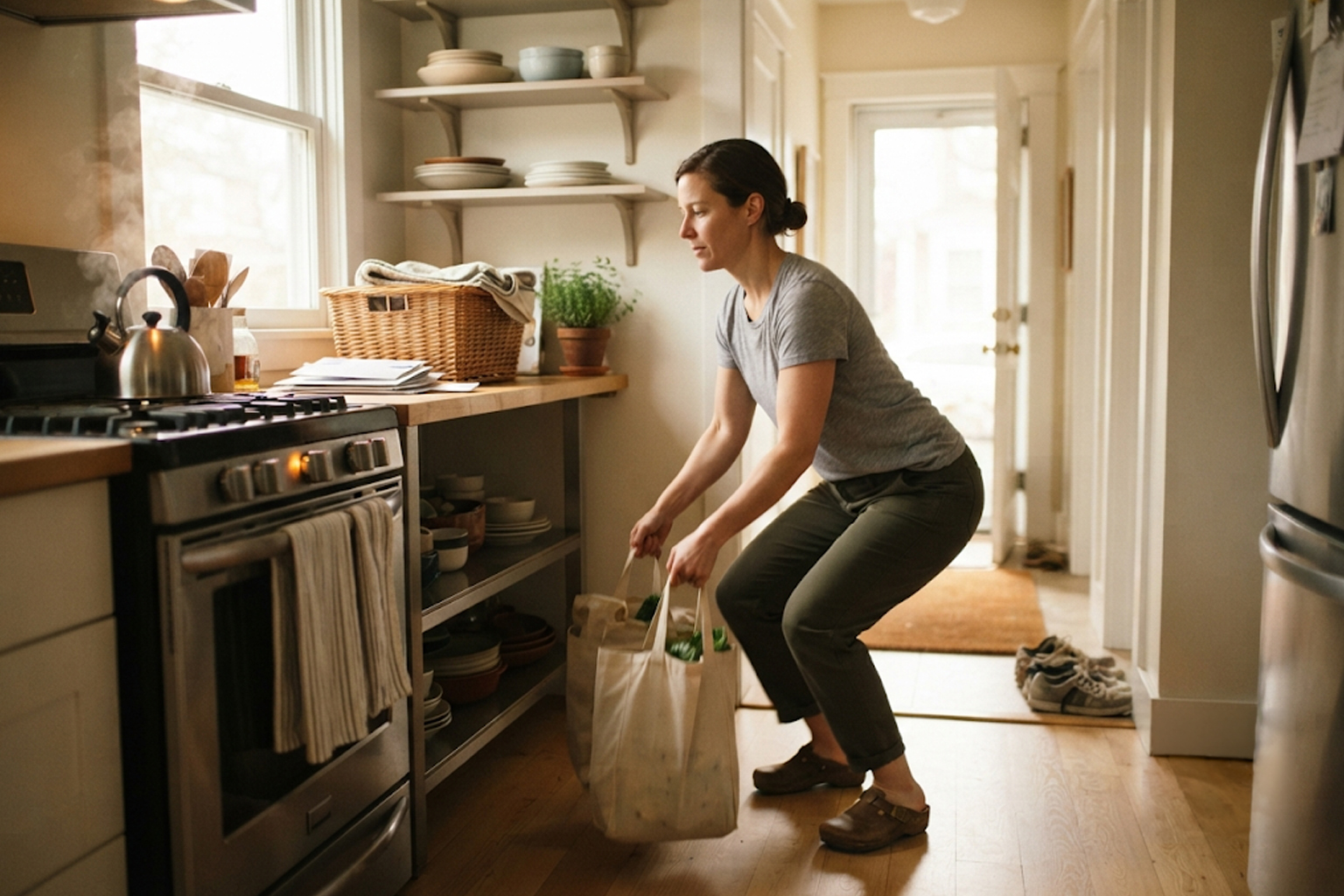
You don’t need long gym sessions to keep getting stronger; you need a plan that fits the life you already have. Small, intentional efforts added into everyday tasks accumulate faster than occasional intense workouts. This article shows practical ways to turn routine moments—laundry, waiting for the kettle, carrying groceries—into reliable strength work. The goal is consistent, measurable progress without rearranging your whole schedule.
Use short resisted movements throughout the day
Resisted movements take almost no time and can be done wherever you are standing or sitting. A single 20–30 second set of slow, controlled squats, calf raises, or isometric holds troubles your muscles enough to stimulate adaptation if repeated a few times daily. Focus on quality: steady tempo, full range of motion, and breathing. Track which moves you repeat so you can gradually add reps or make them harder.
- Wall sits while brushing teeth: 20–40 seconds.
- Calf raises during phone calls: 15–20 reps per set.
- Countertop single-leg balance holds: 20–30 seconds each side.
These small sets are discreet and low-impact, so they’re easy to repeat. Over weeks they build strength and stability without taking more than a few minutes per day.
Turn household chores into brief strength circuits
Chores already create movement opportunities—use them to load muscles in useful ways. Carry laundry baskets with an upright posture and do controlled descents into a chair when folding; loaded carries from the car to the kitchen are a functional strength exercise. Keep a timer or habit cue: three chores done with intentional form equal a short workout. This reframes tasks as productive training rather than chores plus exercise.
- Grocery bags: two trips across the house as farmer carries.
- Vacuuming: lunge one side for a room, then switch.
- Bringing in shopping: pause for deep squats between trips.
These tweaks raise daily load without requiring extra appointment time. They also improve movement patterns you use every day.
Prioritize windows of energy rather than fixed times
Some days you have a strong hour and other days you have five spare minutes—plan for both. Choose two windows you can realistically use: a short one for mini-sets and a longer one for a 15–20 minute focused routine. When energy is low, pick one or two high-impact moves; when energy is high, string more sets together. This approach keeps momentum and prevents all-or-nothing thinking.
Adapting to how you feel makes consistency achievable and reduces missed sessions. It also helps you increase volume gradually without burnout.
Conclusion
Small, intentional actions folded into daily life produce steady strength gains over time. Focus on form, repeatability, and slight progressive overload so those short efforts compound. Treat ordinary tasks as training opportunities and consistency will follow.

