
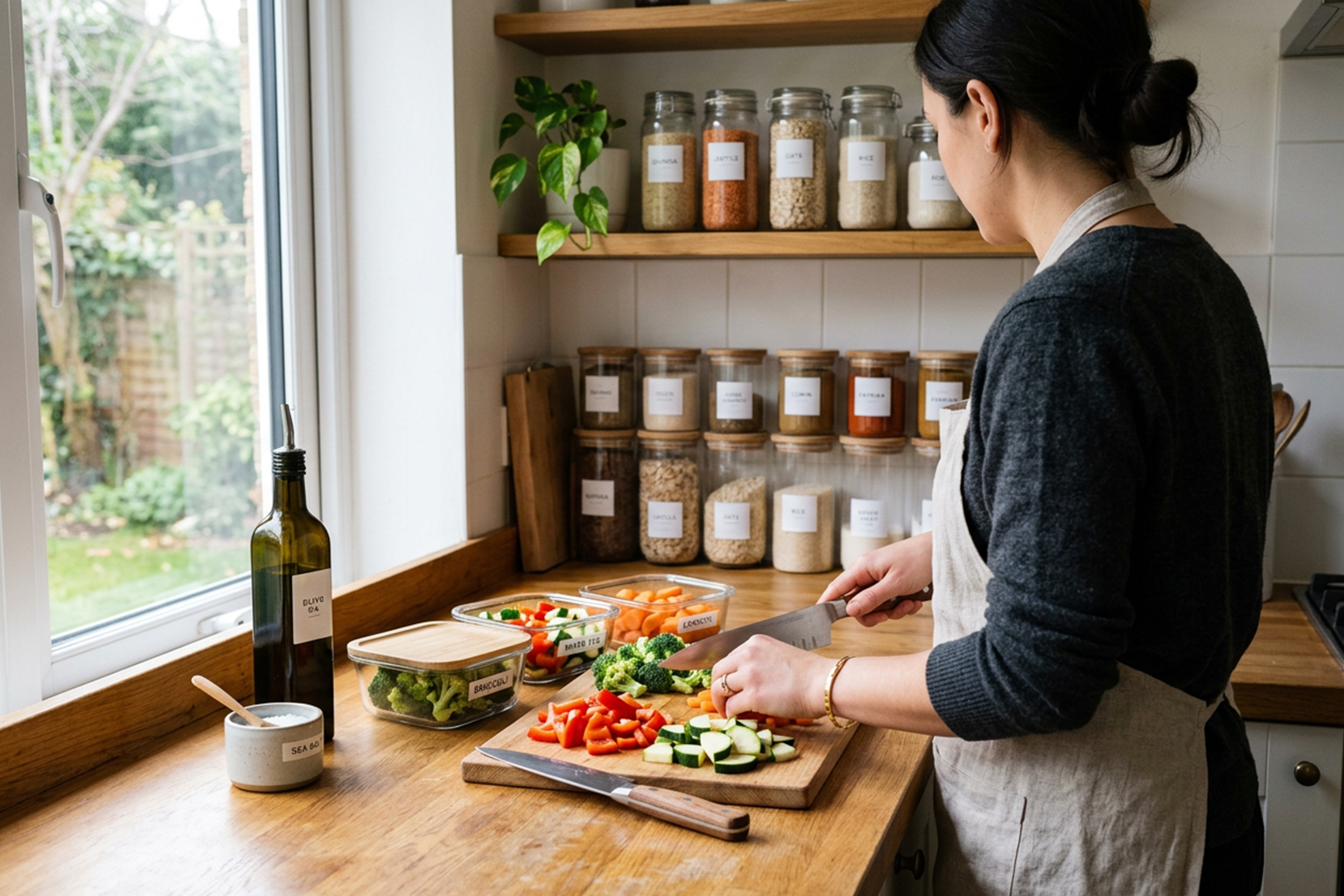
Minimalist cooking isn’t about denying flavor; it’s about reducing friction so you cook more often. By choosing a few reliable methods and ingredients, you shrink decision fatigue and speed preparation. Small rituals, clear storage, and repeatable recipes create space for creativity without chaos. Over time those choices compound into consistent, satisfying meals you can make on any weeknight. This approach favors clarity over complication and helps meals feel manageable.
Start with a simple prep ritual
A short, consistent prep ritual sets the tone for the week. Reserve 20–30 minutes after shopping to wash, trim, and portion vegetables and proteins, plus label any batches. Pre-measured staples like grains, spices, and dressings reduce daily decisions and speed cooking. Include simple sauces or dressings ready to finish meals. These steps make weeknight dinners feel fewer steps than they are.
Stick to the same few tasks initially and adjust only when they prove unnecessary. The goal is habit, not perfection. Reassess once a month to refine.
Organize ingredients and tools by frequency
Organize your pantry and tools around how you actually cook. Keep everyday items—olive oil, salt, a chef’s knife, a cutting board—within arm’s reach and less used gadgets tucked away. Group similar ingredients so you can scan shelves quickly and build meals from what’s visible. Clear containers and simple labels help you assess stock at a glance. Rotate stock regularly to avoid waste and keep flavors fresh.
- Everyday essentials: oils, salts, versatile grains
- Frequent tools: skillet, saucepan, cutting board
An accessible layout reduces friction at the point of cooking. It also makes grocery lists and restocking simpler. This setup helps when planning meals for the week.
Use repeatable menus and flexible recipes
Repeatable menus and flexible recipe templates are the backbone of minimalist cooking. Build a handful of base preparations—roasted vegetables, a braised protein, a simple grain bowl—and learn a few quick swaps for seasonality. Templates allow you to improvise without starting from scratch and make leftovers intentional rather than accidental. Over time you’ll discover combinations that suit your tastes and schedule. Batch-cook components when time allows so assembly on busy nights is quick.
- Swap proteins: beans, chicken, tofu
- Grain base: rice, farro, or quinoa
- One-pan approach: roast, sauté, finish
Use those templates as guidelines rather than rules and adapt as you learn. This creates reliable meals while keeping the process enjoyable. Adjust portions as you learn what you use most.
Conclusion
Adopting a minimalist cooking routine simplifies choices and improves consistency. Small, repeatable habits reduce stress and save time across the week. Start modestly and scale systems that fit your kitchen and lifestyle.

