
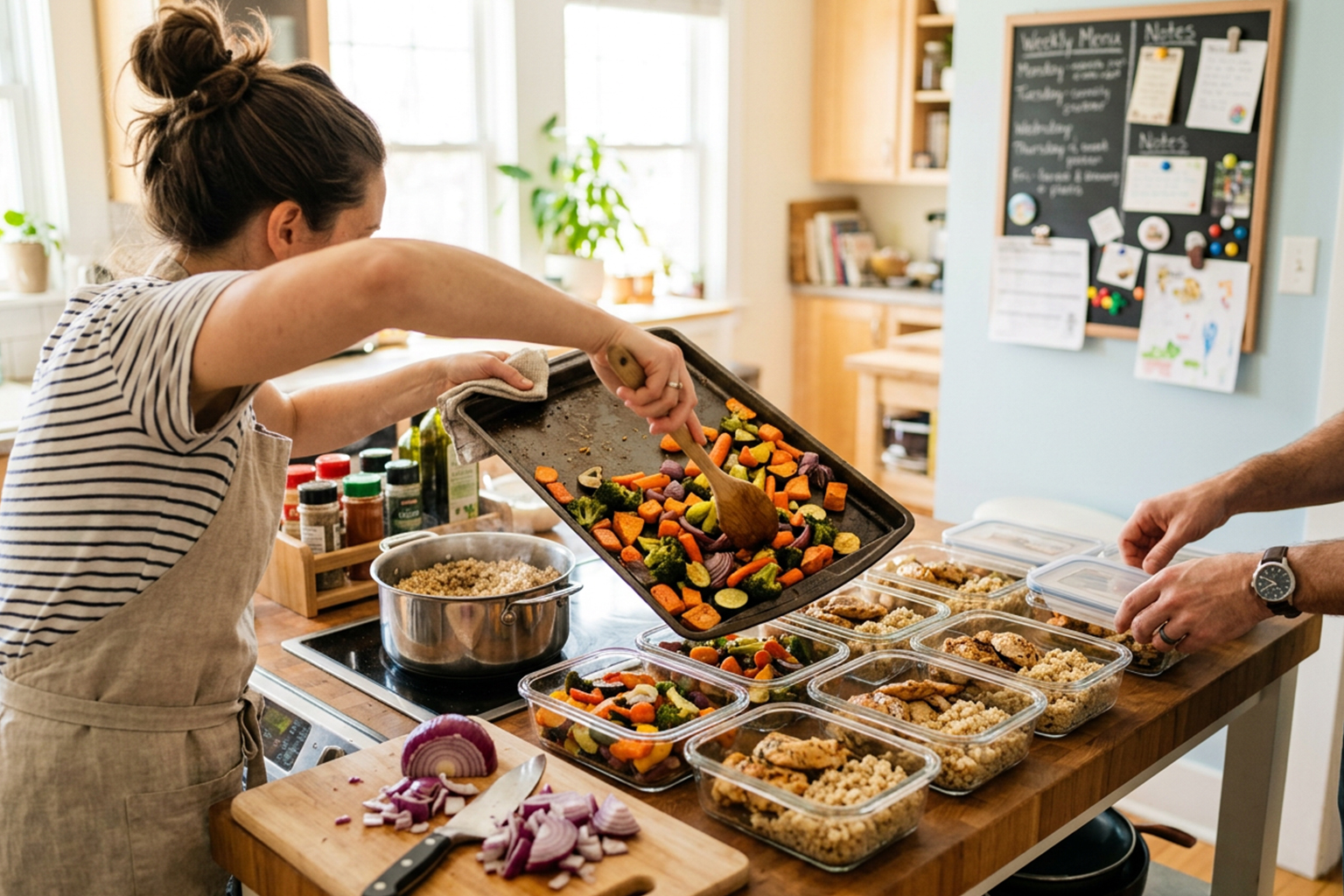
Many home cooks feel stretched at the end of a busy day, and a small, repeatable workflow can change that. Prioritizing a few reliable steps reduces decision fatigue and keeps meals consistent without extra stress. This approach focuses on planning, light prep, and organized tools rather than elaborate recipes every night. Over time these habits compound into faster, more enjoyable evening cooking sessions.
Plan Your Weekly Framework
Start by mapping a loose weekly plan that groups similar tasks and ingredients into themed nights so shopping and prep become predictable. Choose two proteins, a roasted vegetable option, and a grain or starch to mix and match across four to five nights of meals. Block a short planning session once weekly to check perishables and note flexible leftovers nights you can use when plans change. This framework lowers nightly decisions and makes grocery trips efficient by reducing impulse buys and duplication.
Stick to broad templates rather than rigid menus so you can swap items based on what’s fresh or on sale. Templates also help family members understand the rhythm and contribute in small ways.
Prep Habits That Save Time
Identify three prep habits that produce the most payoff and do them reliably: wash and chop a few vegetables, cook a grain batch, and roast or braise a protein component. These tasks can be done in a single 30–45 minute window and unlock several quick dinners during the week. Keep staples ready in labeled containers so assembling a meal is mostly reheating and combining. The goal is not perfection but usable building blocks that make weeknight decisions manageable.
- Batch-cook grains for 3–4 days.
- Pre-chop versatile veggies like onions and peppers.
- Make a simple sauce or dressing base to finish dishes quickly.
When prep is habitual, even small leftovers or pantry items can become the basis of a satisfying meal. Consistency in these habits creates a low-effort safety net for busy evenings.
Tools, Zones, and Simple Organization
Arrange your kitchen so common tools and ingredients live near where you use them: knives by the cutting board, frequently used spices near the stove, and meal containers within reach of the prep counter. A designated cooking zone reduces motion and clears mental clutter, which speeds work and reduces errors. Keep a small, visible list or whiteboard for midweek needs and a clear spot for completed prep so nothing gets forgotten. Low-cost organizers, clear containers, and consistent labeling make it easier to maintain order without extra effort.
Periodic five-minute resets after dinner preserve the system and protect your next cooking session from unnecessary chaos. Small investments in setup multiply into less nightly friction.
Conclusion
Adopting a simple workflow transforms stressful evenings into predictable routines. Small, repeatable steps—planning, minimal prep, and organized spaces—have outsized impact over time. Start with one habit and build gradually to create calmer, more efficient weeknight cooking.

