
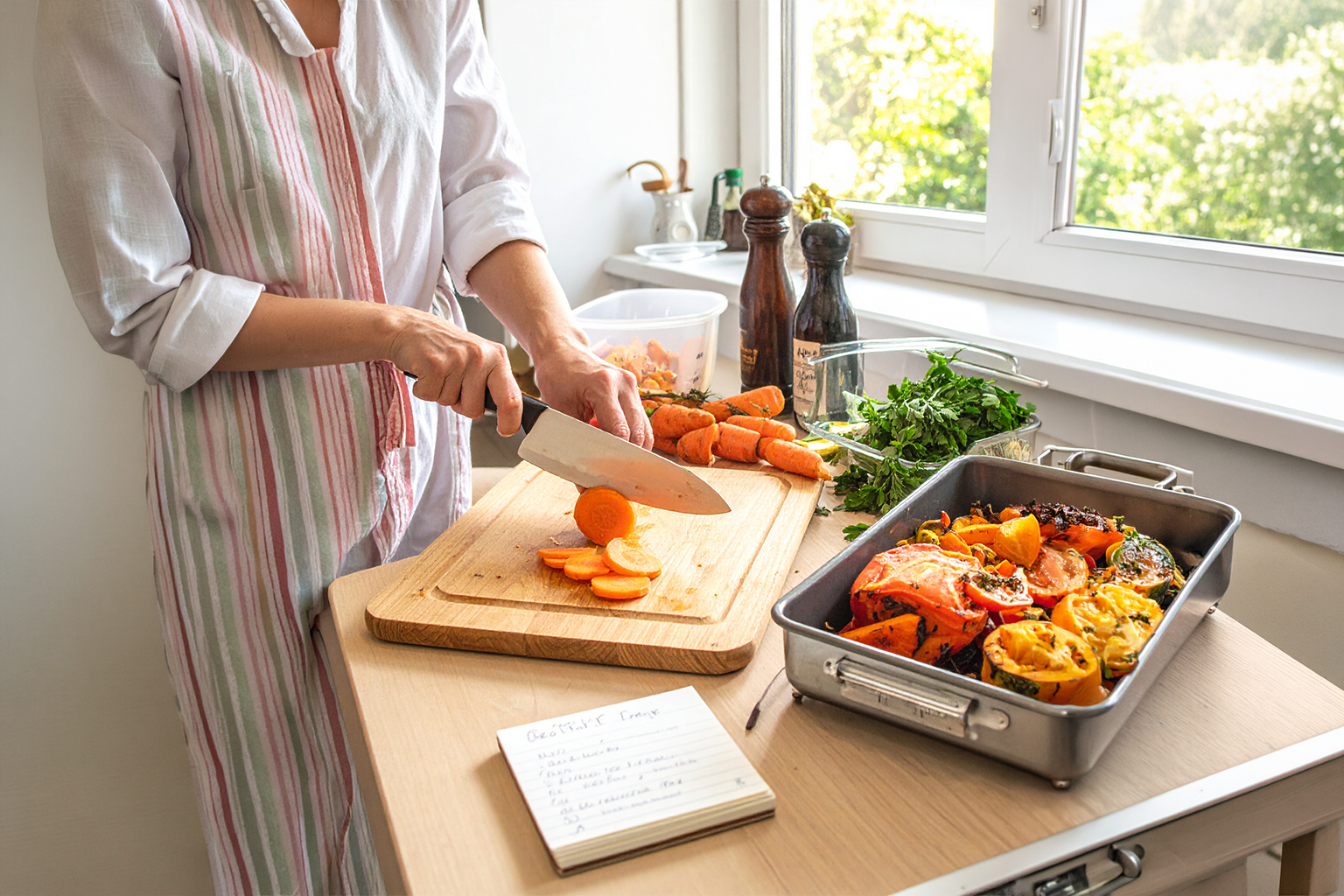
Small, reliable habits in the kitchen have an outsized effect on how meals feel and how often you enjoy cooking. Over time, modest routines reduce decision fatigue and make flavors more consistent. This article outlines practical habits that slot into a busy life without adding stress. The goal is to help you cook more often and with greater confidence.
Set a Simple Weekly Rhythm
Establishing a weekly rhythm means assigning easy tasks to predictable days, such as planning on Sundays and shopping on Mondays. That structure turns big, vague chores into bite-sized responsibilities and creates a dependable foundation for meal choices. When planning, prioritize three to five core meals you enjoy and rotate them rather than inventing new recipes every night. This makes grocery lists shorter and reduces the mental load before dinner.
Keep the rhythm flexible so it adapts to social plans and leftovers. A stable pattern gives you a starting point and frees up creative energy for occasional new dishes.
Prep Smart, Not Excessively
Effective prep focuses on the few tasks that save the most time: washing and chopping vegetables, cooking a grain, or roasting a tray of seasonal vegetables. Aim for 20 to 60 minutes of focused prep once or twice a week rather than long, exhaustive sessions that feel like work. Store prepped ingredients in clear containers so you can quickly identify what’s available and plan around it. Simple labels with dates help reduce waste and encourage timely use.
Prioritize items that combine well across meals, such as roasted carrots, cooked beans, or a neutral grain. This approach helps you assemble healthy meals quickly without relying on takeout.
Organize for Flow
Design your kitchen layout and storage so the items you use together are near each other: cutting boards and knives close to prep space, oils and frequently used spices near the stove. Clear, consistent zones for prepping, cooking, and plating reduce movement and speed tasks. Keep a small, visible notepad or digital list for items to restock and for last-minute ideas to try. Good organization reduces friction and makes it easier to maintain other habits over time.
Regularly revisit your setup and remove items you no longer use. Incremental tweaks keep the kitchen functional and aligned with how you actually cook.
Conclusion
Adopting a few targeted habits makes home cooking more predictable, efficient, and enjoyable. Start with one change, such as a weekly rhythm or simple prep session, and build from there. Over weeks, these small shifts compound into confident, consistent meals you look forward to preparing.

