
Home cooks juggle limited time and high expectations most evenings.
Small, repeatable strategies can reduce stress while improving flavor and consistency.
This article outlines practical approaches that fit into busy schedules without requiring a full kitchen overhaul.
Implementing a few habits each week makes dinner smoother and more enjoyable.
These modest changes are easy to maintain and scale over time.
Plan Your Weekly Meals
Begin each week by sketching a simple meal map that balances proteins, vegetables, and one-carbohydrate options. Choose two main recipes and three quick variations you can rotate to avoid decision fatigue. Prepare a consolidated shopping list organized by store section to speed errands and reduce forgotten items. A realistic plan focused on variety rather than perfection keeps effort manageable and results reliable. Leave a flexible buffer for nights when plans change.
Test the plan one week and adjust quantities and timing based on actual appetite and schedule. Small refinements let the system fit your household instead of forcing extra work.
Optimize Ingredients and Tools
Keep a short list of reliable pantry staples and fresh ingredients that support multiple recipes. Label containers and use clear storage order so you can spot what needs replenishing at a glance. Invest in two or three versatile tools — a sharp chef knife, a good skillet, and a covered roasting pan — that reduce prep and cleanup time. Quality basics often speed cooking more than specialized gadgets. Rotate staples seasonally to keep meals interesting and aligned with produce cycles.
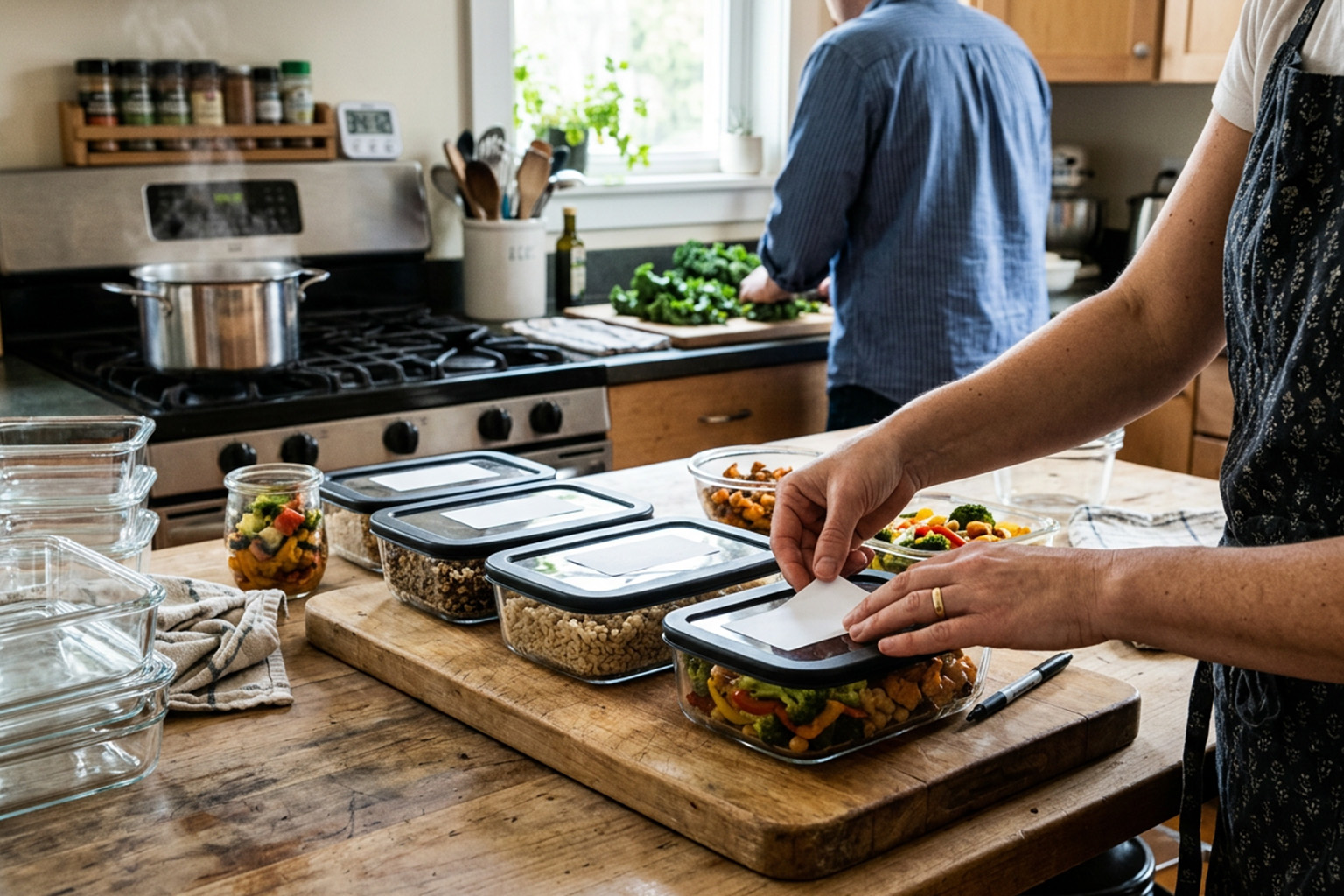
Batch-cook staples like grains, legumes, and roasted vegetables once or twice weekly to shorten nightly assembly. Freezing portions and clear labeling help you pull meals together on tight evenings.
Build Quick Cooking Habits
Build short habits that shave minutes off prep, such as trimming and storing mise en place during weekdays. Use timers and overlapping tasks: start a sauce while a grain cooks and roast vegetables during simmering. Simplify seasoning by crafting a few go-to spice mixes or sauces to finish dishes consistently. Teaching household members simple repeatable tasks multiplies these gains and reduces solo workload.
Track small wins for a few weeks and celebrate them to reinforce the new behaviors. Over time these micro-habits compound into noticeably easier, tastier weeknight cooking. Over time you will notice evenings feel less rushed.
Conclusion
Adopt one or two strategies this week and observe how they change your evenings.
Practical systems reduce stress and leave room for creativity.
Consistency, not perfection, is the goal.

