
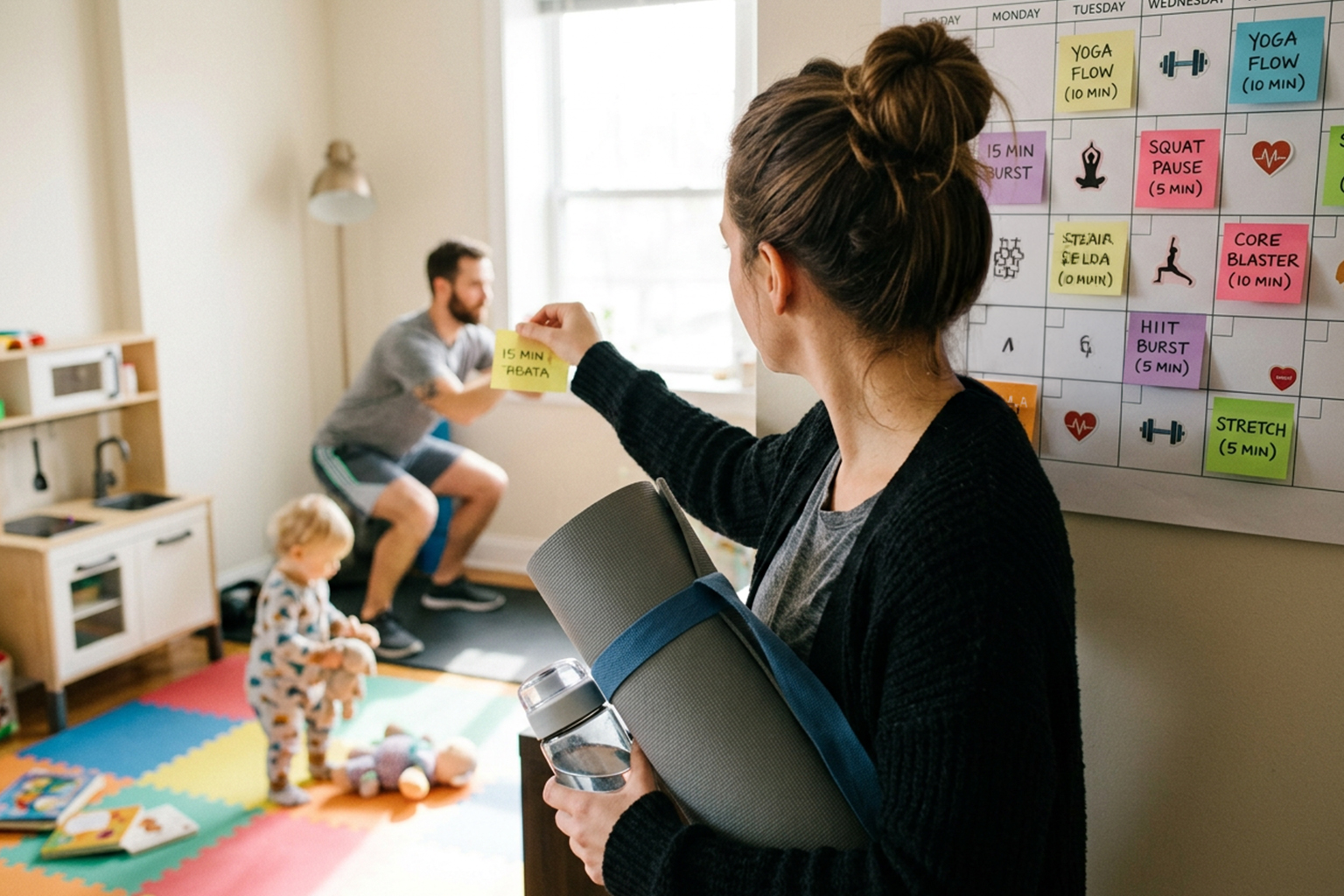
Fitting consistent movement into a busy life requires realistic planning and small, purposeful decisions.
When schedules shift, the best approach is a flexible framework that still targets strength, mobility and recovery.
This article outlines practical ways to assess your daily windows, select high-value movements, and stitch together short sessions.
Use these tactics to maintain momentum without needing long blocks of uninterrupted time.
Small, repeatable practices beat sporadic long sessions for lasting gains.
Assess Your Time and Energy Windows
Start by mapping when you consistently have energy rather than simply when you have free time.
Some people are sharper in the morning while others get a boost midafternoon; align workouts to those periods for better quality.
Note recurring constraints like meetings, childcare, or commute that create predictable pockets you can exploit.
A simple weekly audit of actual activity versus scheduled intentions reveals realistic opportunities.
Record results in a simple note to spot trends and avoid repeating ineffective times.
- Morning window
- Midday microbreak
- Evening recovery
Having a clear map of available windows reduces decision fatigue when a slot opens.
It also helps you adapt expectations for what a session can achieve in that time.
Prioritize Movements That Deliver Value
When time is limited, choose compound movements and multi-joint patterns that work several systems at once.
Squats, push variations, hinges, and loaded carries can maintain strength while short mobility routines protect range of motion.
If equipment is scarce, use bodyweight progressions and tempo variations to keep intensity meaningful.
Mixing strength and mobility in the same session maximizes benefit for the time invested.
Include brief isometrics or tempo work to preserve strength when heavy loading isn’t possible.
Set a priority list of three core movements you aim to cover each week.
Rotate emphasis by day so you hit strength, mobility and conditioning without long workouts.
Build Flexible Mini-Sessions
Design micro-sessions lasting five to twenty minutes that can be stacked or dispersed through the day.
These can be a focused strength circuit, a mobility flow, or a short conditioning set that raises heart rate.
Treat them as interchangeable blocks so a missed morning can be made up with two shorter evening sessions.
Tracking small wins encourages consistency and makes performance gains additive over weeks.
Scheduling these as optional appointments in your calendar increases the chance they’ll happen.
- 5–8 minute mobility flow
- 10–15 minute strength circuit
- 12–20 minute interval conditioning
Keep simple templates you can do without much setup to lower the activation energy for movement.
Over time, these templates become reliable building blocks for sustained progress.
Conclusion
A flexible plan anchored to real-life windows and high-value movements makes consistency achievable.
Micro-sessions and a small set of priorities reduce friction and preserve progress when days are chaotic.
Start small, track what works, and let modest routines compound into lasting fitness.

