
Consistent kitchen habits reduce decision fatigue and speed meals.
Small steps repeated each day create reliable results over time.
They help you adapt recipes, manage time, and reduce waste.
This article outlines practical habits that fit busy weeknights.
Use a few of these to make cooking less stressful.
Plan and Prime
Start the week with a simple plan: pick three anchor meals and a few flexible sides. Create a concise shopping list that supports those meals and limits impulse buys. Prime ingredients the night before by washing greens, grating cheese, or portioning proteins. Treat planning as a short ritual that saves far more time during dinner service.
When you know what’s coming, substitutions are easier and stress drops. Small early actions compound into smoother evenings.
Pantry, Fridge and Mise en Place
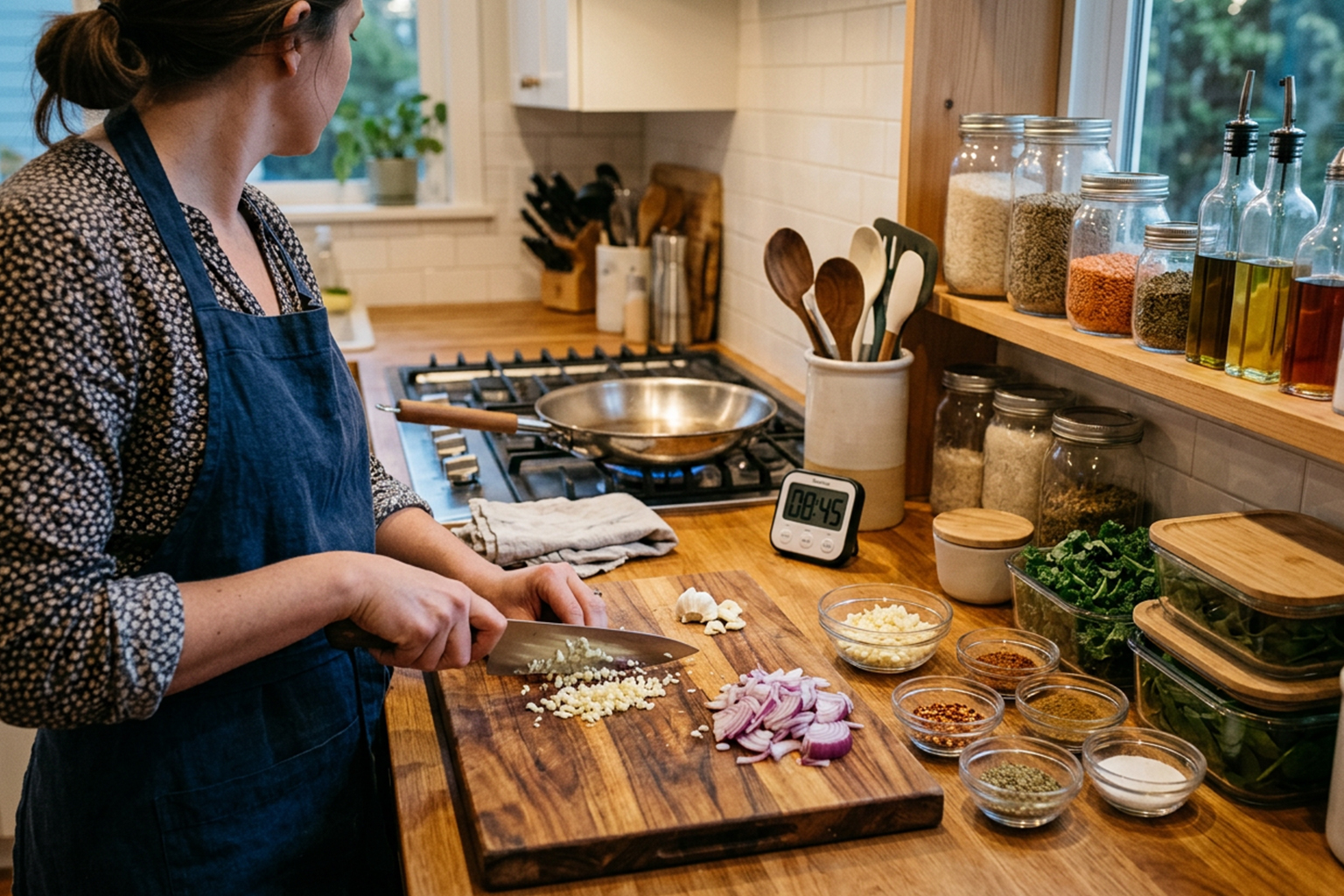
Keep staples organized so you can assemble meals without searching. A reliable pantry, labeled containers, and a few preserved basics like canned tomatoes, grains, and good oils transform last-minute ideas into meals. Adopt a lightweight mise en place habit: measure spices, chop aromatics, and line up tools before you turn on the stove. That discipline reduces mistakes and keeps timing predictable.
- Group staples by use: sauces, grains, baking, snacks.
- Label and rotate items with quick dates.
- Store prepped aromatics in clear containers for two to three days.
A small, ordered storage system makes improvisation practical. You’ll waste less and cook more confidently.
Timed Workflows for Weeknights
Break the hour before dinner into staged tasks: start longest-cooking items first and prep simple sides while they cook. Use timers to coordinate steps and avoid crowding the space with simultaneous tasks. Batch tasks like roasting vegetables or cooking grains on an off day to shave time midweek. This kind of timed choreography keeps each night relaxed and efficient.
Routines that respect cooking times reduce last-minute rushing. The result is better food and calmer evenings.
Tools, Clean-as-You-Go and Rituals
Lean on a few dependable tools: a good knife, a pan that heats evenly, and a reliable timer. Adopt a clean-as-you-go habit to clear surfaces between tasks, which shortens cleanup and makes the next night easier. Develop small rituals—preheating pans early, tasting while you cook, and plating with purpose—to make the process repeatable. These rituals create flow and preserve energy for flavor decisions.
Consistency in tools and cleanup makes weeknight cooking sustainable. Little rituals keep meals enjoyable rather than burdensome.
Conclusion
Adopt two or three habits and make them routine.
Small changes compound into predictable, pleasant dinners.
Over time your kitchen will feel more efficient and less stressful.

