
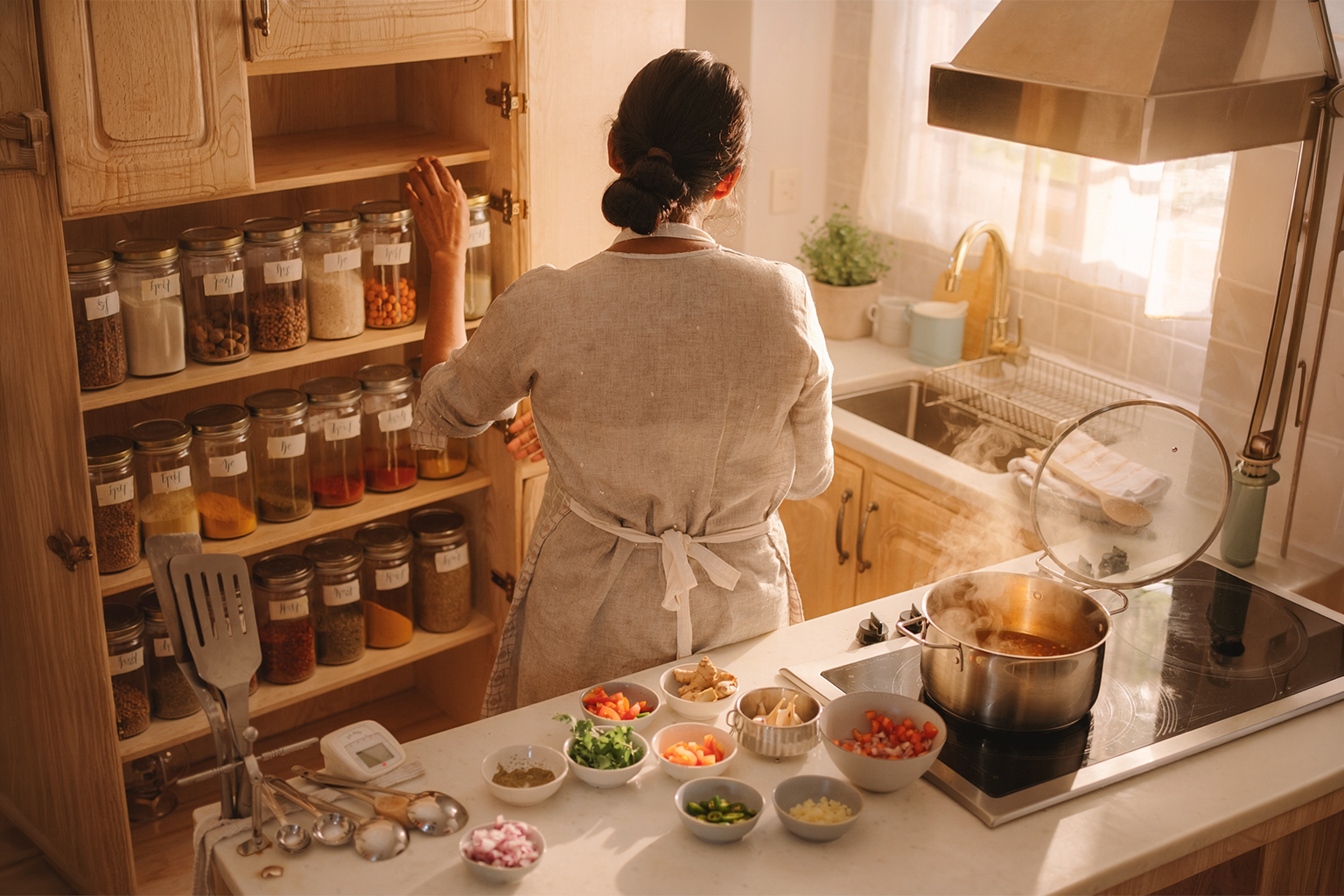
Begin by observing how ingredients, tools, and trash move through your kitchen during a typical meal. Note bottlenecks like crossing traffic paths, distant spice storage, or cluttered counters that interrupt flow. Measure how long common tasks take and which steps are repeatedly frustrating. Understanding current patterns helps you target changes that yield the biggest time savings. Small tests of layout changes can reveal unexpected benefits.
Start small and tackle one pain point at a time. Even modest changes can improve the whole process.
Create Purposeful Zones
Divide the kitchen into clear zones: storage for dry goods, a prep surface near the sink, a cooking area around the range, and a cleanup station by the dishwasher or trash. Keep frequently used tools and ingredients within arm’s reach of their primary zone to minimize trips across the room. Labeling shelves and using uniform containers reduces searching and speeds inventory checks. This physical logic makes it faster to move from recipe to plated meal. Rotate seasonal items and prioritize access for items you use daily.
- Pantry and bulk storage
- Prep counter with knives and measuring tools
- Cooking area with pots, pans, oils, and spatulas
- Cleaning zone with trash, compost, and drying rack
Adapting zones to your most common meals is key. Rearrange as needs change to maintain efficiency.
Standardize Tools and Habits
Choose a small set of multi-use tools and commit to consistent placement so reaching becomes automatic. Develop routines like mise en place, preheating while you chop, and batch-cooking sauce bases to compress future meal time. Keep a running shopping list and replenish staples in predictable quantities to avoid last-minute substitutions. Over time these habits reduce cognitive load and make quicker cooking feel effortless. Regularly review what you actually use and retire duplicate items to free space.
Teach family members the system with simple labels and short instructions. Shared routines multiply the time savings.
Conclusion
Organizing space and building a few reliable habits will transform evening cooking from chaos into a predictable routine. Start with one zone and one habit, then expand as you notice improvements. Consistency and small changes deliver the biggest time savings over weeks.

