
Sustaining fitness doesn’t require long daily sessions or complex schedules. Short, well-focused workouts can preserve strength, mobility, and cardiovascular fitness when time is limited. The difference comes from consistent effort, purposeful selection of exercises, and small progressions over time. Adopting brief sessions reduces friction and makes fitness more likely to stick.
Maintaining this habit depends on planning, not perfection. Small wins add up and keep momentum alive. With a simple framework you can train effectively even on busy days.
Assess Your Week
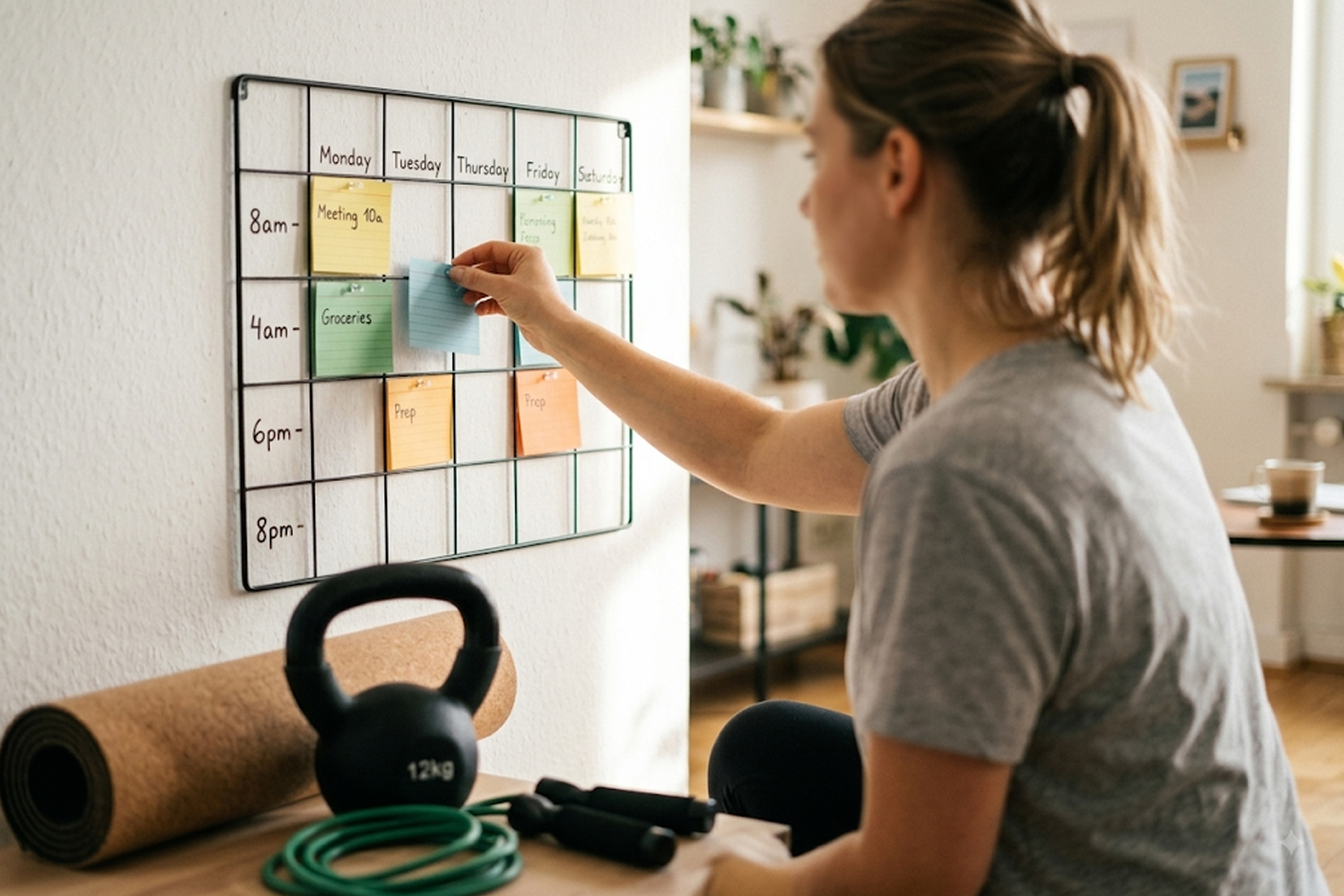
Begin by mapping available windows for movement across a typical week. Identify predictable pockets—mornings, lunch breaks, or evenings—and protect two to four of them for intentional sessions. Be realistic about recovery and non-training commitments so your plan fits rather than competes with life. Treat these slots as appointments to increase the odds you actually show up.
Prioritize consistency over intensity on the busiest days. Reserving at least one slightly longer session each week helps maintain overall capacity.
Design Short Sessions
Structure each session around a clear goal: strength, mobility, or conditioning. Keep blocks to 10–25 minutes using compound moves, mobility flows, or interval circuits that provide the most return for time invested. For strength, choose two compound lifts or movement patterns with progressive overload. For conditioning, alternate short high-effort intervals with recovery to maximize efficiency.
- Strength: 3 sets of 6–12 reps (squats, presses, rows).
- Mobility: 10–15 minutes of joint-focused flows and soft tissue work.
- Conditioning: 6–10 rounds of 20s work / 40s rest for calories and heart health.
Rotate session types across the week so each capacity gets attention. Simplicity and repetition allow measurable improvements.
Track and Adjust
Use a simple tracking method to maintain progress—notes in a phone, a short log, or a habit tracker. Record load, reps, perceived effort, or duration so you can incrementally increase challenge. If sessions feel stale or recovery suffers, reduce volume or shift intensity for a week. Regularly review what’s working and adapt the plan to changes in schedule or goals.
Small adjustments keep the plan sustainable and enjoyable. Aim for gradual progression rather than dramatic spikes in volume.
Conclusion
Short, purposeful sessions make fitness realistic on busy schedules. Consistency, simple tracking, and rotating focus build resilience over time. Start small, measure a little, and let steady practice do the work.

