
Creating a smoother cooking routine is less about radical overhaul and more about steady, small improvements. Start by identifying the moments that consistently slow you down and pick one tiny habit to change. Over a few weeks, those small shifts compound into a more predictable evening that leaves you less frazzled. This approach keeps progress realistic and sustainable without adding extra stress.
Plan with a Flexible Framework
Build a loose weekly plan that balances repeatable favorites with one or two new dishes. Use themes like “one-pot,” “grill,” or “vegetarian” to reduce decision fatigue while keeping meals interesting. Planning this way makes grocery shopping faster and ensures you have complementary ingredients on hand. It’s a framework that guides choices without locking you into strict recipes.
Make the framework adaptable so weekday changes don’t derail it. Swap proteins or sides based on what’s available and still hit the core structure of your plan. That flexibility is key to long-term adherence.
Prep Smart, Not More
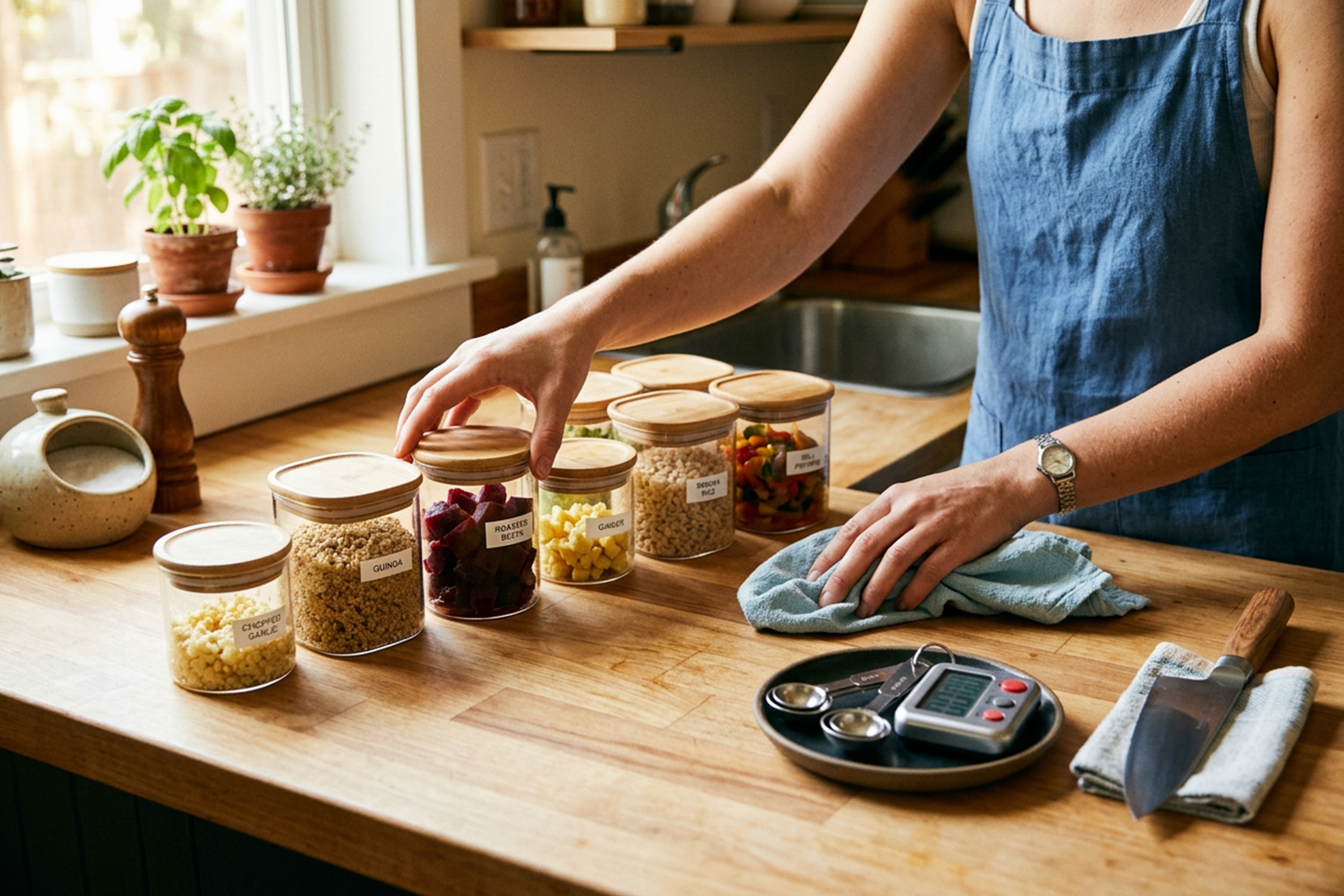
Focus on prepping components rather than full meals—chopped aromatics, cooked grains, and roasted vegetables keep well and speed assembly. Spend 20–30 minutes on a weekend or a weekday evening to batch these elements and store them in clear containers. When it’s time to cook, you’ll assemble instead of starting from scratch, which reduces time and decision stress. This approach preserves freshness and allows last-minute creativity.
- Chop onions and peppers; freeze portions if needed.
- Cook a pot of beans or grains for multiple meals.
- Roast a tray of mixed vegetables to use in bowls or salads.
Small, repeatable prep tasks deliver big time savings across the week. Prioritize things that multiply in usefulness.
Organize Your Workspace for Flow
Keep frequently used tools and pans within easy reach and group ingredients by use rather than by type. A clear, consistent layout reduces the time spent searching and lowers interruptions while cooking. Label containers and keep a small mise en place kit with measuring spoons, a timer, and a sharp knife near your main prep area. These small adjustments remove friction and help you move from step to step confidently.
Reset the workspace after meals so the next cooking session starts fresh. That closing habit makes preparing the following meal noticeably easier.
Iterate and Learn Weekly
Spend five minutes each week reviewing what worked and what didn’t in your meals and routines. Note one thing to change—swap a side, adjust timing, or try a new storage method—and test it the next week. Gradual iteration keeps the process manageable and helps you refine solutions that fit your household. Over time you’ll build a set of personally tailored habits that consistently improve results.
Small, frequent improvements are more powerful than occasional big changes. Keep the cycle simple and focused to maintain momentum.
Conclusion
Adopt one small practice at a time and give it a few weeks to settle into your routine. Consistent, modest changes reduce stress and increase confidence in the kitchen. Over months those tiny habits reshape how smoothly home cooking flows.

