
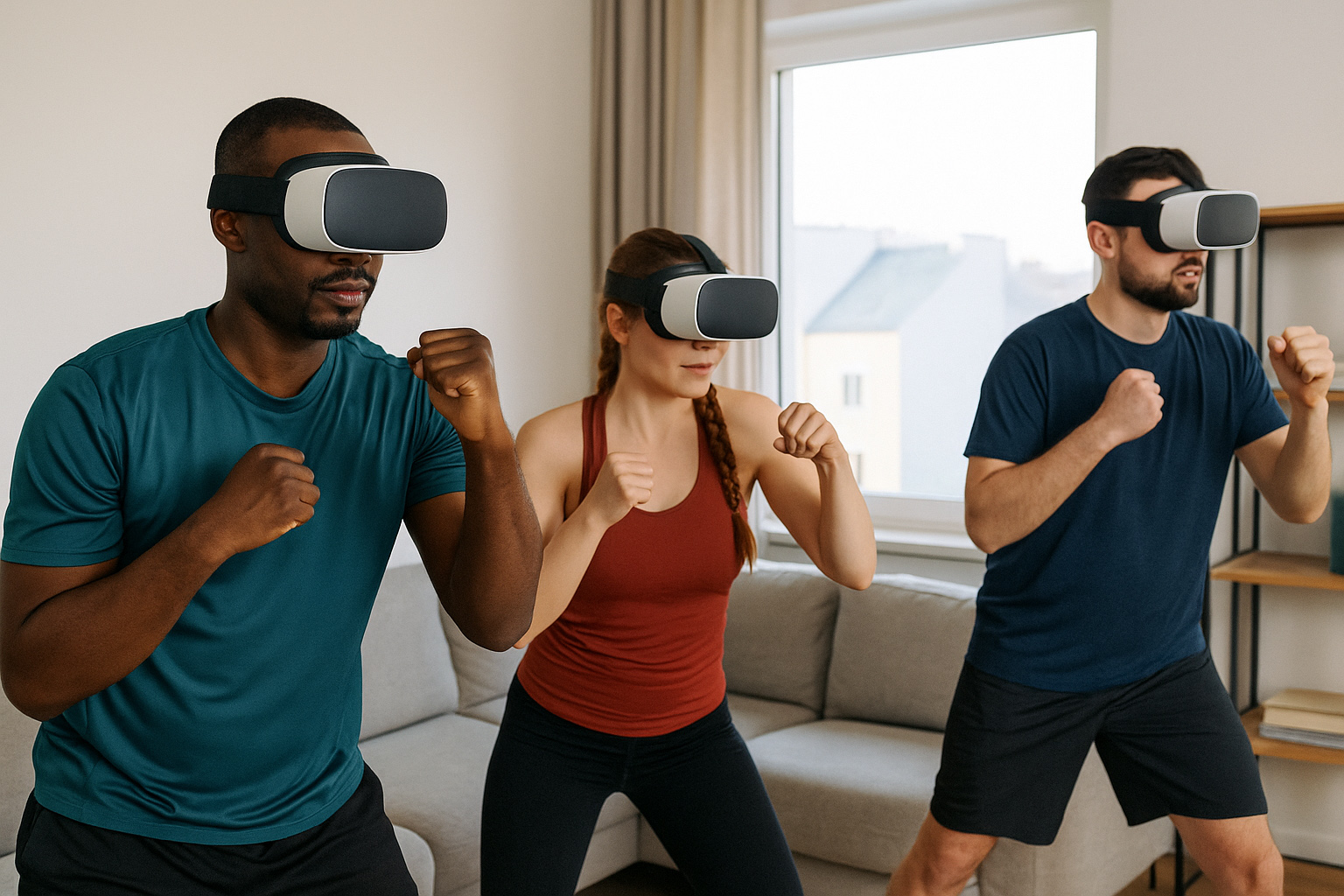
Fitness is no longer confined to gyms or solo home workouts. The next frontier of health and wellness is happening in virtual spaces—where exercise meets entertainment and social connection. Virtual reality (VR) fitness parties are redefining how people stay active, combining technology, community, and fun into a powerful new way to move.
The Rise of Virtual Reality Workouts
As VR technology becomes more accessible, it’s transforming fitness into an immersive, interactive experience. Instead of following a screen workout, users step into digital environments—boxing in futuristic arenas, dancing on neon-lit stages, or hiking through virtual landscapes. The addition of social elements, where multiple participants join from different locations, creates the feeling of a shared group class—minus the commute.
How VR Fitness Parties Work
Virtual reality fitness parties allow friends, family, or strangers to work out together in real time. Through VR headsets and motion-tracking sensors, participants can see avatars of one another, move in sync, and even cheer each other on. These experiences go beyond simple exercise; they build motivation through interaction, healthy competition, and accountability. Many platforms also integrate leaderboards, live instructors, and post-workout hangouts to recreate the energy of group fitness classes.
The Benefits of Social Fitness in Virtual Reality
Working out in VR eliminates many barriers to traditional fitness routines. People who find gyms intimidating or struggle with time constraints can join sessions from their homes. The gamified nature of VR keeps workouts engaging, while real-time feedback and immersive visuals help users maintain proper form. Most importantly, the social aspect boosts consistency—studies show that people are more likely to stick with fitness goals when exercising with others, even virtually.
Challenges and Future Potential
Despite its promise, VR fitness still faces challenges such as hardware costs, limited space, and motion discomfort for some users. However, as technology advances and becomes more affordable, these issues are expected to fade. The integration of AI, haptic feedback, and health tracking will make VR workouts even more personalized and effective, merging fitness, gaming, and social connection seamlessly.
Conclusion
Virtual reality fitness parties represent the evolution of how we stay healthy and connected. They transform workouts from solitary routines into vibrant social experiences where community and motivation thrive. As VR technology continues to evolve, the future of fitness looks not just more immersive—but more human.

