
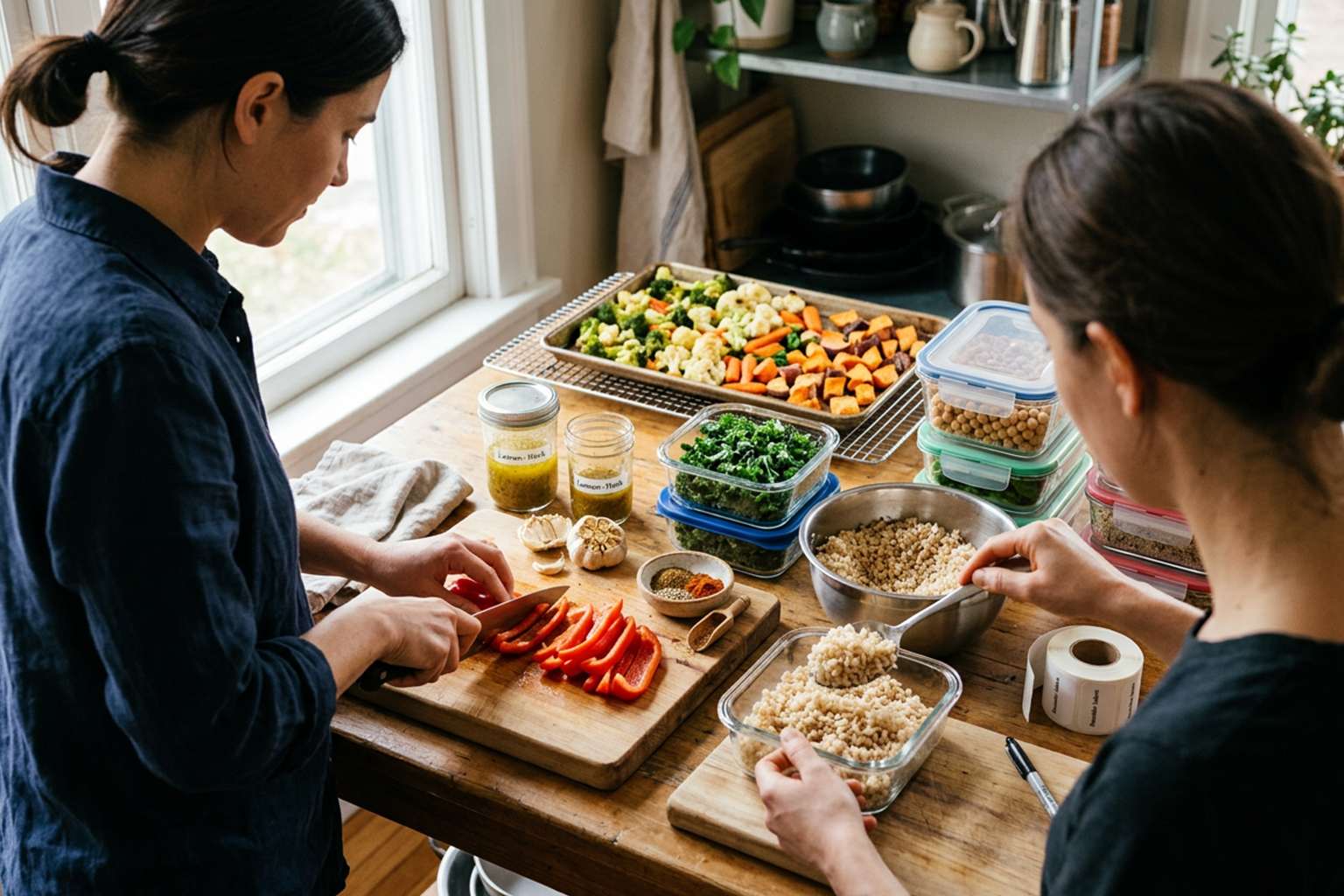
Spending a little time on the weekend to prep can change how your weeknights feel in the kitchen. Small, intentional steps mean fewer decisions and faster dinners when evening energy is low. This article outlines practical prep habits that fit into a single block of time and pay off all week long. Follow a few repeatable steps and you’ll notice consistent improvements in speed and flavor.
Plan a Flexible Weekly Core
Start by choosing a handful of reliable base ingredients that work across several meals. Pick one protein, two vegetables, and one grain or starch that you enjoy and that store well. Planning around these cores keeps shopping simple and reduces food waste because components can be mixed and matched. A flexible plan lets you adapt to schedules, cravings, or what’s on sale without losing momentum in the kitchen. This approach reduces decision fatigue and makes weeknight menus predictable yet varied.
On the weekend map out three to five meal templates you can rotate. Keep the templates broad—roasted protein with grain, stir-fry, sheet-pan meal, hearty salad, and a pasta bowl work well. With templates in place, swapping ingredients takes minutes and you avoid reinventing the wheel every night.
Prep Smart, Not Exhaustively
Focus your weekend time on tasks that save the most effort during the week: chopping, blanching vegetables, cooking grains, and portioning proteins. Prepare items to different degrees of readiness so you can finish meals quickly without losing texture or flavor. For example, par-cook vegetables that reheat well, but keep delicate herbs whole until serving. Choose containers that stack and label them with basic use-by notes so things don’t get forgotten.
Prioritize two or three prep tasks that fit the time you have. Even 45–90 minutes of focused work can produce several ready-to-use elements that shave time each evening. The goal is consistency, not perfection.
Use Flavor Shortcuts and Smart Storage
Invest a little prep into concentrated flavor components: a simple vinaigrette, a quick pan sauce, or a toasted spice blend. These small elements lift many dishes and can be made in bulk and refrigerated. Store prepped items in clear containers and group them by meal purpose so assembling dinners is more like arranging than cooking. When you keep go-to flavor boosters on hand, weeknight meals feel intentional and well-seasoned with minimal active cooking.
- Quick vinaigrette: oil, acid, mustard, salt.
- Roasted garlic or caramelized onions for depth.
- Toasted spice mix for instant warmth.
Combine smart storage with portioned components to cut nightly steps to mixing and finishing. This habit makes it easy to adapt a base into multiple cuisines with one or two finishing touches.
Conclusion
Weekend prep reduces weekday friction and improves meal quality with a small time investment. Choose a flexible core, prep selectively, and keep flavor shortcuts ready to go. Over time these steps become a habit that consistently simplifies dinner.

