
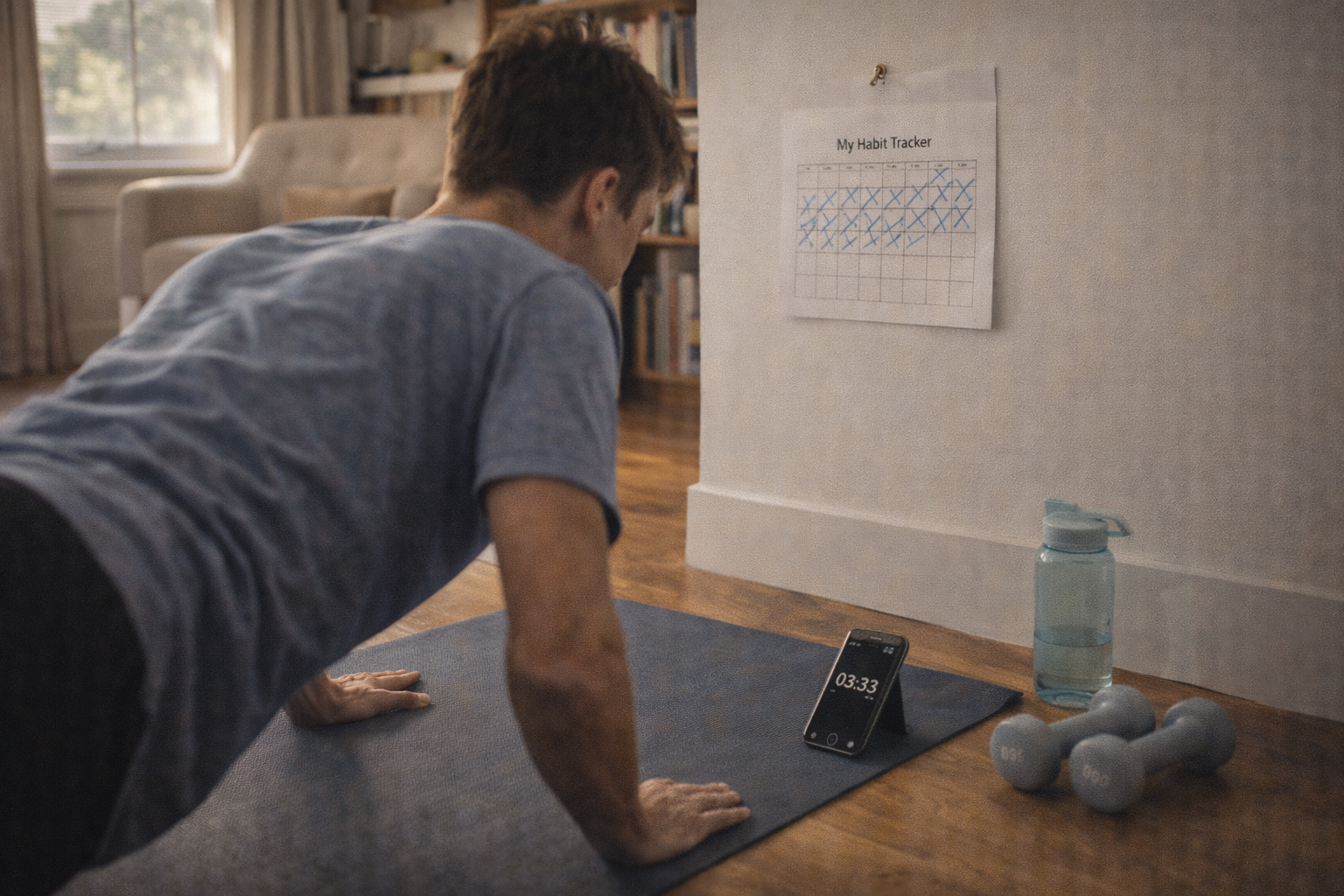
Many people start exercising with enthusiasm but struggle to keep a habit long term. Creating a sustainable home workout routine depends less on intensity and more on consistency, structure, and small daily choices. This article outlines practical strategies to build reliable habits that fit into busy schedules and limited spaces. With simple steps you can make fitness a regular part of your life without overwhelming changes.
Set Realistic Goals
Setting realistic goals begins with clarity about why you want to exercise and what success looks like. Instead of vague targets, choose measurable actions like minutes of activity per day, number of weekly sessions, or progression milestones. Prioritize goals that focus on behavior rather than immediate outcomes to reduce frustration and improve adherence. Adjust expectations based on time constraints and recovery needs so the habit remains achievable.
Start small and celebrate consistency, even when progress seems slow. Small wins build momentum and reinforce the new behavior. Reframe setbacks as information to improve scheduling.
Design Simple Routines
Design routines that are brief, flexible, and anchored to existing daily cues. A ten to twenty minute sequence that combines mobility, strength, and cardio intervals can be effective and easy to repeat. Use minimal equipment or bodyweight exercises to lower activation energy and keep your space uncluttered. Consistency matters more than variety at the early stage; once the routine is stable, gradually introduce new movements.
- Morning stretch and 10-minute strength circuit.
- Midday walk or interval session.
- Evening mobility and breathing work.
Keep a short checklist or calendar reminder to maintain momentum. Simple tracking reduces decision fatigue and makes completion more likely.
Track Progress and Stay Motivated
Tracking progress helps you see patterns and make small adjustments that compound over time. Record measurable metrics like session frequency, perceived effort, or a brief note about how you felt after each workout. Use visual cues such as a habit calendar or an app to celebrate streaks and identify lapses early. Pair workouts with enjoyable rituals like music, a favorite podcast, or a consistent time slot to increase intrinsic motivation. Accountability partners or online communities can further boost commitment when used selectively.
Review your progress weekly and refine the plan to match your energy and schedule. Be kind to yourself during setbacks and treat them as learning opportunities rather than failures.
Conclusion
Regular home workouts grow from consistent, manageable choices made daily. By setting realistic goals, designing simple routines, and tracking progress, you create a resilient habit system. Small, sustainable actions add up to meaningful fitness gains over months and years.

