
Consistent home cooking starts with small, repeatable routines that fit your life.
When you design simple patterns for planning, prep, and storage, meals become easier and more reliable.
This article outlines practical habits you can adopt without overhauling your whole kitchen, with realistic examples you can try this week.
Use these ideas to reduce stress, save time, and improve weeknight results.
Build a flexible weekly framework
Set up a weekly plan that balances repetition with variety so you can shop and cook with intention while avoiding boredom.
Choose two or three base proteins and a handful of vegetables you enjoy, then rotate sauces, grains, and simple sides to keep meals feeling fresh and adaptable to what’s on sale.
Block short prep sessions across the week — a 15-30 minute slot after shopping and a midweek refresh — and assign a quick cleanup window so leftovers stay attractive and usable.
Keeping the framework predictable helps decision fatigue and grocery waste, and allows you to build a comfortable rhythm around your busiest days.
Start small and adapt as you learn what works for your schedule.
Allow flexibility for nights when plans change and keep a simple fallback meal option.
The goal is a reliable backbone, not rigid menus.
Smart pantry and mise en place habits
Organize your pantry and fridge so staples are visible and accessible, which reduces the time you spend hunting for ingredients and deciding what to cook.
Group like items together, label shelves when useful, and keep frequently used ingredients at eye level to speed assembly and reduce waste.
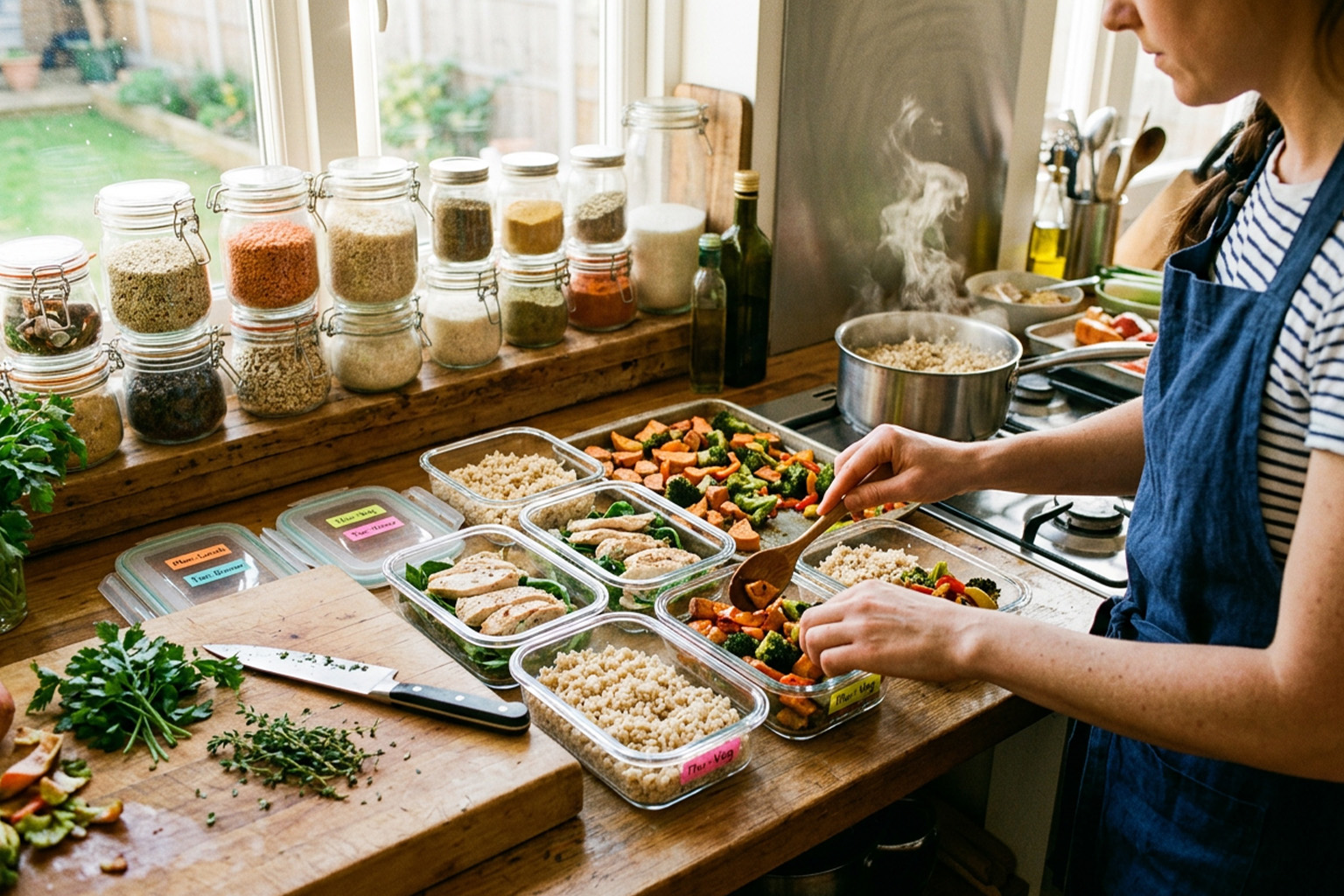
Adopt a rolling prep habit: wash and chop vegetables, pre-cook grains, and portion proteins when it makes sense so evening assembly is mostly reheating and combining.
These small investments pay off by cutting evening prep time and making improvised dinners feel intentional.
- Keep a rotating shopping list on your phone or a whiteboard to capture needs as they arise.
- Freeze portions in meal-sized containers so you always have a ready option for nights you don’t cook.
- Use clear jars for dry goods to see quantities at a glance and avoid duplicates.
Review the pantry each week and replace anything running low.
These habits reduce last-minute trips and make improvisation easier when plans shift.
Time-saving techniques and practical tools
Lean on a few reliable tools and simple methods that speed common tasks without adding complexity, such as a sharp chef’s knife, a sturdy roasting pan, and a handful of airtight containers.
Learn go-to techniques like high-heat roasting, one-pan sautés, and batch sauce making so you can vary flavors quickly without extra work.
Embrace sensible shortcuts—pre-washed greens, frozen vegetables, or jarred aromatics—when time is tight while keeping fresh elements for texture and brightness.
Pair technique with the routines you already follow to make efficient cooking both practical and satisfying.
Be selective about gadgets and invest in items you actually use regularly.
Over time, these choices compound into meaningful time savings and more consistent meals.
Conclusion
Building small, intentional kitchen routines boosts confidence and reduces stress.
Focus on repeatable planning, visible staples, and a few time-saving techniques that fit your lifestyle.
Start with one habit this week and add more as it becomes natural.

