
Cooking faster doesn’t have to mean sacrificing flavor. With small changes to how you organize, prep, and reuse ingredients, weeknight meals become less stressful and more satisfying. The habits below focus on repeatable actions you can adopt within a few meals. Try one at a time and keep what actually makes your evenings easier.
Keep a Core Prep Routine
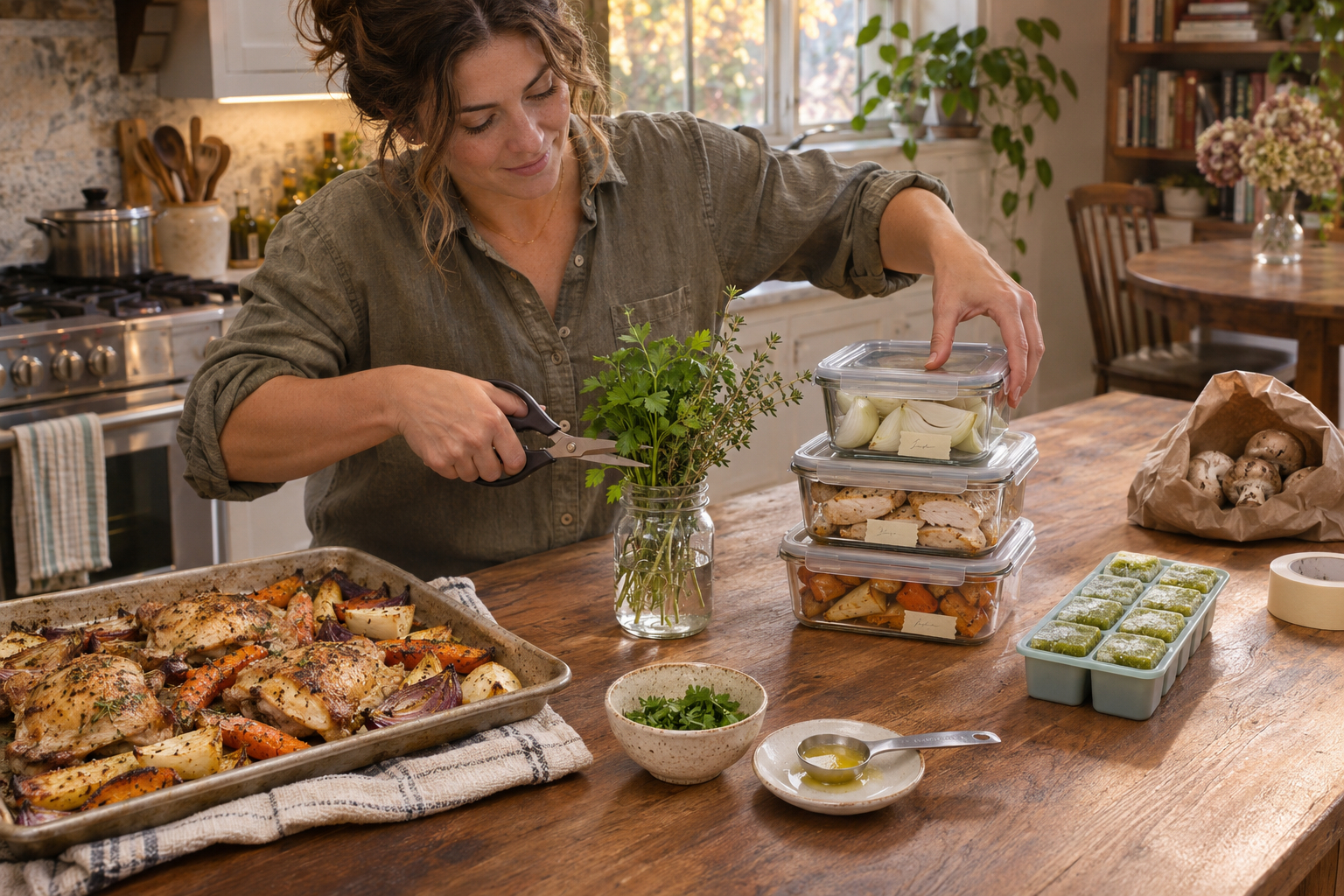
Set aside 10–20 minutes after grocery day for a quick trim-and-store session: wash greens, quarter onions, and portion proteins. Chopping similar items at once reduces repeated knife work and keeps the most-used ingredients within reach. A consistent prep rhythm reduces decision fatigue and speeds assembly later. Over time the effort compounds — a few extra minutes upfront saves a lot of evening stress.
Start with the items you use most each week and build from there. Even a single focused session will change dinner dynamics noticeably.
Embrace One-Pan Meals
One-pan dishes cut both cooking and cleanup time while concentrating flavors as ingredients caramelize together. Think sheet-pan chicken with root vegetables or a skillet pasta finished with a splash of stock. Layer textures by timing tougher vegetables earlier and delicate ones near the end. Season deliberately and resist over-stirring to let a good crust develop.
Choose recipes that require similar oven or stovetop temperatures to streamline planning. Once you master a few templates, you can riff on them with what’s in the kitchen.
Use Shortcuts That Still Taste Homemade
Smart shortcuts make dinner doable without tasting like a shortcut. Use store-bought stocks, pre-grated cheeses, or rotisserie chicken as a base, then finish with freshly chopped herbs, lemon, or toasted seeds. A quick pan reduction or a butter finish can lift simple ingredients into something richer. Balance convenience with a single fresh element to preserve a homemade character.
Experiment with one shortcut per recipe until you find combinations you like. These swaps save time without sacrificing the final plate.
Preserve Ingredients for Flavor
Proper storage prolongs peak flavor and prevents waste, which saves time and money in the long run. Keep herbs in jars of water in the fridge, store mushrooms in paper bags, and freeze leftover sauces in ice-cube trays for later use. Labeling containers with dates makes it easier to rotate items before they spoil. A little system reduces last-minute runs to the store and keeps meals consistent.
Start small by adopting one storage habit this week. The fewer ingredients you toss, the less time you spend replacing them.
Conclusion
Changing how you prep, cook, and store food pays off quickly in both time saved and better dinners. Adopt one habit at a time and keep the ones that actually simplify your routine. Over weeks you’ll notice cooking becomes faster and more enjoyable.
