
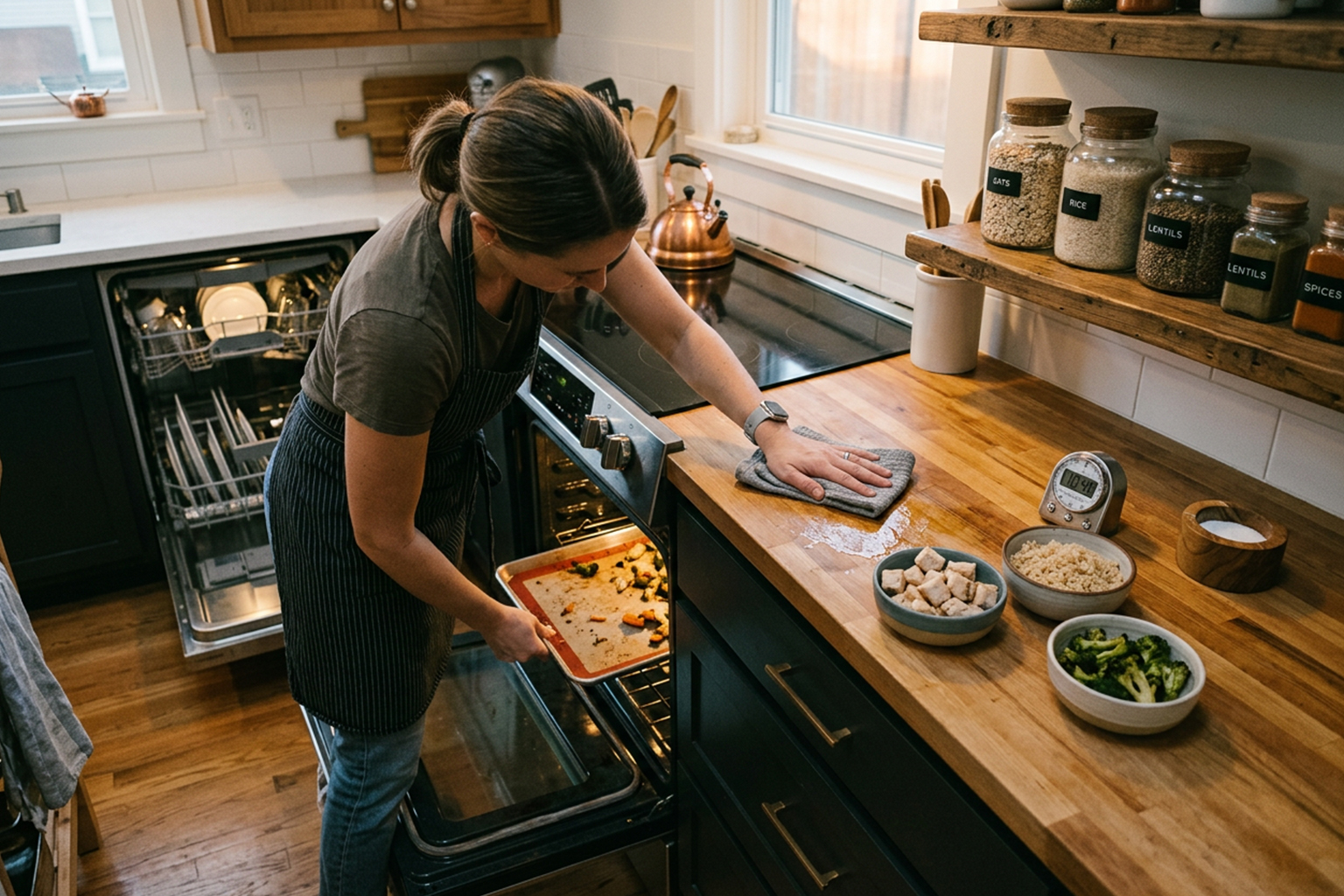
Busy weeknights and shifting schedules make cooking feel unpredictable and stressful. Adopting a few consistent habits converts that unpredictability into a reliable rhythm you can rely on. This article outlines practical frameworks—meal templates, pantry routines, timed prep windows, and a nightly reset—that reduce decision fatigue. Each idea is meant to be adopted gradually so you can improve results without overhauling your routine.
Build Flexible Meal Templates
Meal templates are repeatable structures that guide choices without scripting every detail. Examples include protein + two vegetables, grain bowl with a sauce, and one-pan roast — each template can be adapted with seasonal ingredients and different flavor profiles. Templates shorten planning time and make it easier to improvise when you’re low on time or motivation. Over time these patterns train your intuition, so substitutions become faster and more confident.
Start with two or three templates that fit your typical week and refine them as you learn preferences. Keep a short list of go-to proteins, starches, and sauces to make template swaps seamless.
Smart Pantry and Ingredient Routines
Consistent pantry habits prevent last-minute grocery runs and reduce food waste. Keep a rotating core of shelf-stable items—canned tomatoes, dried grains, versatile oils, and a few spices—plus a simple checklist for fresh produce that you buy weekly. Store like items together and label or group by use so you can scan options quickly when planning a meal. Regularly clearing expired items and noting low-stock staples makes shopping and meal-building faster.
Once a week, do a quick pantry and fridge sweep to capture what you already have and what you need. That small habit saves time and eliminates redundant purchases.
Prep Windows and Tool Pairings
Set short, focused prep windows to batch tasks like chopping, marinating, or cooking grains. Pairing tasks with specific tools—an instant pot for grains, a sheet pan for roasted vegetables, a blender for sauces—reduces cleanup and speeds execution. Time-blocking prep for 20–30 minutes a day or on a weekend afternoon makes weeknight assembly simple. When tools and tasks are matched, you minimize friction and build predictable outcomes.
Choose two reliable tools and learn how they simplify multiple dishes. Small investments in technique pay off more than buying many specialty gadgets.
Nightly Reset and Simple Planning
A brief nightly reset keeps the kitchen ready and reduces morning chaos. Wipe surfaces, load the dishwasher or wash key items, and jot a one-line plan for the next day’s meal based on what’s available. This five- to ten-minute habit clears mental clutter and makes it easier to start cooking when time comes. Over a week, the reset habit compounds into smoother prep and fewer wasted ingredients.
Make the reset part of your evening routine so it becomes automatic. A little consistency each night creates big gains for the week ahead.
Conclusion
Adopting a few practical frameworks—templates, pantry routines, timed prep, and a nightly reset—makes home cooking more reliable and enjoyable. Start small, refine what works, and let repeatable patterns reduce decision load. Over time these habits free you to focus on flavor and family instead of stress and scrambling.
